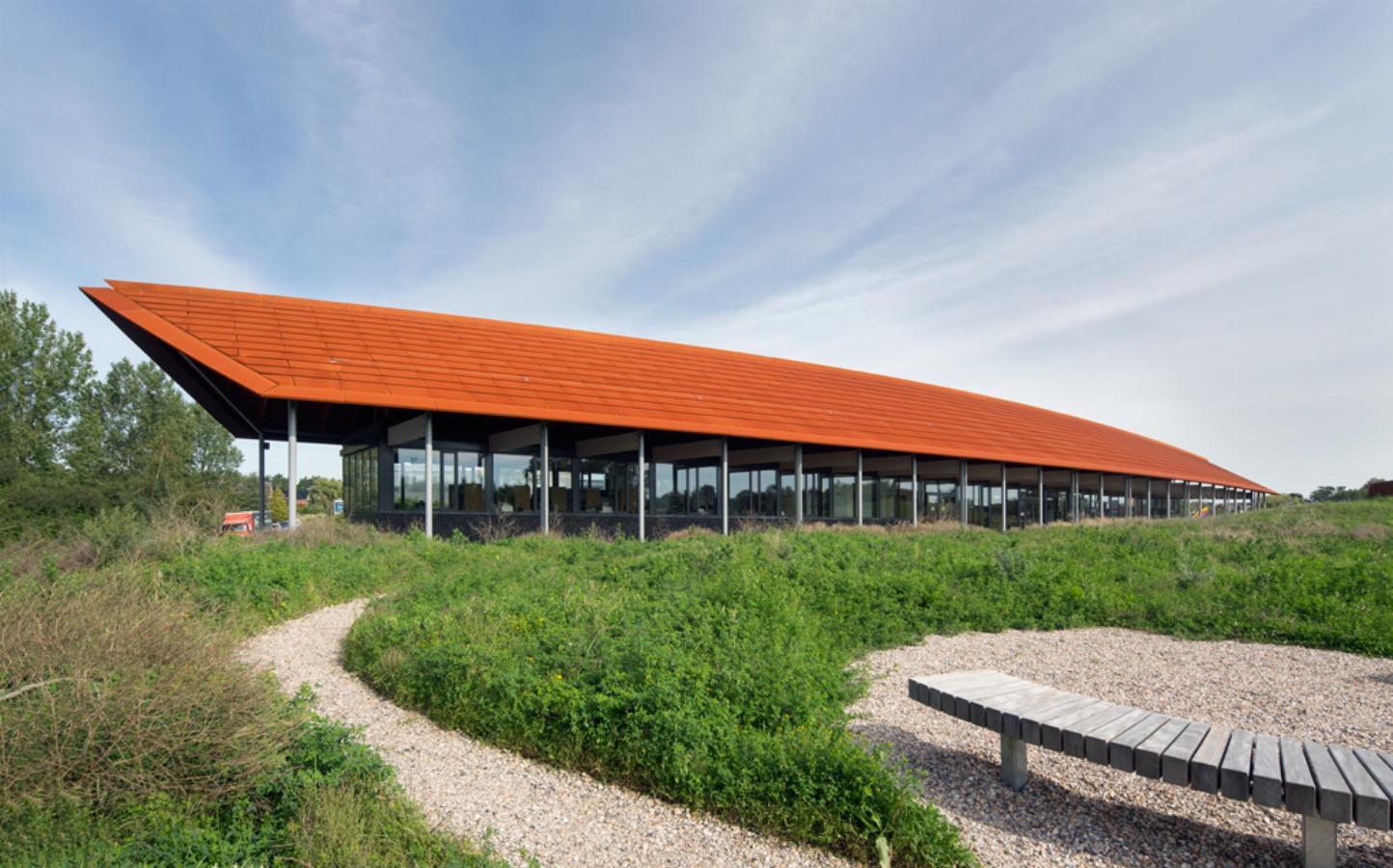
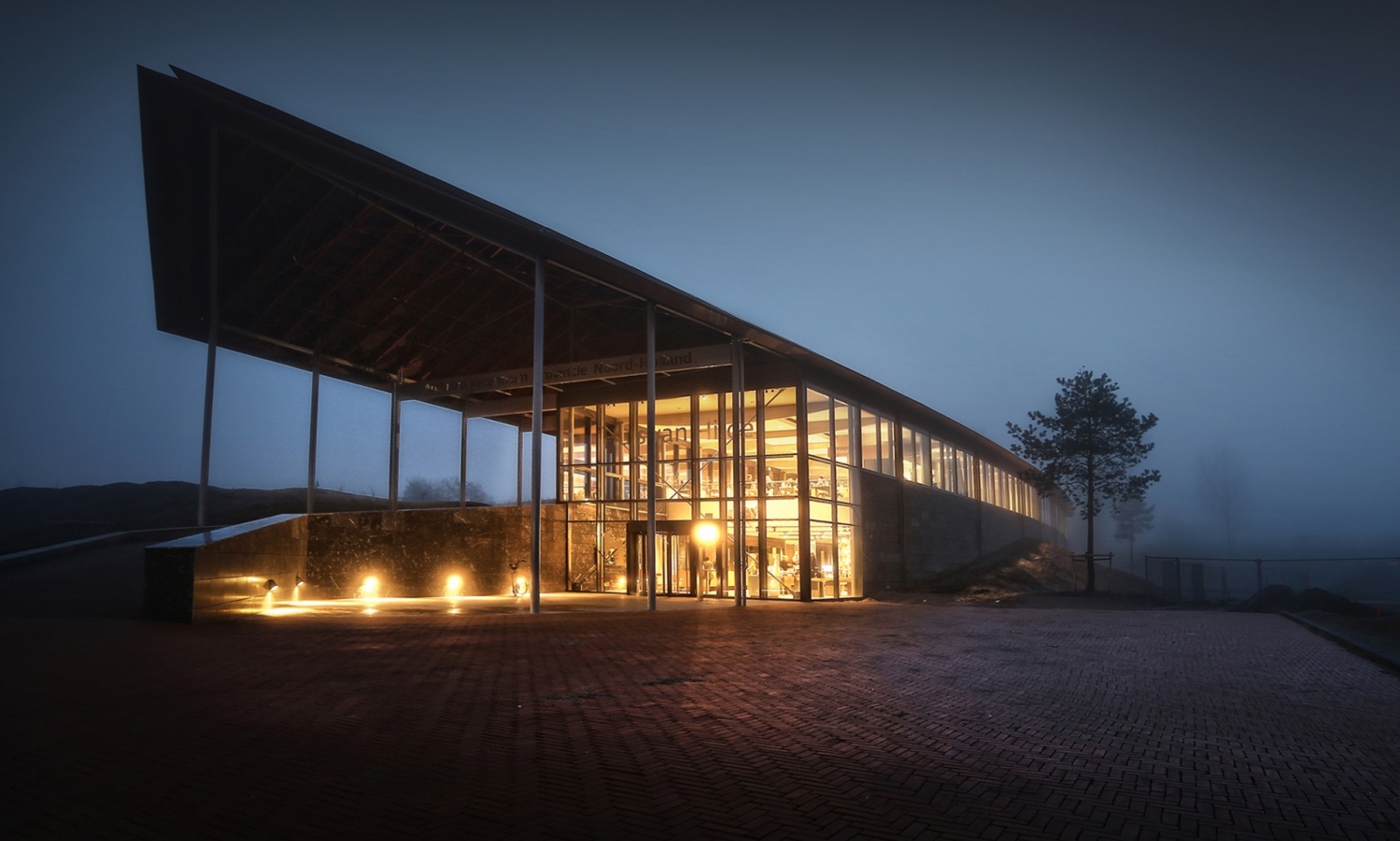
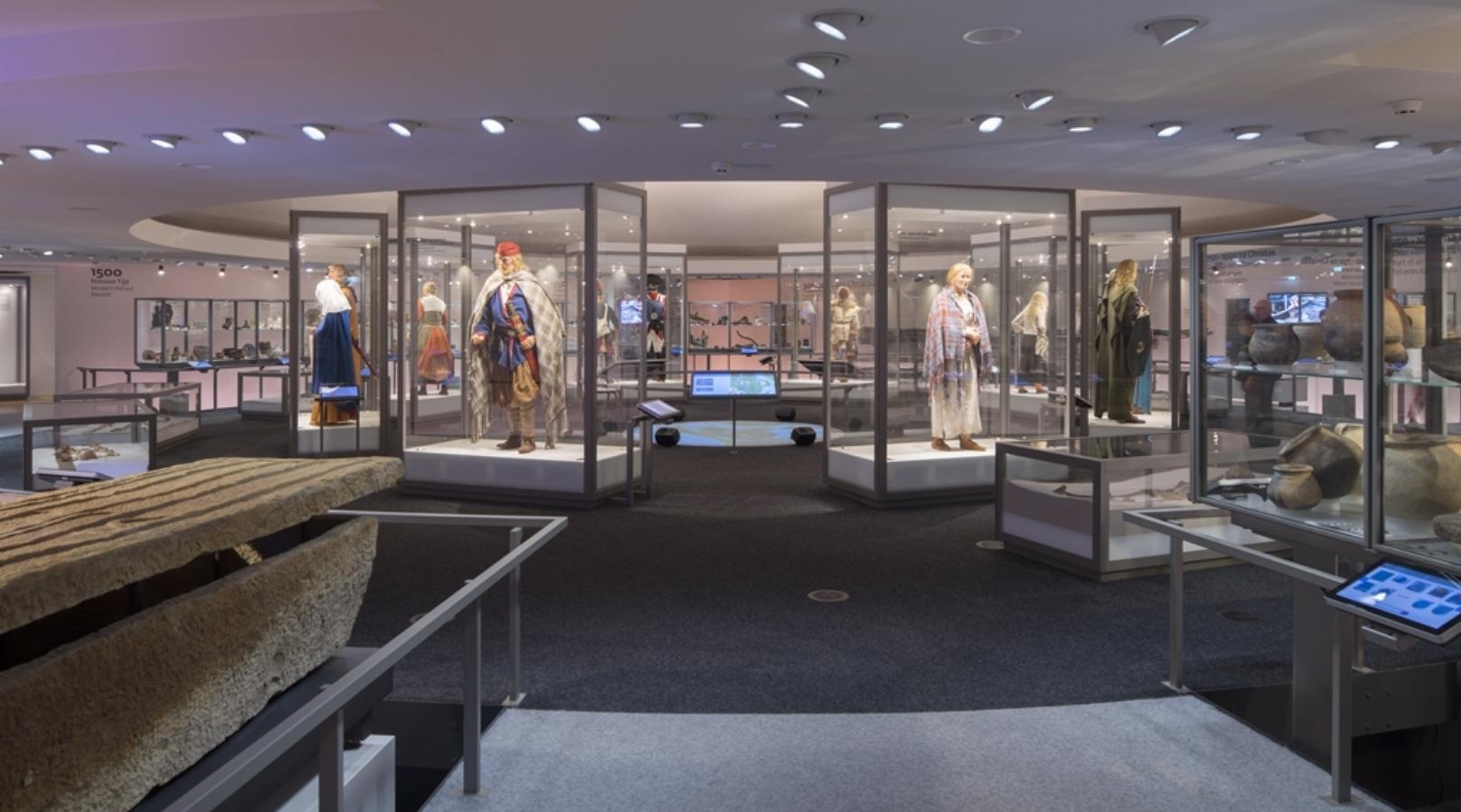
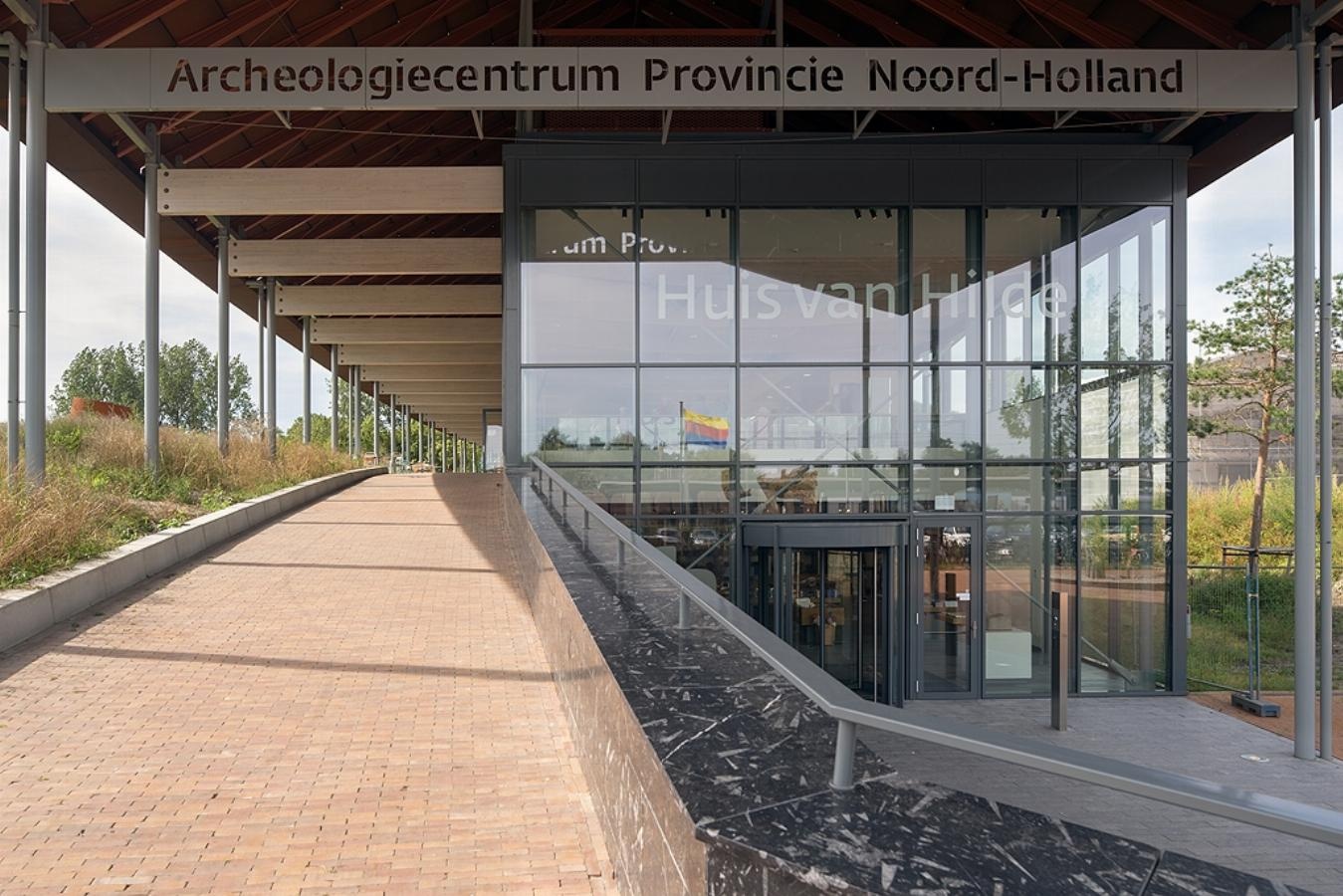
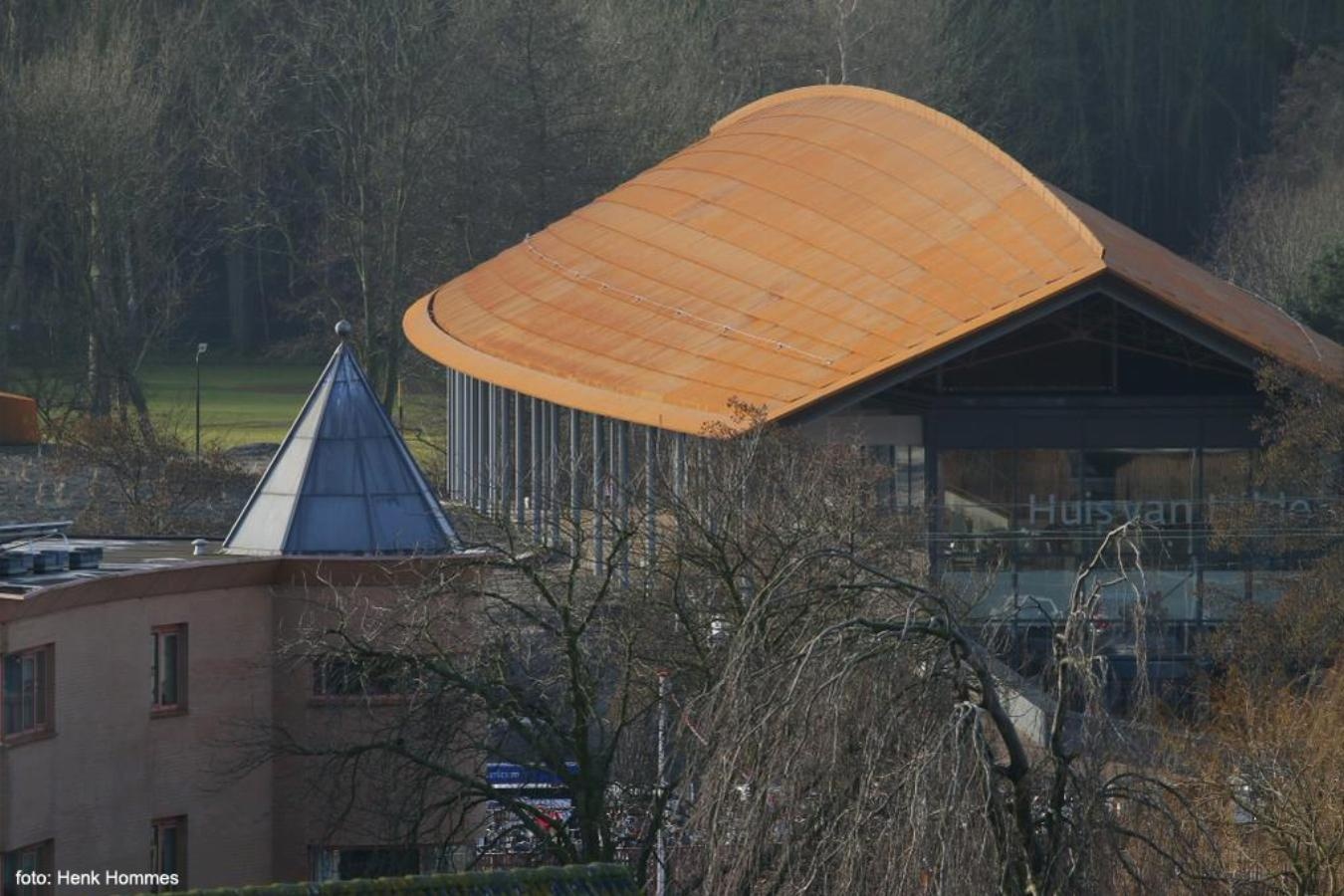
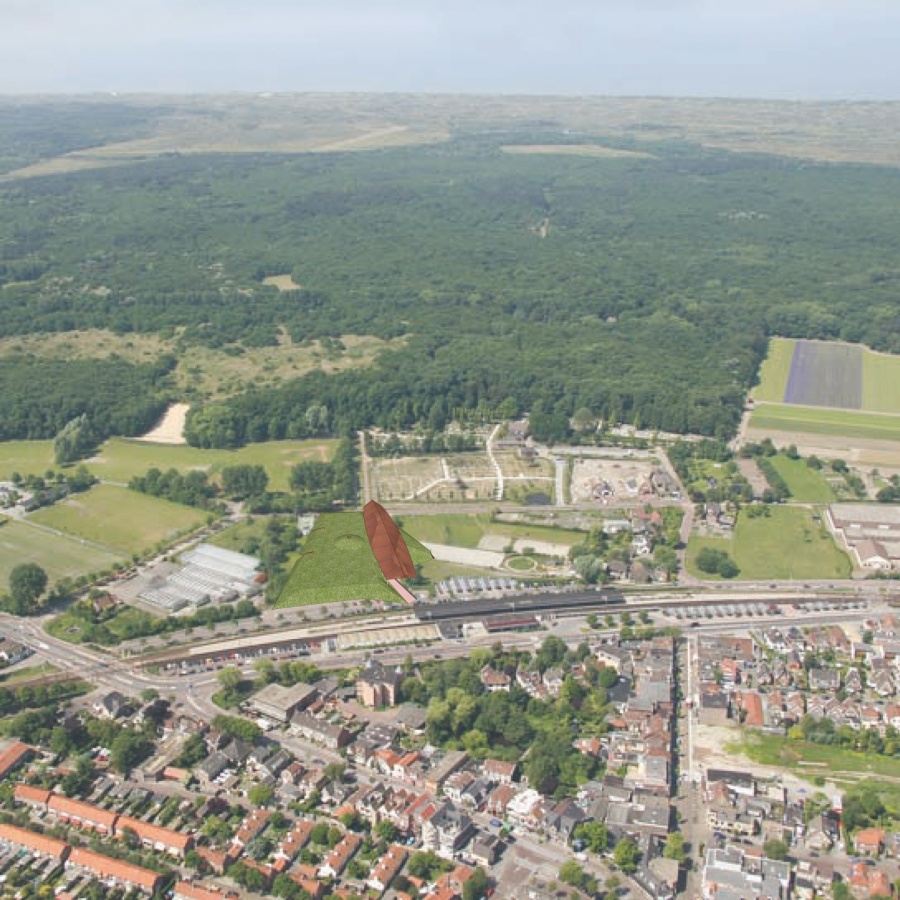
House Hilde lies on the dunes, on the tourist route between Station Castricum and dunes. The building opened in January 2015 and combines a depot with a museum function. The archaeological center is named Hilde, a woman from the fourth century AD and found in 1995 during an excavation in Castricum.
Hilde house was commissioned by the Province of North-Holland. Every Dutch province is responsible for the preservation and exhibition of archaeological finds within its borders. The old depot of North Holland in Wormer was too small, the climate was bad manageable and it was only limited accessible to visitors. The building on the Zanderij in Castricum offers plenty of space for storage and exhibiting archaeological finds and collections.
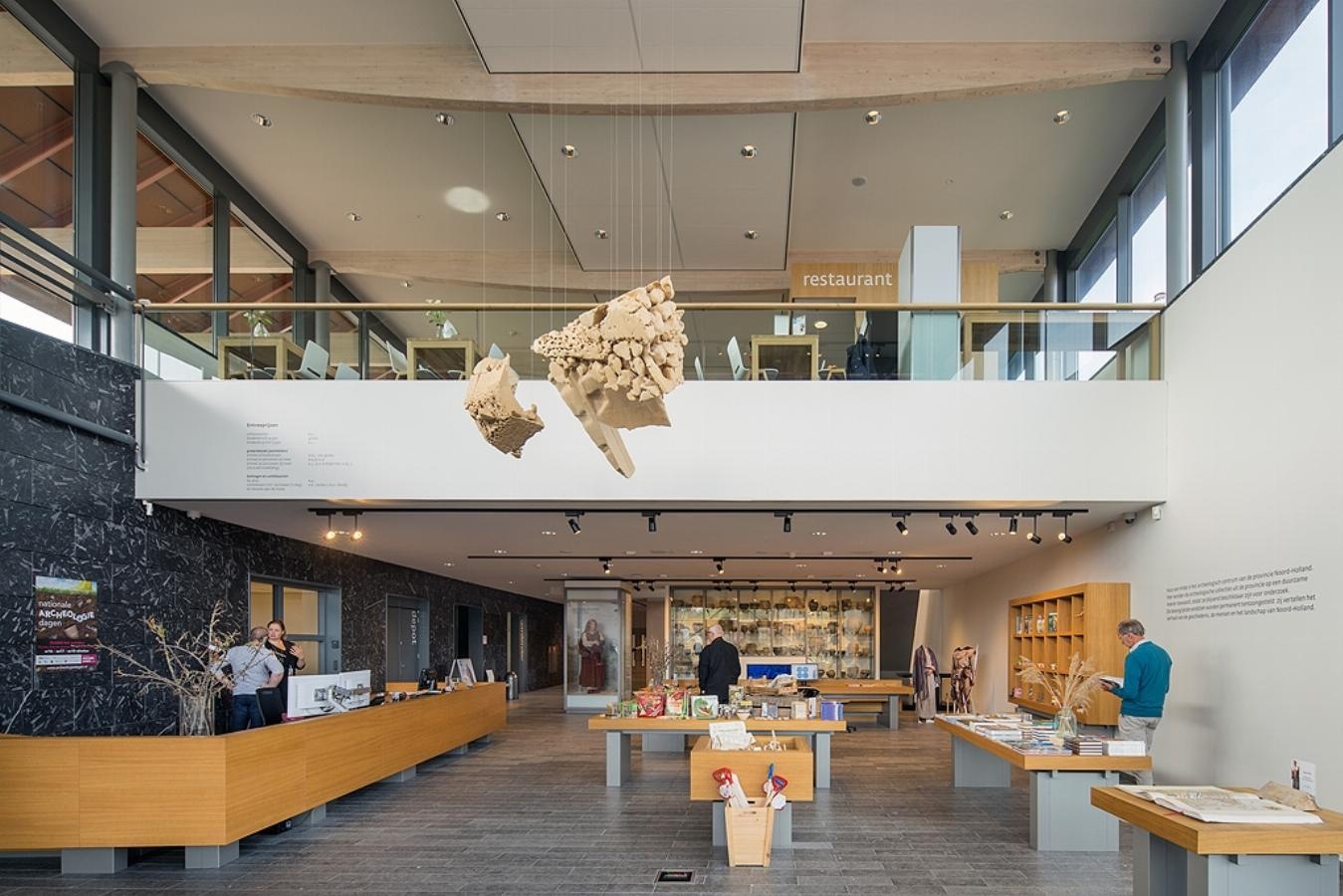
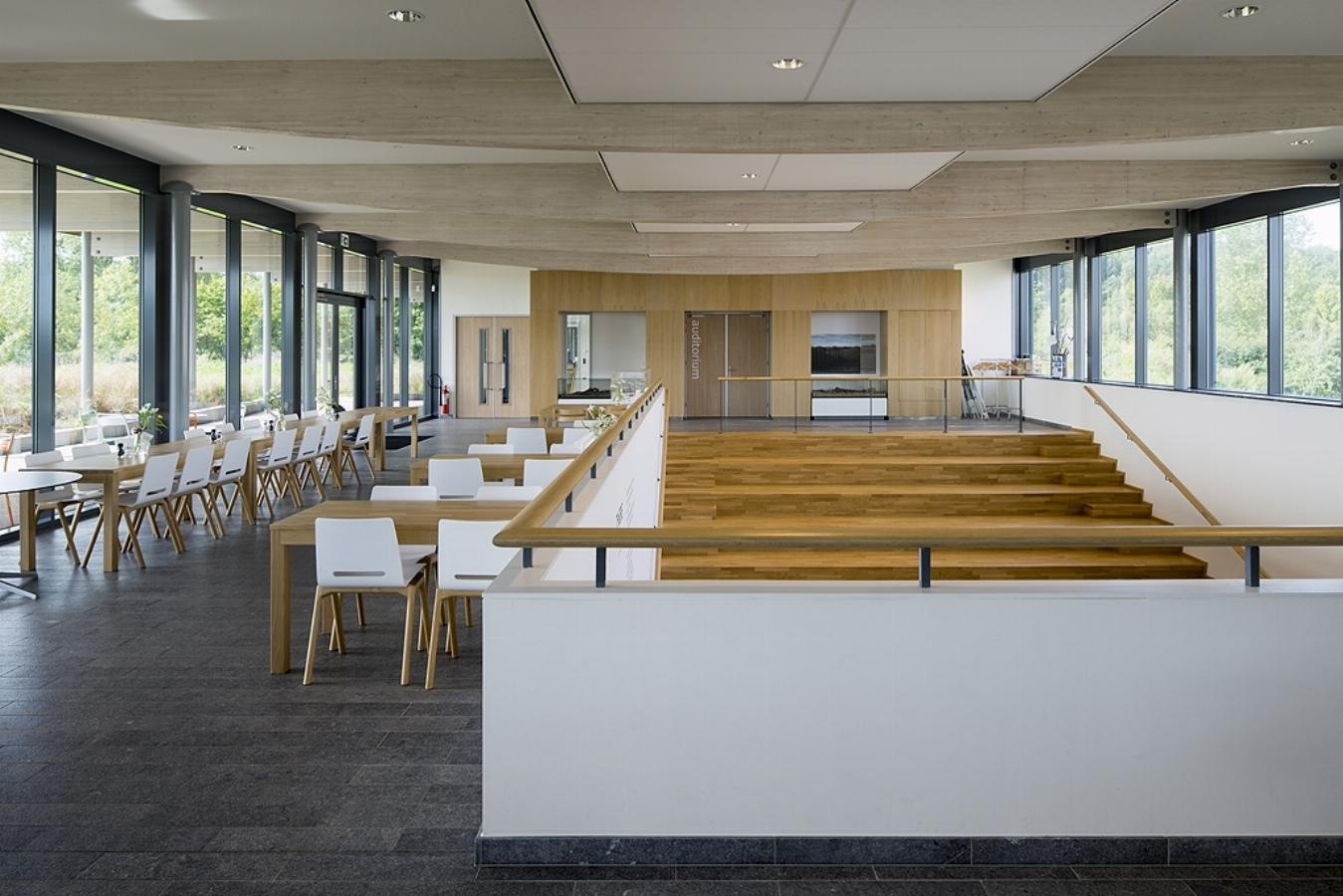
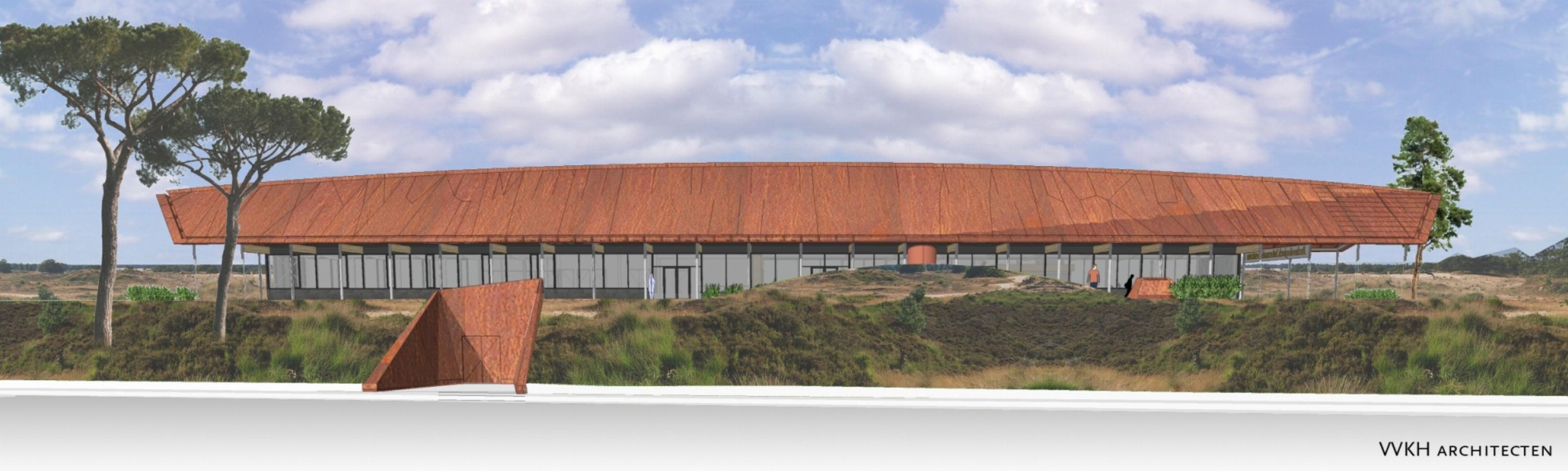
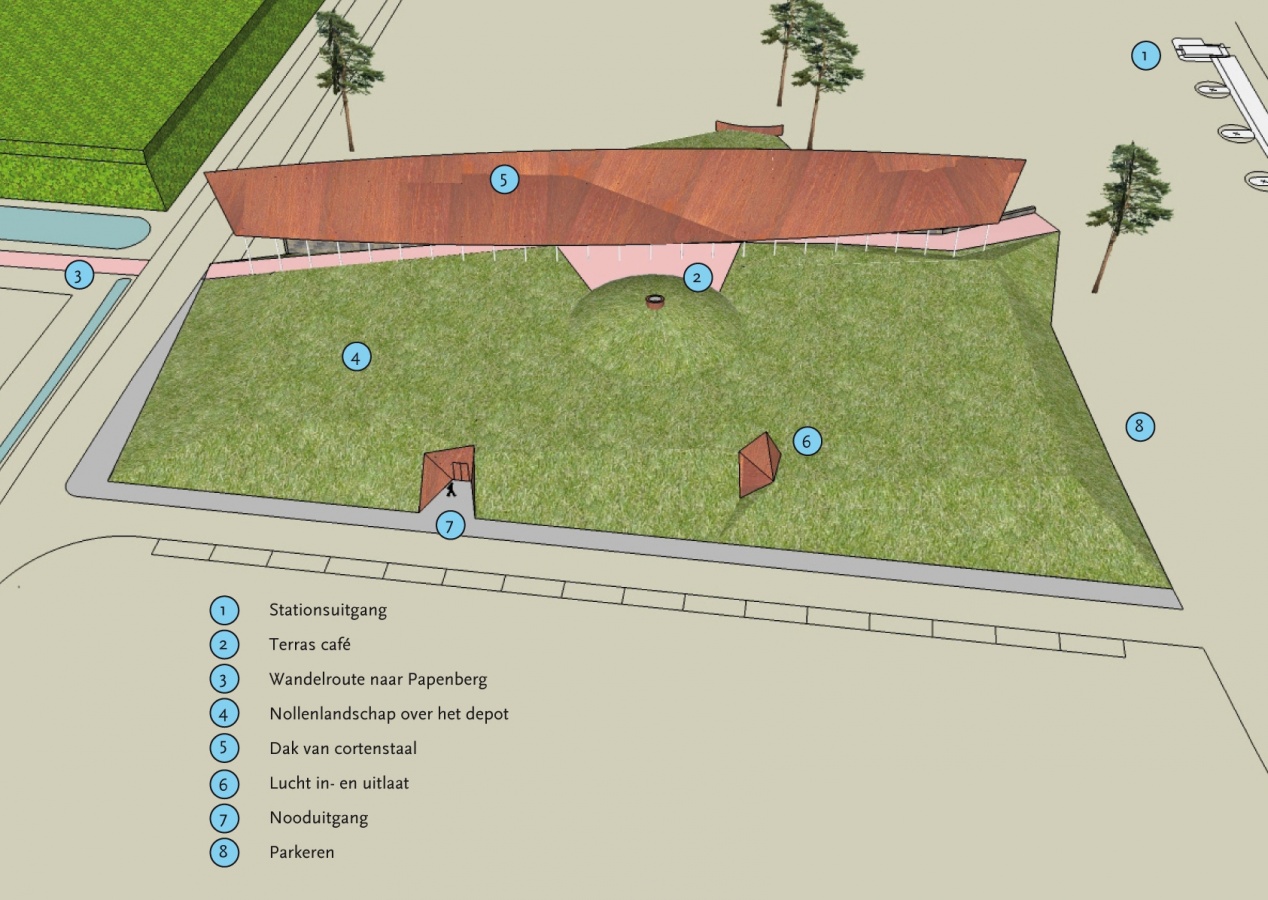
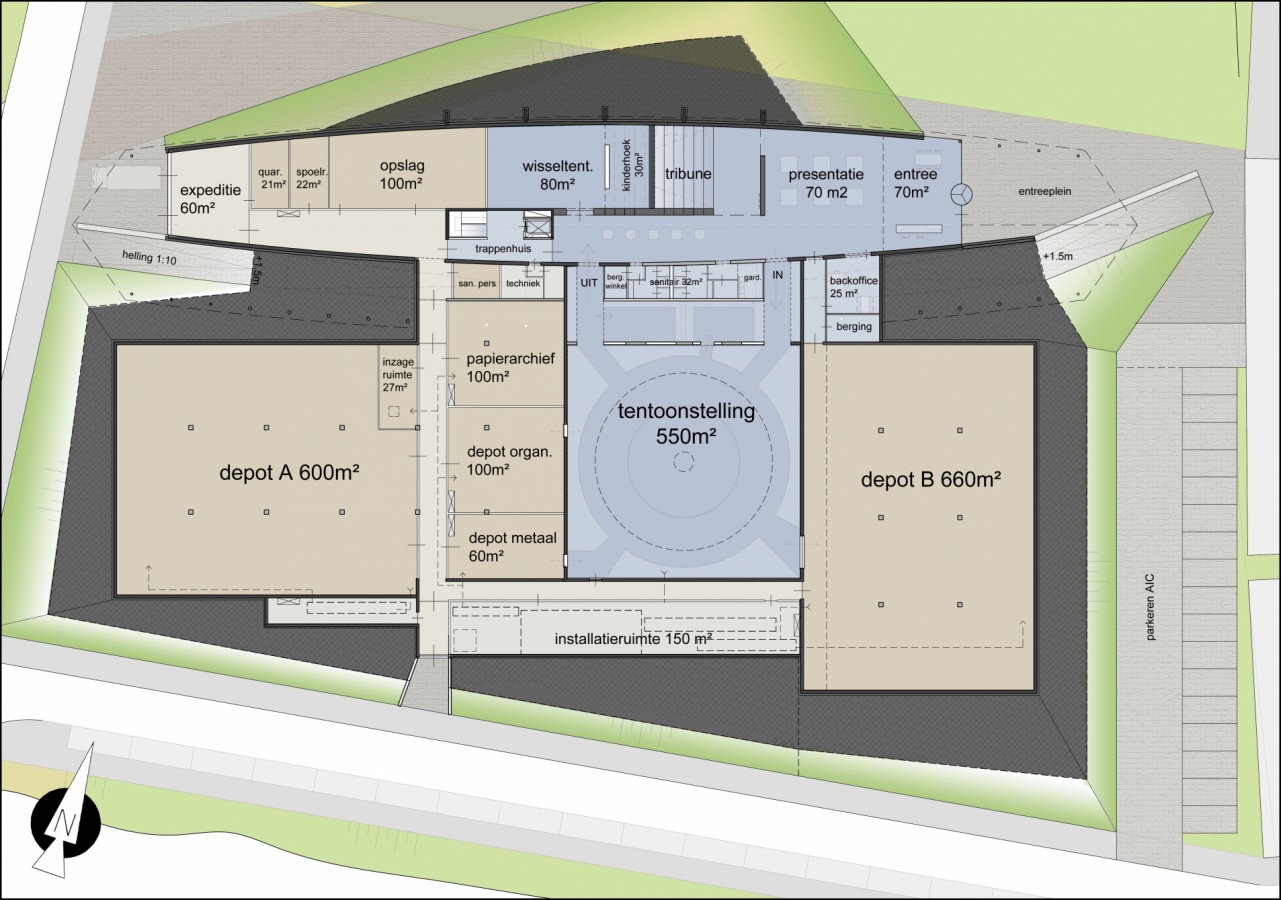
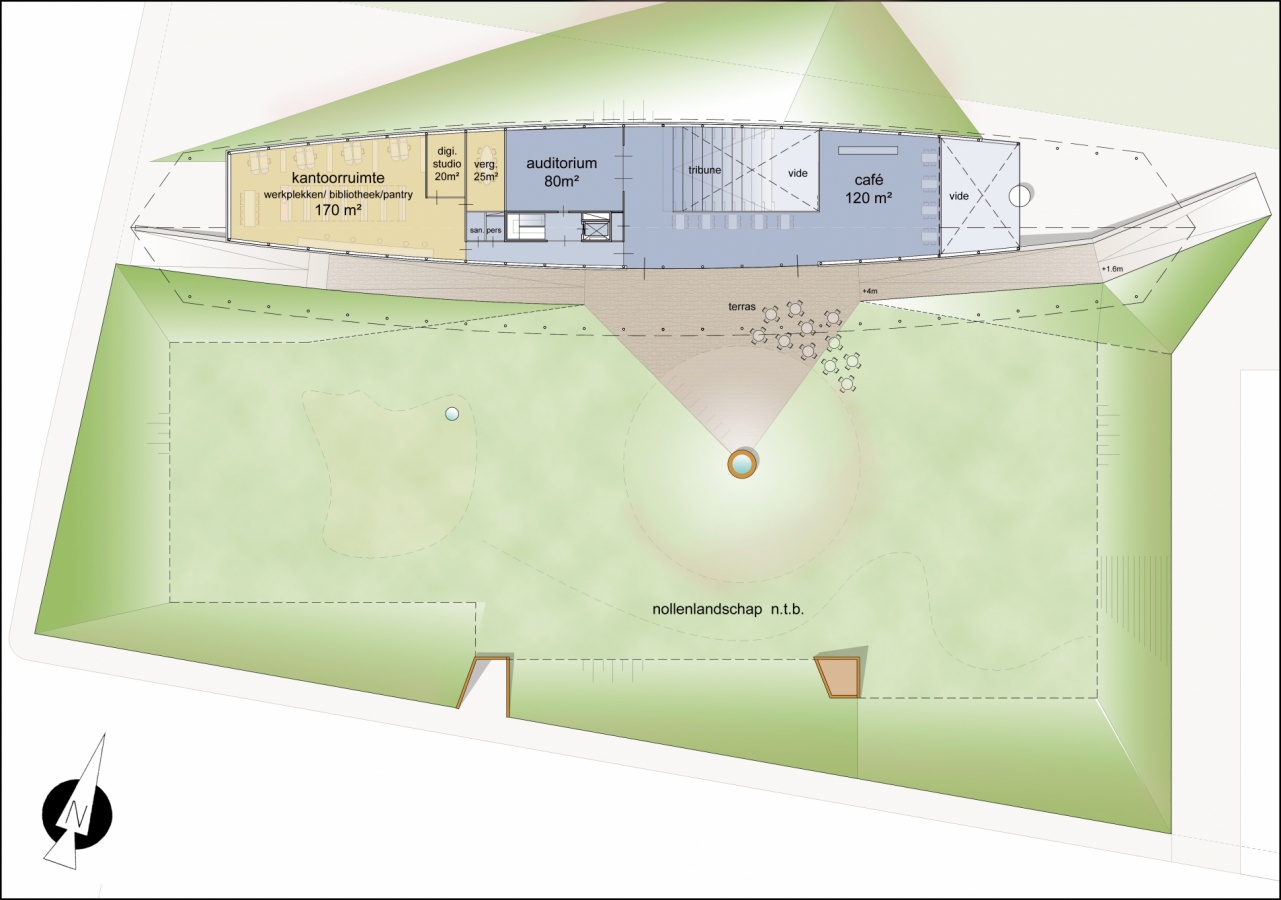
Hilde house has a floor area of 4,480 m2 and is divided into a pavilion and an underground depot. The building is designed with the surrounding landscape. The draft refers to an old dune landscape (so called “nollen” landscape) that is much older than the current shifting sand dunes and can still be found at various places in North-Holland. In the aboveground elongated pavilion on the one side the main entrance, with desk, museum shop, and a space for temporary exhibitions, cloakroom and toilets are situated, on the other side the office staff. On the first floor is a small restaurant with terrace and auditorium. The elongated shape and the 70-meter roof of the building refer to the early medieval farms, as they have been in the area. The curved roof structure is finished with Corten steel sheeting as a reference to thatched farms. The large overhangs of the roof protect the interior from direct sunlight, which allows the use of large glass surfaces. The façade is decorated with stone from Morocco, fossil pintail squid in it, a reference to the archaeological feature of the building. This stone also comes back into the interior.
The depot is about 2,200 m2 and is divided into several archives and the centrally located exhibition space. The hilly “nollen” landscape is, as it were, pulled over the depot. By placing a meter of sand on top of this part of the building a stable climate is achieved in a passive way and only limited installations are necessary in order to maintain a constant temperature and humidity in the depot. By putting strong in design and construction on sustainability House Hilde has an average score of 8.6 on the sustainability label. In addition, the integration of buildings with the landscape certainly has a symbolic value: in the ground is the best place to preserve archaeological treasures.
| Architects | Fons Verheijen, Krijn Tabbers |
| Employees | Albert Kingma |
New hotel formula in Hoofddorp
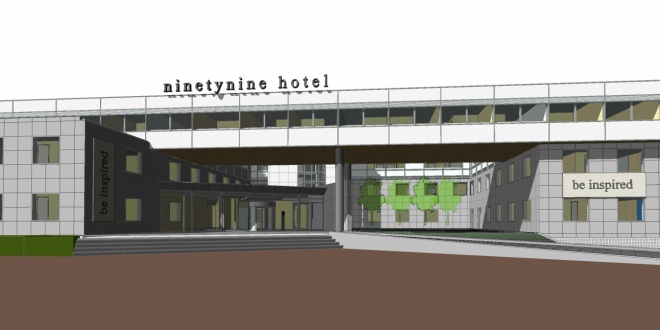
In 2016, we conducted a study on behalf of CTI (Control Towers International) into the possibilities of accommodating a hotel in an existing office building in Hoofddorp. The detached office building with parking garage at the Kruisweg 106 is part of the business park "de Hoek" in Hoofddorp. The building is a stone's throw from Schiphol and Amsterdam and is easily accessible by car and public transport.
We then made the design for the transformation into a hotel with 133 rooms and various facilities, such as a restaurant, bar and lounge.
Based on the study and design, the zoning plan has been adjusted in consultation with the municipality and an interested market party has been contracted: Centro Hotels from Germany. The design was then fully tailored to Centro's wishes. A completely new, trendy hotel formula for the Netherlands will be introduced in the building; the "Ninetynine-hotel Amsterdam", specifically aimed at the younger target group. Vitamin-E has provided the interior design of the Ninetynine formula on behalf of Centro. The new hotel will be a good addition to the current offer in the municipality of Haarlemmermeer.
The demolition work was carried out in 2017, and in November 2018 the transformation of the existing office building into a hotel started.
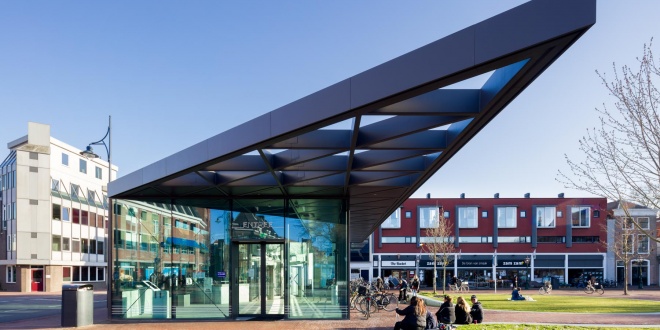
The team with VVKH Architects, Dura Vermeer and Besix has been selected for the design and build of a five-story underground parkinggarage in the historical center of Leiden.
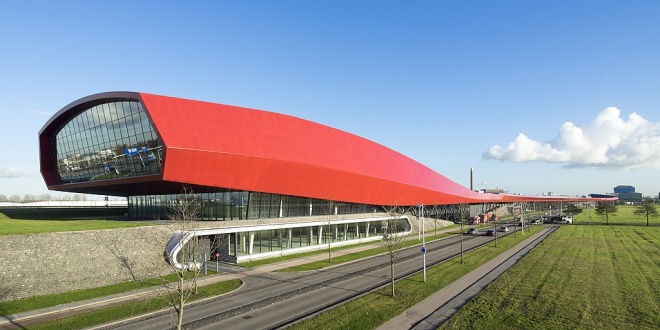
Next to the highway A2 near the centre of Utrecht a spectacular large scale shopping and leisure centre has been realised. The 800 meter long “Ferrari red” complex acts as a noise barrier to the new residential area of Leidsche Rijn. The fluent design of slowly undulating lines is inspired by the perspective of the driver passing the complex in 32 seconds, driving at a speed of 100 km/hour. The fluent lines create an illusion of movement. This building, having a surface area of approx. 65,000m2, houses many retail businesses, a high-quality DIY store, a catering business (fast-food restaurant) and leisure facilities (discotheque, sports or multi-purpose hall). On the roof is a 1400 spaces large car park. The building together with the ‘Cockpitgebouw’ at the Wetering Noord area, designed by the architect Kas Oosterhuis, are the showpiece of the city of Utrecht.
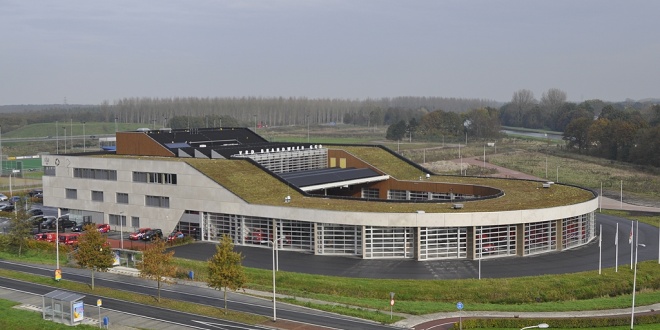
This new building had become a recognisable beacon on the edge of the city of Assen. The building accommodates several emergency services such as a firestation, the Area Health Authority and the Safety Region Drenthe. Together with the Koopmans Bouwgroep, VVKH won the design & build competition. The new building is compact, sturdy looking and radiates preparedness for an emergency. All functions have been placed under a single roof, organised around a central atrium. From the atrium there’s a view on the court yard where fireman are practicing. The firetrucks are stationed around the court yard, ready to tear out. Offices are concentrated on the higher floors overlooking the highway A28. The building has a very high sustainability-rating (Dutch GPR-score 8,0).