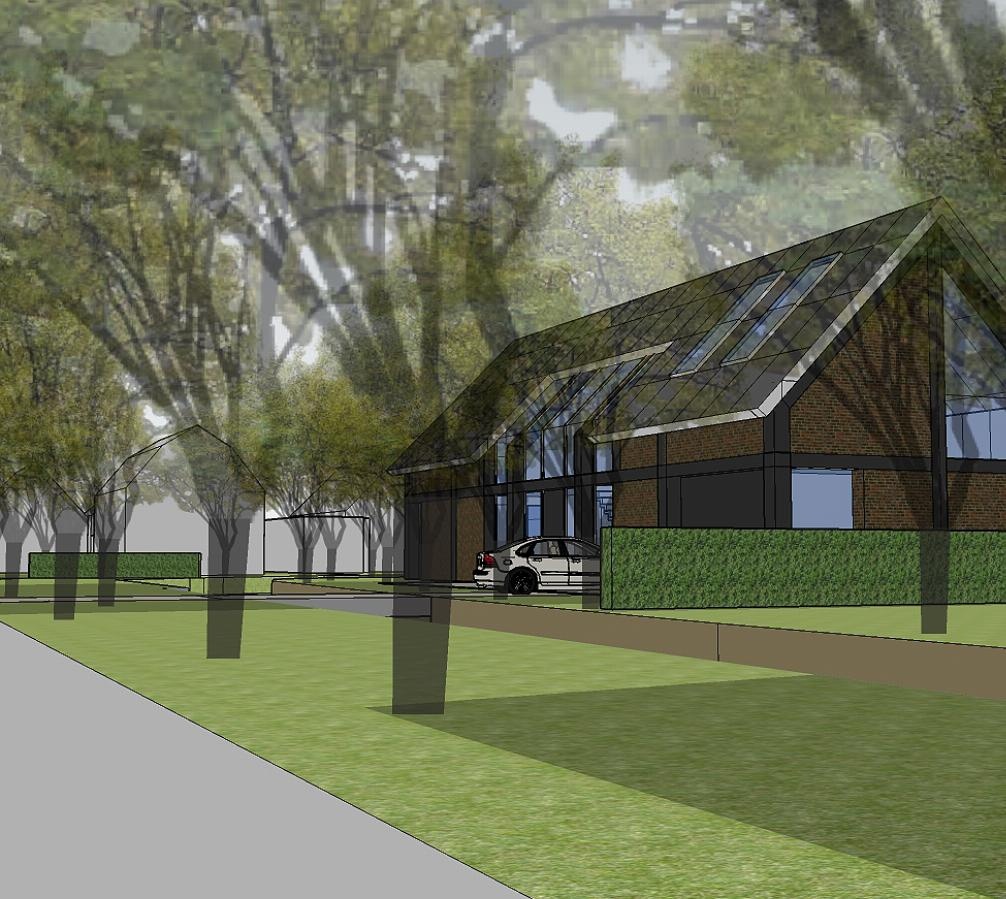
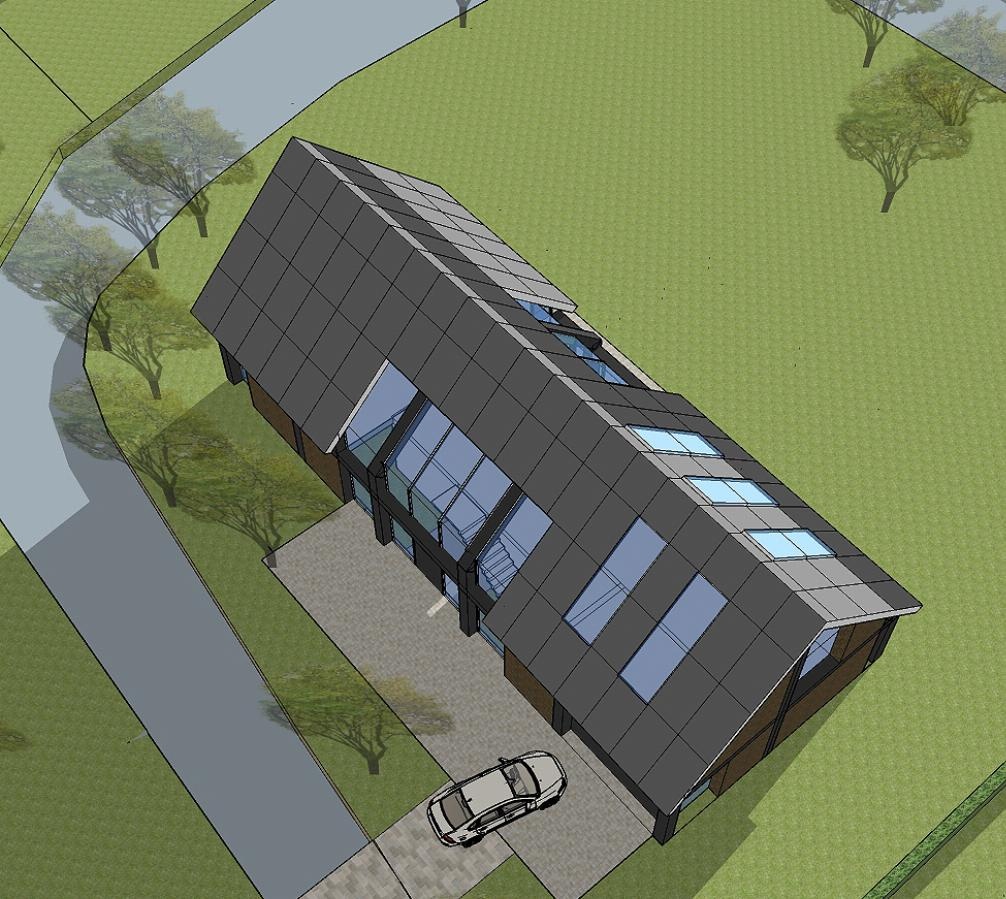
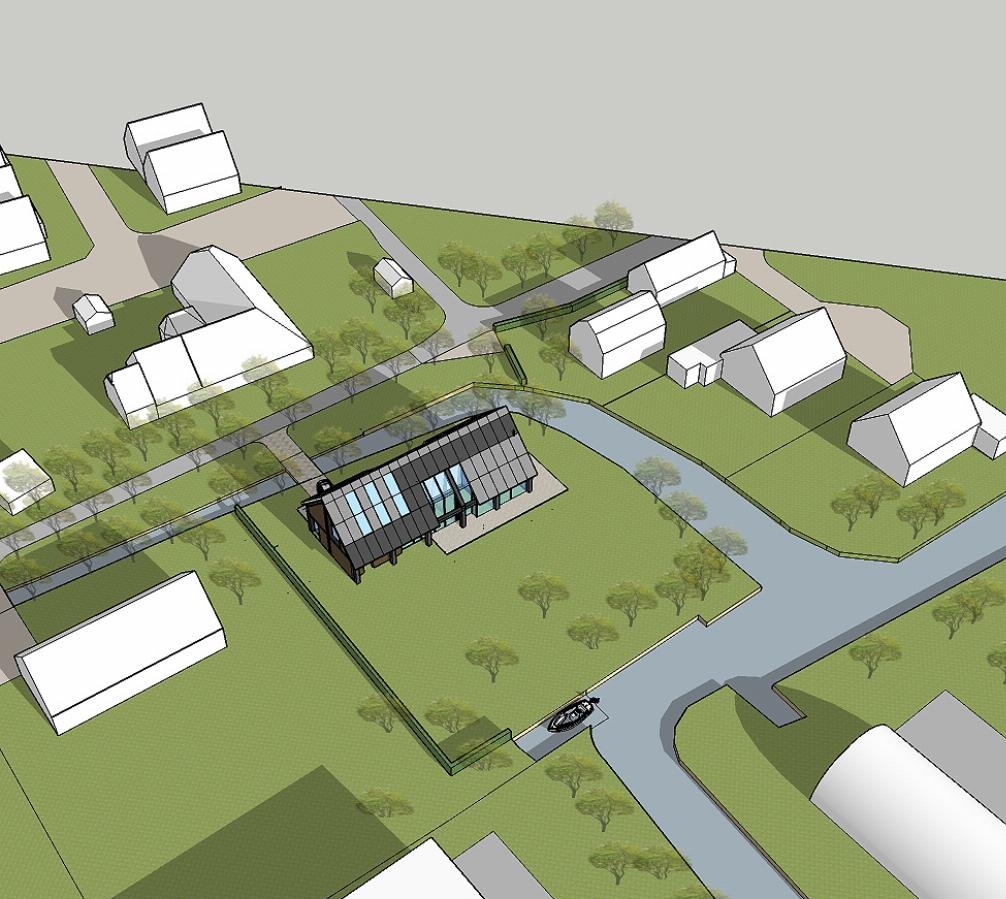
The ‘Oud Woelwijk’ farm, the oldest part of which dates from before 1528, was still standing at the beginning of the 20th century in a sea of lands and bushes to the south of the village center of Voorschoten. The farm formed an ensemble with the country estate of Roucoop. The country estate no longer exists, and from 1930 the built-up area has been advanced. Yet the Essenlaan is still a protected leafy lane that leads to the old farm. For a plot directly on the other side of the farm, we have made a design for a contemporary energy-neutral home. The single-storey house with hood is designed as an outbuilding of the farm. You reach the plot via a bridge that cuts through the historic woods at a clever location. A very spacious home has been designed partly due to a number of voids. The volume is still closed on the farm side. On the south side, the house opens to the large garden.
| Architects | Gerrit-Jan van Rijswijk |
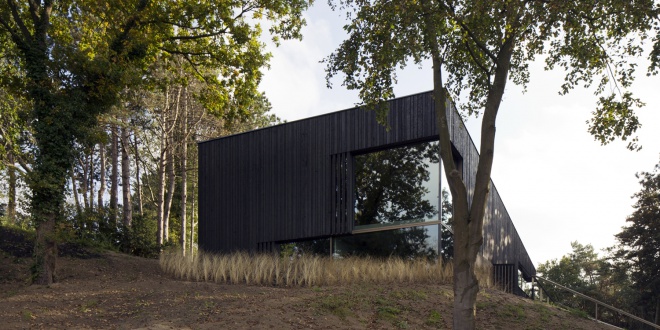
Villa Meijendel takes its name from the nature reserve in which it is located, where a forest meets a valley of dunes. The house is constructed from concrete and set into the side of a sandy slope. The building's design aims to create a dialogue with its surroundings, both through the way the form and materials engage with the landscape, and through the use of glass to provide views out from and into the house.
The boxy geometric structure is entirely clad in charred timber, creating a textured black surface that appears different depending on how sunlight falls on it. The exterior finish, inspired by the ancient Japanese shou sugi ban technique, also helps to preserve the wood. Sometimes the house is almost invisible against the dark edge of the forest, sometimes it sparkles in the sunlight because of the glittering charred wood, as such forming a background for the play of shadows of tree trunks and branches. The villa hides and reveals itself in the landscape.
The property has its entrance on a middle level accommodating an office and two bedrooms. Stairs ascend to an open-plan kitchen and living space, and drop down to a master bedroom and gym room.
The living room features a full-height corner window that looks out through the trees towards the dune valley. A lower window facing to the rear and a large glazed surface lining the adjacent double-height circulation area face out onto the forest. At the far end of the first floor, sliding glass doors lead out from the kitchen onto a terrace.
The material palette –concrete, steel and anodised aluminium– was chosen to complement the tones and textures of the surrounding environment. Each material is applied in a raw, untreated form. Internally, the walls are finished with smooth concrete, while the rough-sawn Douglas fir beams supporting the ceilings feature a distinctive grain.
West 8, Adriaan Geuze, is responsible for the garden design.
Photography is by Christian van der Kooy
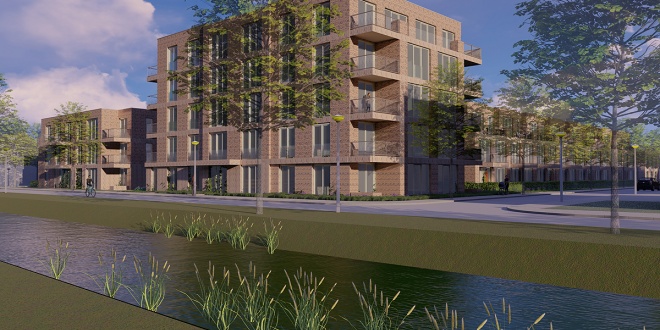
Housing association St. Willibrordus wants to renew 40 duplex houses along Stompwijckstraat in Wassenaar. The program provides for the realization of 86 social rental homes, mainly for starters and seniors. The plan area is located in a village extension from the 1960s. At the time of completion, this was the northernmost district of Wassenaar and it overlooked the meadows and farms. The district is spacious with a focus on greenery. In the development of the plan, we link up with the basic qualities of the neighborhood with spacious profiles with front gardens and lots of greenery. In order to be able to make the closed building block, the Stompwijckstraat in between will be removed. This provides space to solve parking for residents within the building block. The plan also provides for a communal courtyard with a social facility adjacent to it.
To create privacy in the front gardens, we create a green strip between the front gardens and the sidewalk that remains the property of the municipality. The existing structure of mature trees will be maintained. There is a distinction between a formal front, with zoom houses on the ground floor all around that are accessible from the street side, and an informal rear with parking under an open green deck (through which existing large trees protrude) and the access to the houses on the upper floors. through wide galleries. In the long streets, the building blocks match in scale with the buildings on the overlying because the top (third) storey has a setback in relation to the building line. On three sides of the building block, the balconies of the houses on the upper floors hang from the building blocks as ornaments. The balconies provide contact with the street and respond to the orientation with respect to the sun by means of a rotation and still show the echo of the current situation. The building block responds somewhat more robustly to the northern park side. On the northwest side, one of the blocks reacts in height to the adjacent apartment building.
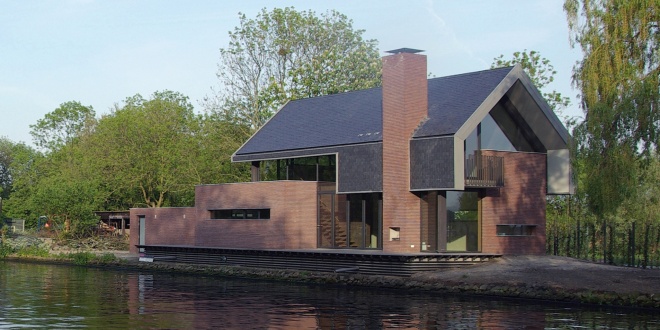
On a triangular plot, where the historical Vlietweg diverts from canal the Vliet, VVKH designed a house based on experiencing the Vliet. Rough, brick walls engage each other, vaging what is inside and outside. Water and landscape are part of the house.
At the entrance you're being received in a yard with monumental trees. The aperture in the wall give a first glance of the Vliet. From the high entrance it's three steps up to enter the livingroom giving a panoramic view over the Vliet, but shielded from the road.The folding window opens completely and extents the livingroom straight to the edge of the water. A stair with cantilevered steps and a glass balustrade leads to the first floor.
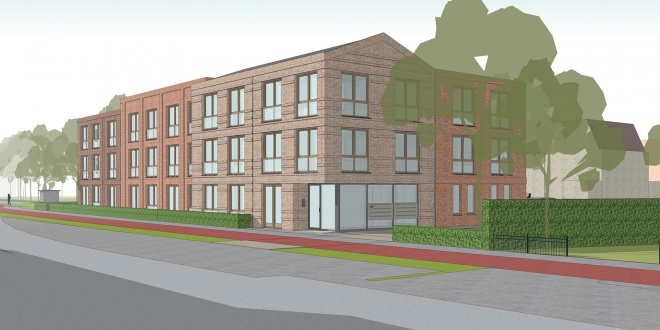
For the Hoge Rijndijk location in Zoeterwoude, a new construction plan has been developed for an apartment building with starter homes, after demolition of the existing office building. The building stands on the edge of the large-scale buildings that are currently being built between the Oude Rijn and the Hoge Rijndijk, and the existing residential area from the 1980s. It adjacents to a small park on the east side. The new building has been placed in the building line of the Rijndijk and thus strengthens the profile of the road. The parking spaces are located in the rear area, lined by green. By dividing the building mass in three, a smaller scale is created, which is further reinforced with differences in brickwork and roof shape. The building will contain 34 residential units of approximately 50 m2 and a bicycle storage. An extremely energy-efficient and sustainable design is achieved with individual heat pumps and solar panels on the roof.
The permit application is being processed, implementation is expected in 2021.