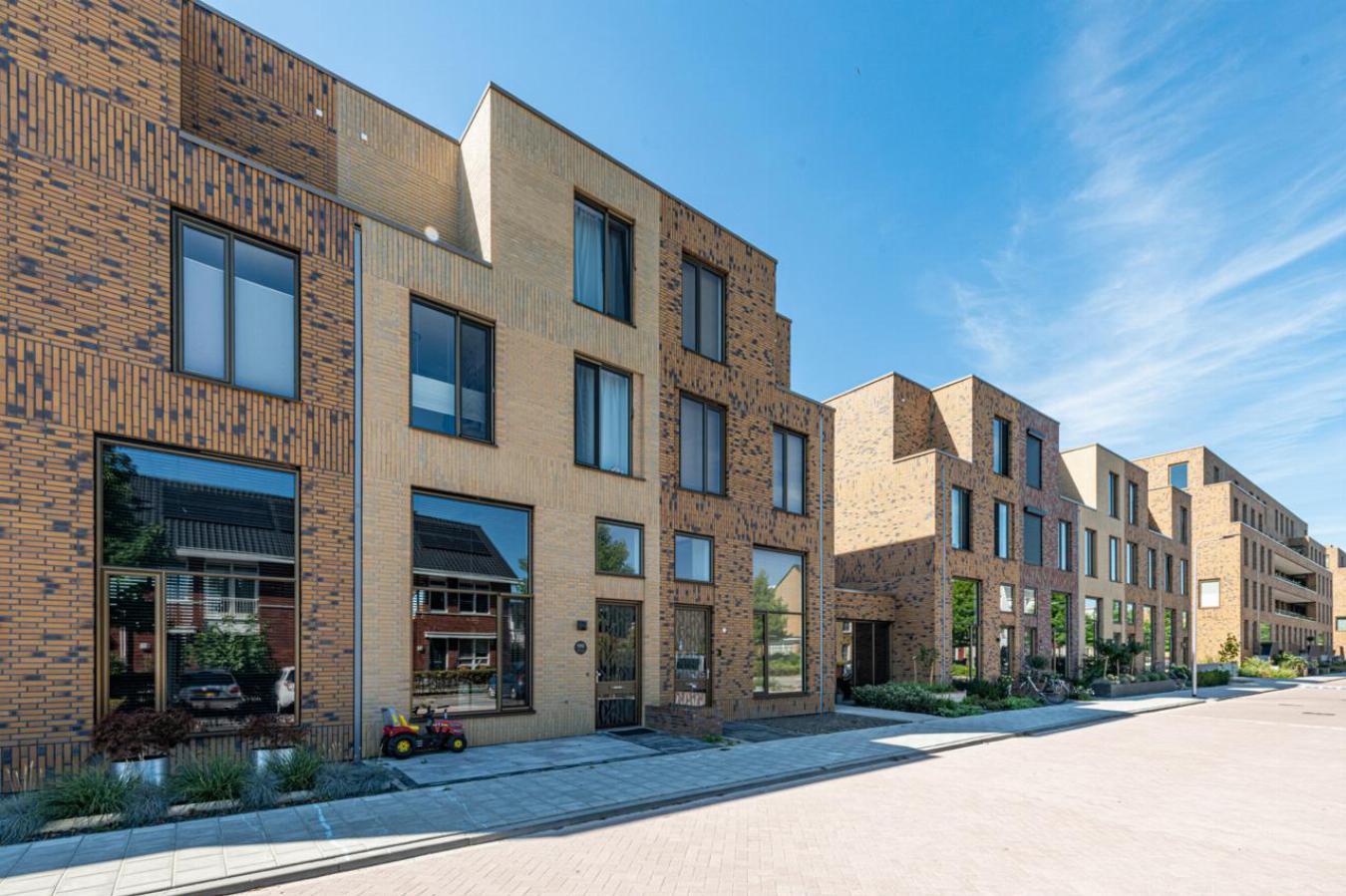
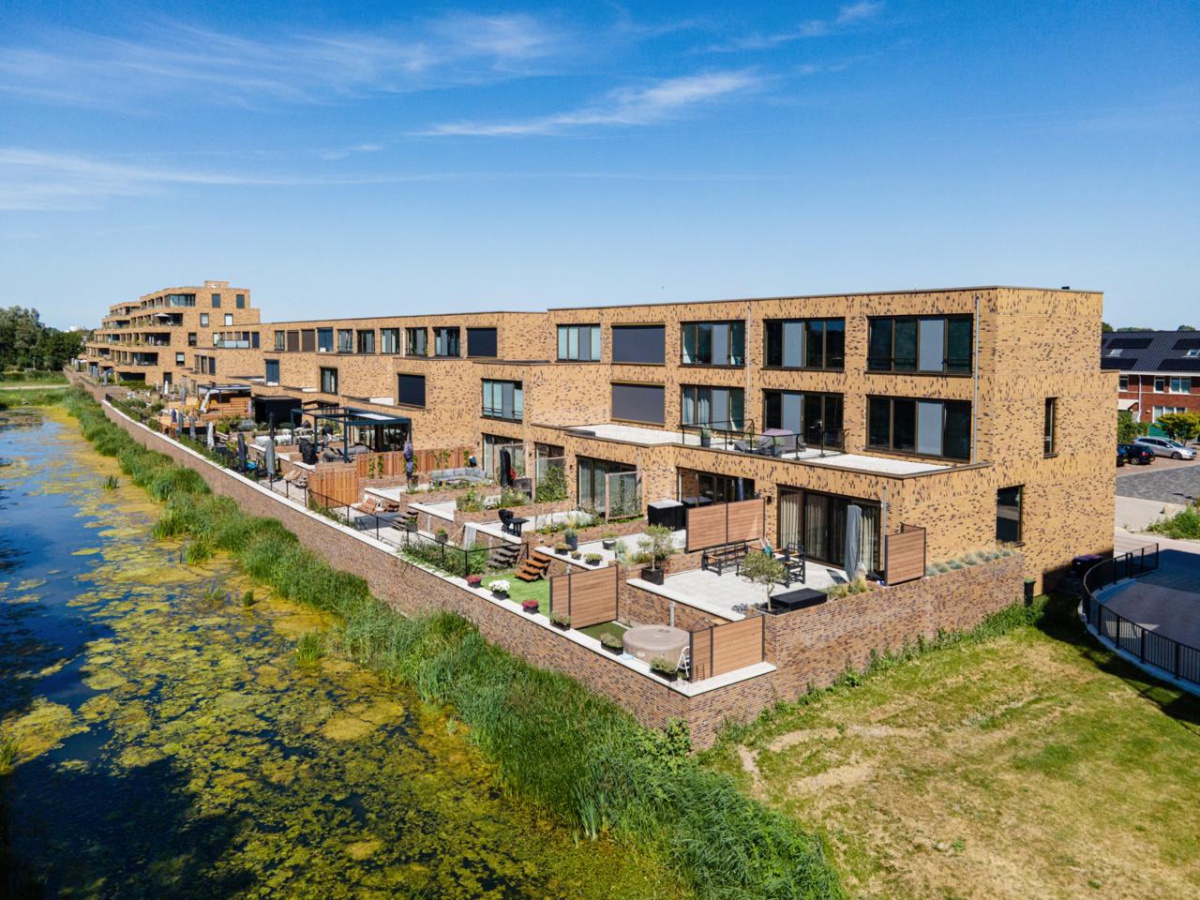
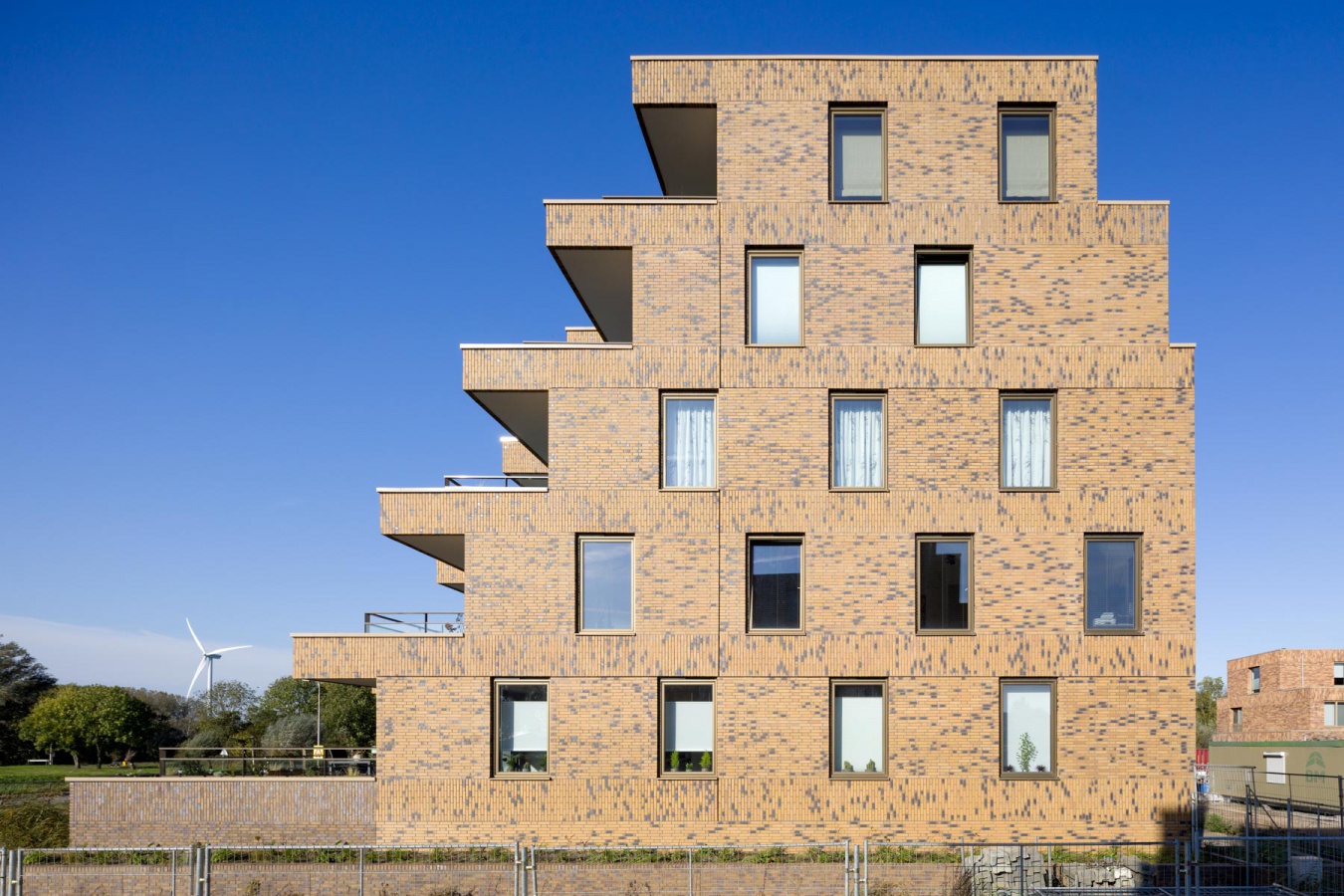
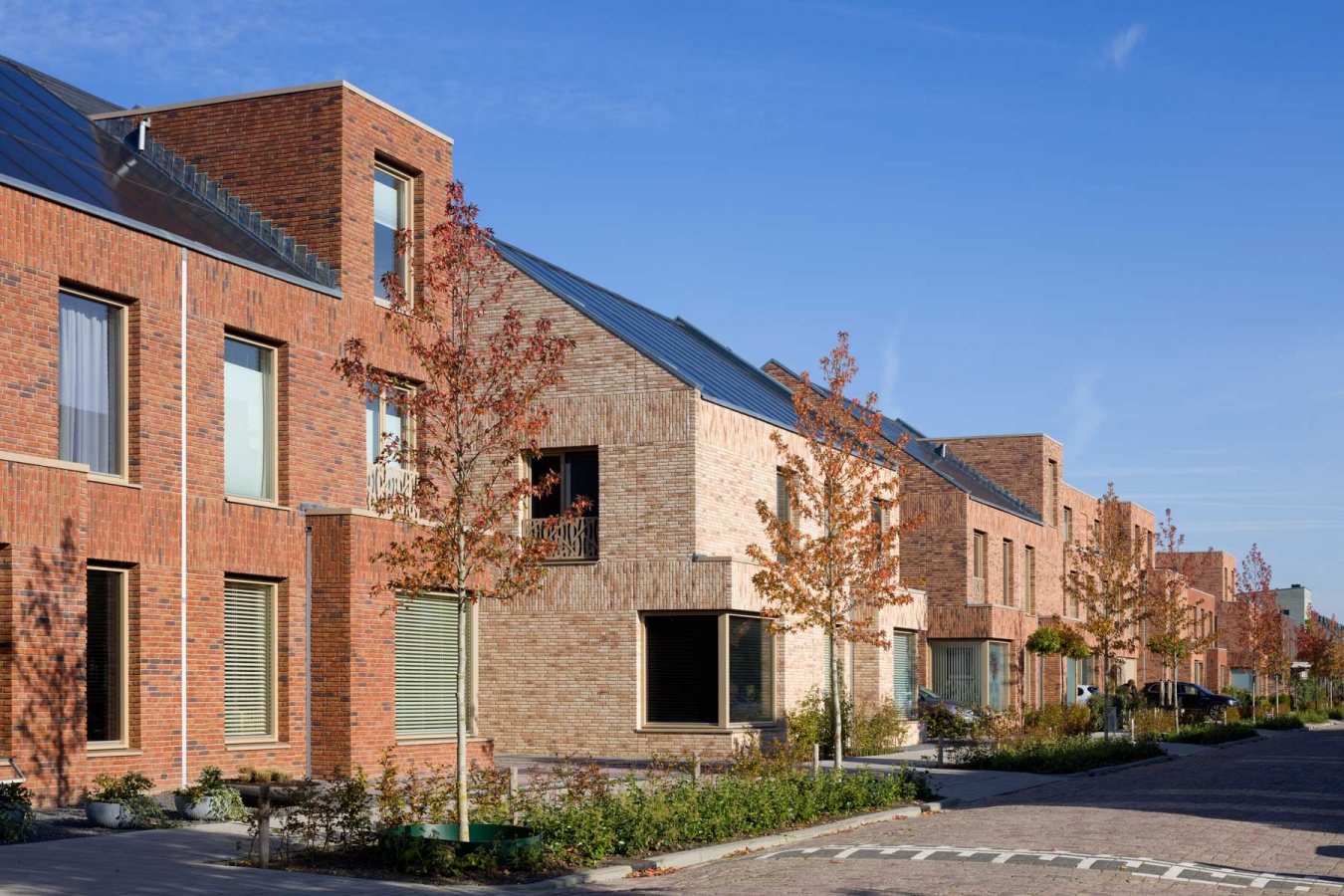
"PURE LIVING"; the winning housing concept for the ‘Klop’ location in Alphen aan den Rijn
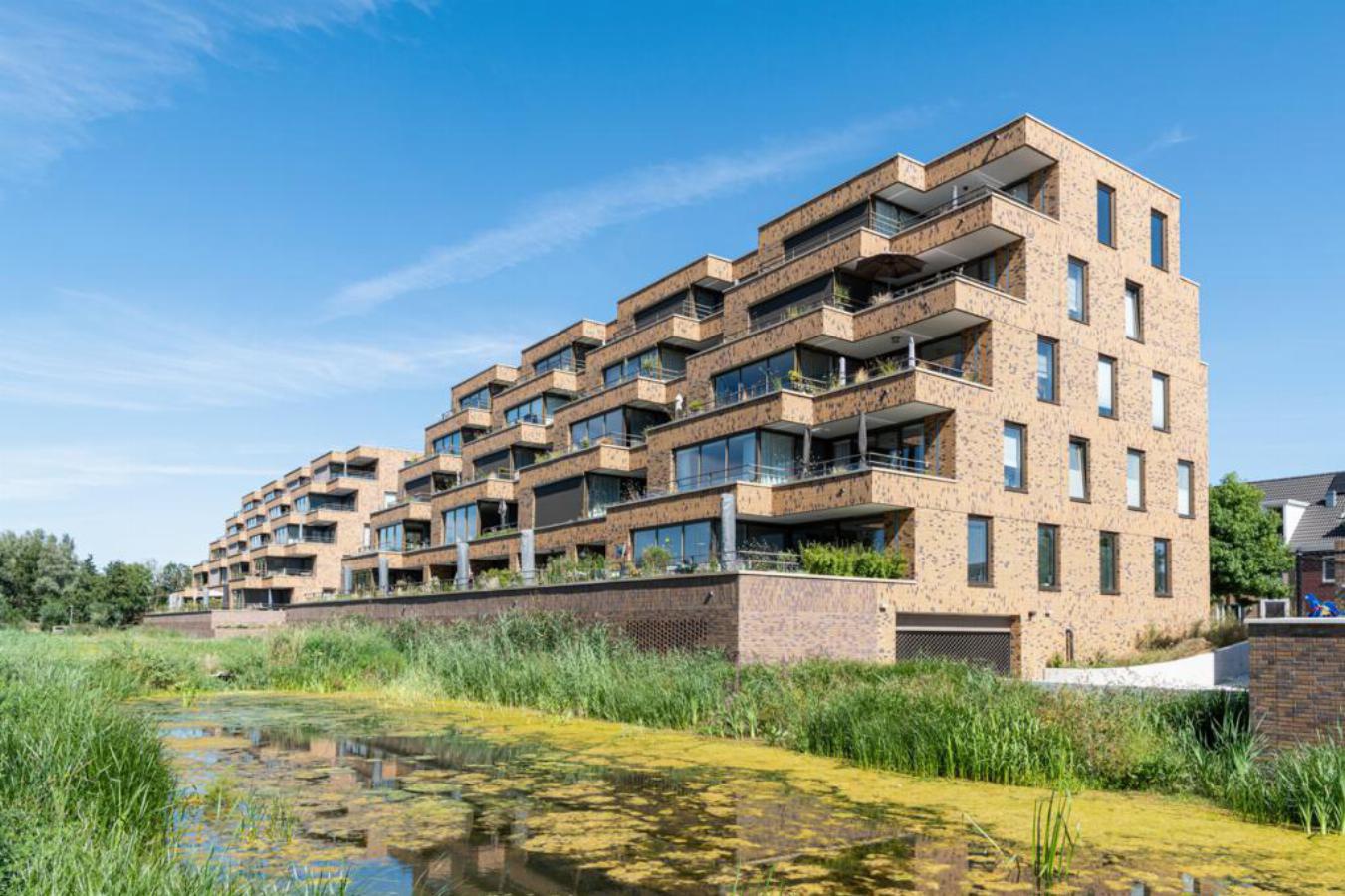
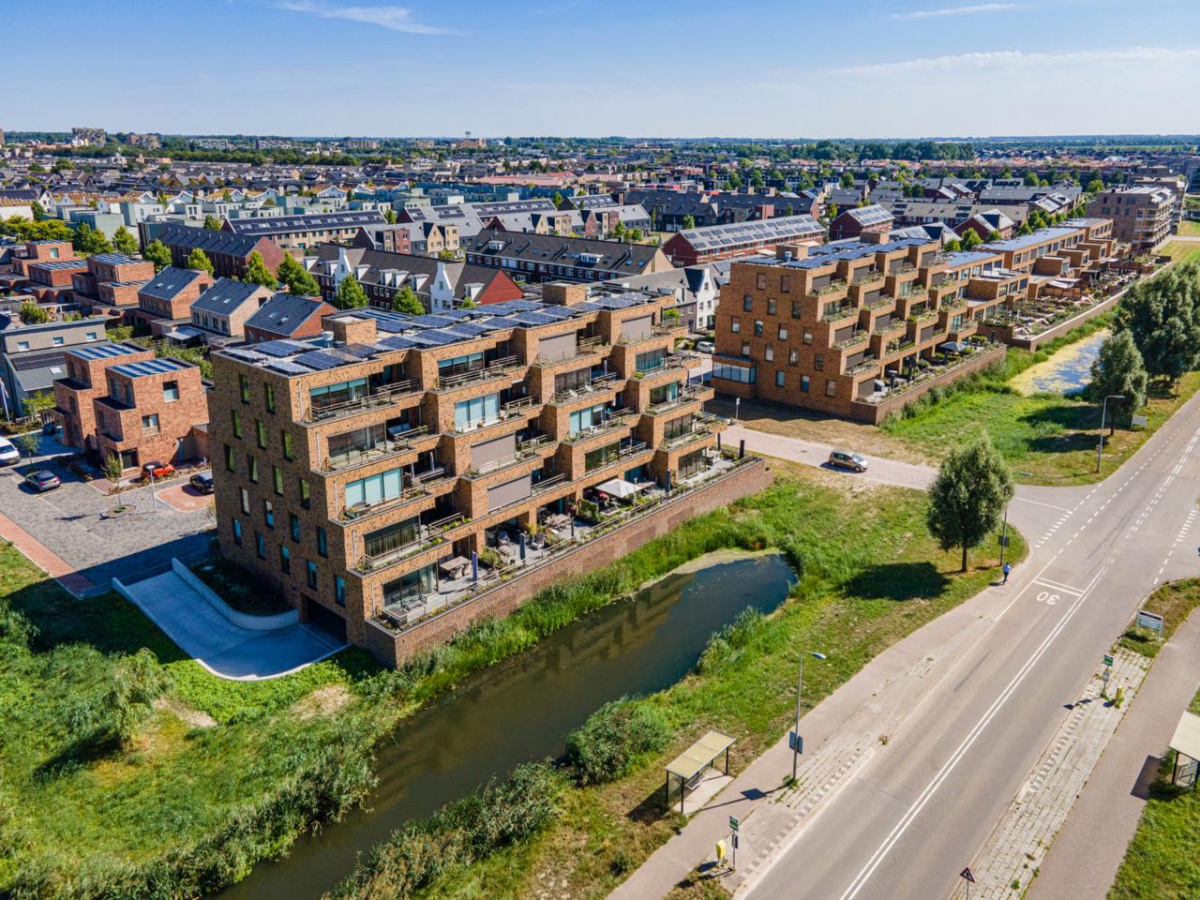
Together with Bemog Projectontwikkeling we have developed a vision for 3rd stage of this location in Alphen aan den Rijn. The location is the final piece of the residential area of Kerk en Zanen. It is located on the edge of the Green Heart, with beautiful sight lines on the polders. From the N11, the peripheral buildings will become the first sight of Alphen aan den Rijn.
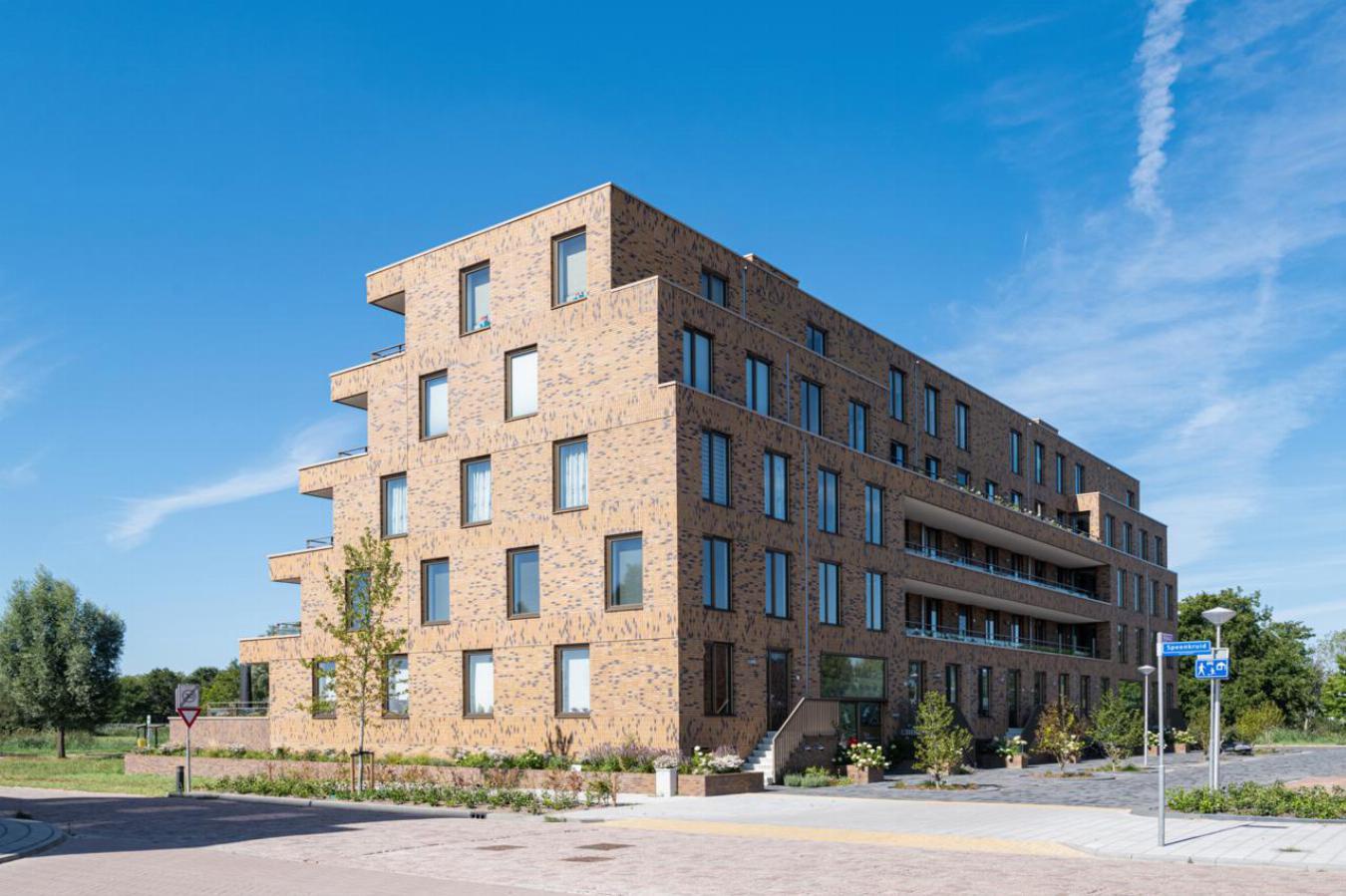
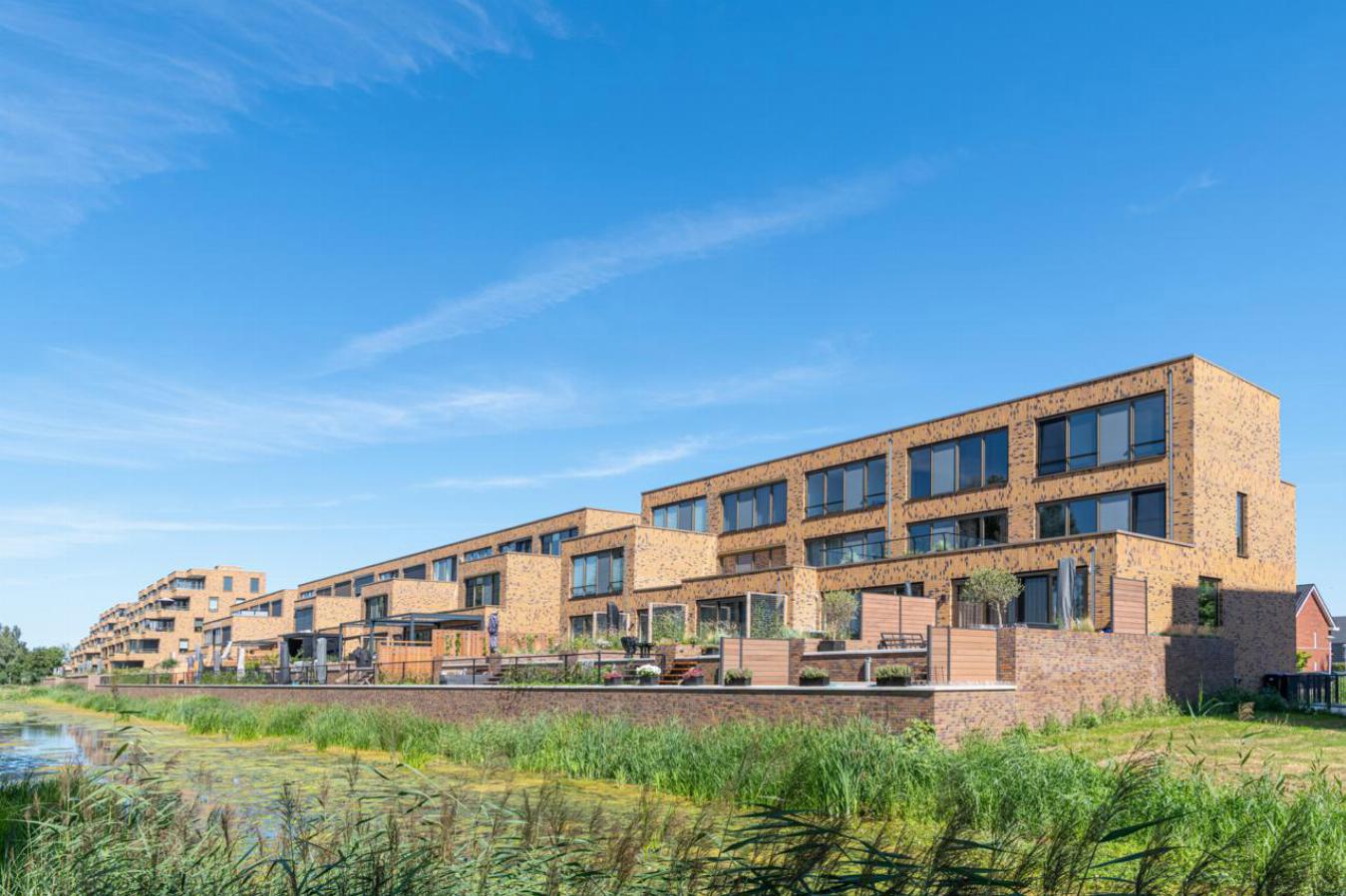
A sustainable plan has been developed for this location (zero on the meter), which in terms of architecture fits seamlessly into the green environment. The 'Pure Living' concept consists of 40 terrace apartments, 20 water houses, 16 linked villas, a utility and neighborhood facility and a built-in parking facility. The peripheral buildings with the linked water houses and the two apartment buildings form the green boundary of the polder landscape of ‘het Groene Hart’. The greenery of the polder is visually extended into the buildings by giving each apartment its own (terrace) garden. The semi-detached villas are positioned in various ways and are adapted according to buyer's wishes.
| Architects | Ronald Knappers, Thomas Gillet |
| Client(s) | Bemog Projectontwikkeling |
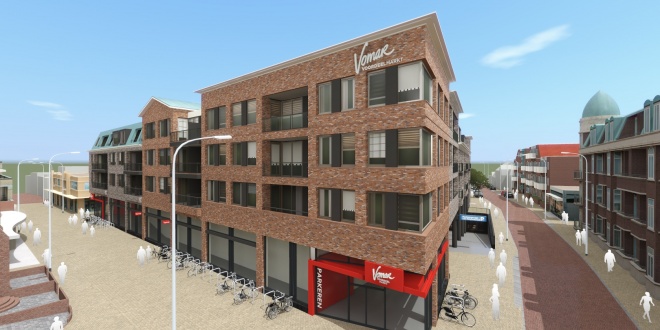
Urban development and architectural integration “Vomar” location, corner of Abraham van Rooijenstraat and Maarten Kruijtstraat in Noordwijk
From an urban planning point of view, the contours and height of the building plan were determined by the municipality of Noordwijk. The plan clearly defines the streets Abraham van Rooijenstraat and Maarten Kruijtstraat, in line with the existing street profiles. Gasthuissteeg will also have a clear boundary with this building plan.
The main mass has an intermediate scale between two worlds present in the environment. On the one hand, there is the smaller-scale village development of the Hoofdstraat and on the other hand, the large-scale hotel development. The mass of the new building block to be built is 3 storeys high plus a roof storey. It is articulated into a number of volumes, softening the scale of the building block. These volumes are made independent by different colors of masonry and roof finishes. With a play of rhythm between balconies, windows, tires, roof moldings and a green-copper-colored roof, the building blends in well with the seaside resort architecture of the environment. The mass on the Gasthuissteeg is 2 storeys high. It has a green facade with window openings. On the north side of the plan, the existing firebreak will be closed and the buildings will close directly on the adjacent plot.
The plan is mainly sustainable because of the triple land use. The building block has an underground floor, on top of that a storey layer, above that a parking deck for the houses and 42 houses.
Abraham van Rooijenstraat is an important access road. That is why functions such as the entrance to the underground parking garage, the entrance to the parking deck on the 1st floor in front of the houses, and the entrance to the expedition have been made here. The Kruisstraat will become more traffic-calmed. This will be the world of shopping as it is at the Hoofdstraat. This is where the shopping functions will be located, which are accessed via two clear entrances at the corners. These entrances are clearly visible from the Hoofdstraat and from the Grent.
The entrance to the houses is on the north side. This will give the existing loading and unloading yard, where other residential accesses are located, a quality impulse. The gallery facade, which is hardly visible from the public space, is conceived as a veranda world. It's a light world of painted wood.
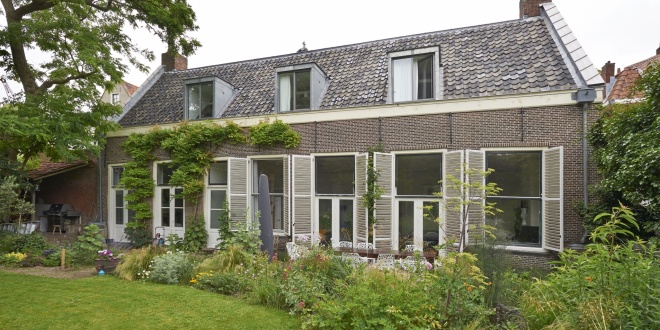
Together with restoration contractor Burgy from Leiden, the back house, the garden house of the house at Garenmarkt 9 / 9a, has been completely restored and modernized. The new owner lives in this part. The front house with a number of apartments / studios for rent will remain unchanged for the time being.
The house at Garenmarkt 9, 9a is also popularly known as 'Thorbeckehuis'. The house has one of the largest private backyards in Leiden. In the Secret Annex, the garden house (No. 9a), the liberal statesman Johan Rudolph Thorbecke wrote in 1848 the revision of the Constitution, which turned our country into a constitutional monarchy. Thorbecke has lead three cabinets from 1849. A gable stone in the national monument reminds of the habitation by the liberal statesman and professor of law (1798-1872).
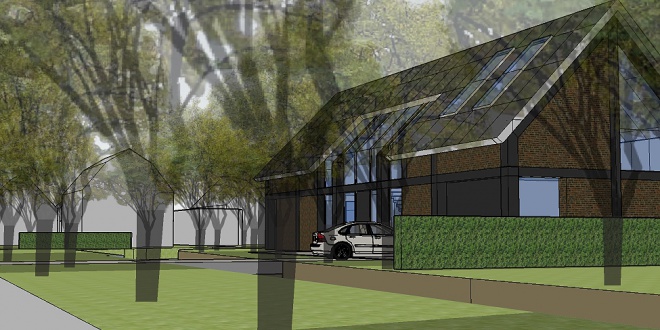
The ‘Oud Woelwijk’ farm, the oldest part of which dates from before 1528, was still standing at the beginning of the 20th century in a sea of lands and bushes to the south of the village center of Voorschoten. The farm formed an ensemble with the country estate of Roucoop. The country estate no longer exists, and from 1930 the built-up area has been advanced. Yet the Essenlaan is still a protected leafy lane that leads to the old farm. For a plot directly on the other side of the farm, we have made a design for a contemporary energy-neutral home. The single-storey house with hood is designed as an outbuilding of the farm. You reach the plot via a bridge that cuts through the historic woods at a clever location. A very spacious home has been designed partly due to a number of voids. The volume is still closed on the farm side. On the south side, the house opens to the large garden.
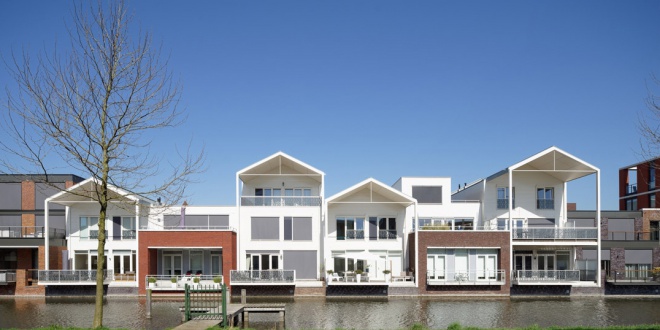
The plan ‘de Biezenhof’ is part of the new residential area ‘Waterrijk Woerden’ and is situated along a natural watery region. The urban scheme of ‘Waterrijk Woerden’ was designed by West 8 and refers to the traditional Dutch water cities such as Delft and Leiden. The design is made in collabiation with Klunder architects. Almost every dwelling is individual and has a specific connection to the water.
The plan of Biezenhof is divided in two parts: there is one block of family houses around a courtyard on the edge of the lake, and there is a row of water houses and apartments along a canal.
The buyers of the houses could choose between several types of houses as well as between four architects. Due to the possibilities in combining type and architect, not one house is the same. Every house has a singular character: the lake houses have a beautiful view on the lake, the street houses have a garden, and the canal houses enclose big terraces. In the public space there are a few parking places, the majority of parking places are organised in garages.
The houses designed by Knappers are characteristic because of the huge roof overhanging the façade. This contributes to the shelter-against-the water identity of the houses, and refers to the greenhouse glass constructions in the low lands. At the street side these houses are made of brick, which gives them a closed and open (to the light and the water) individuality.