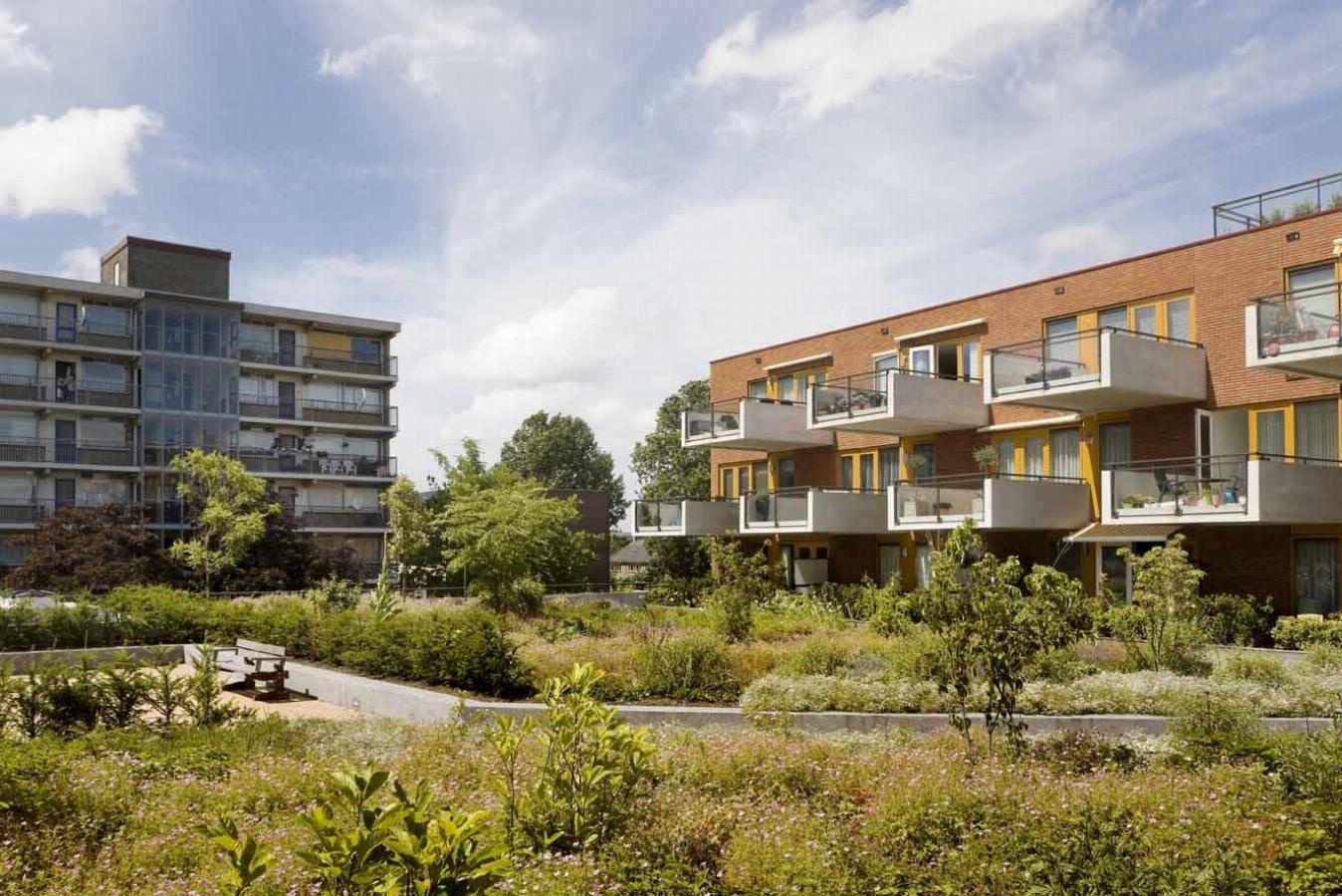
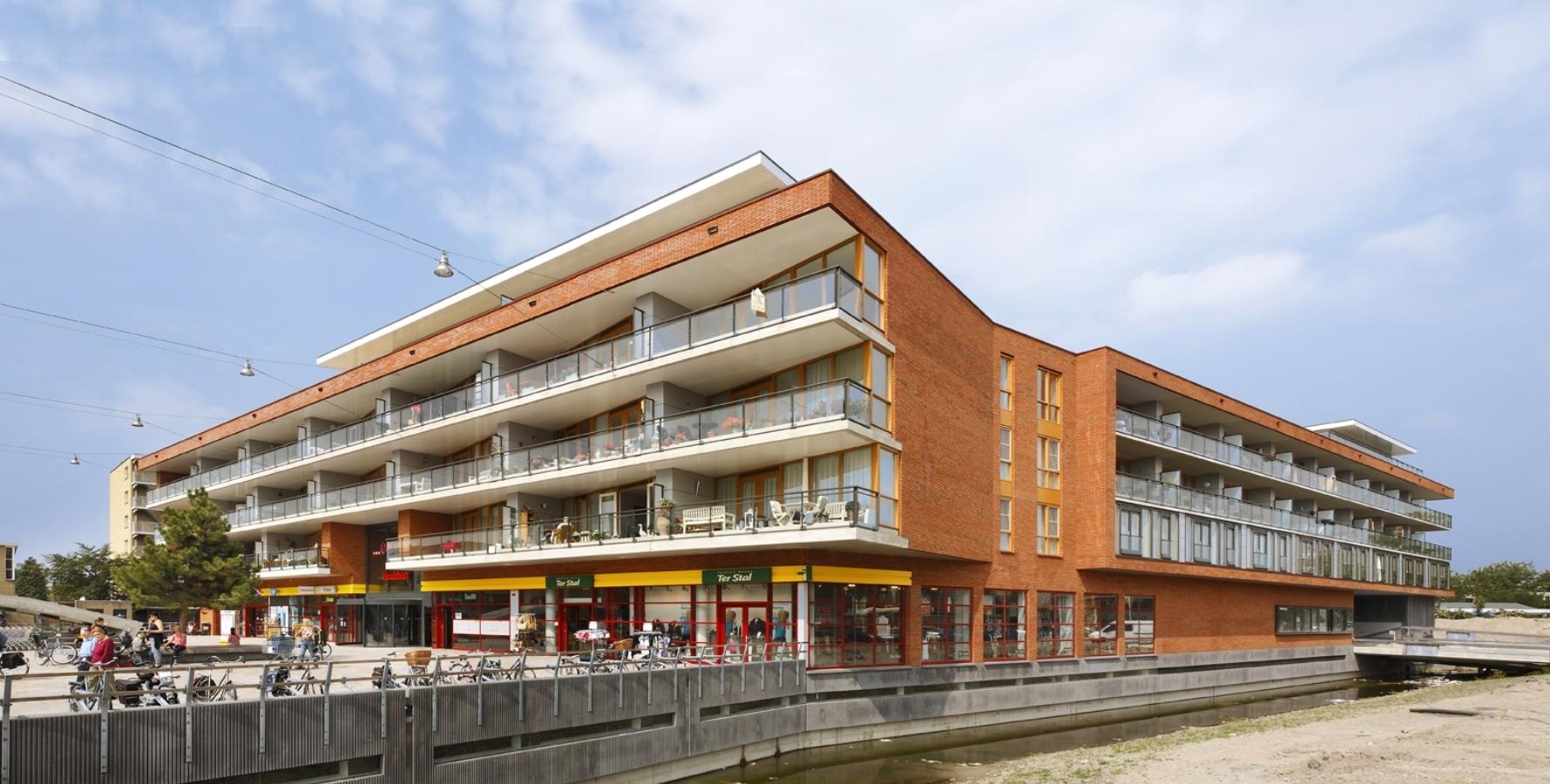
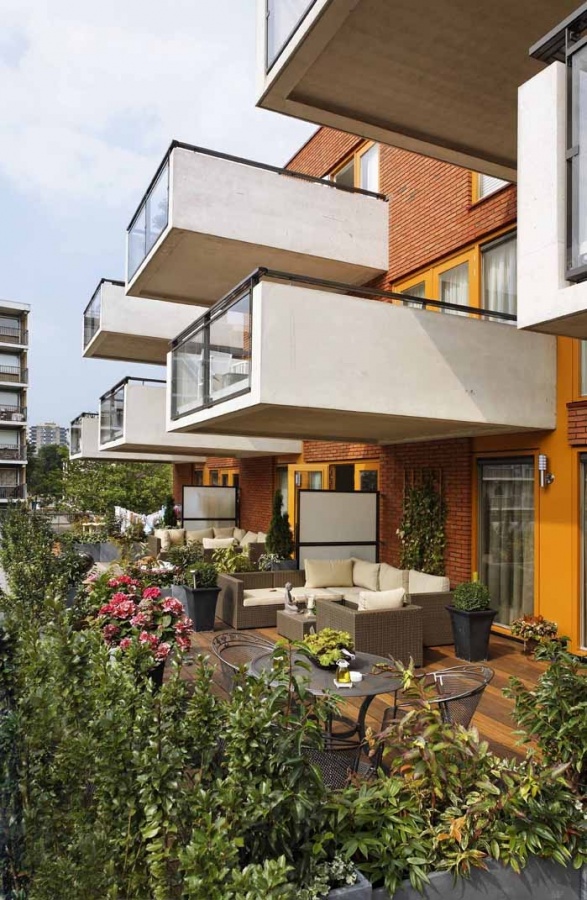
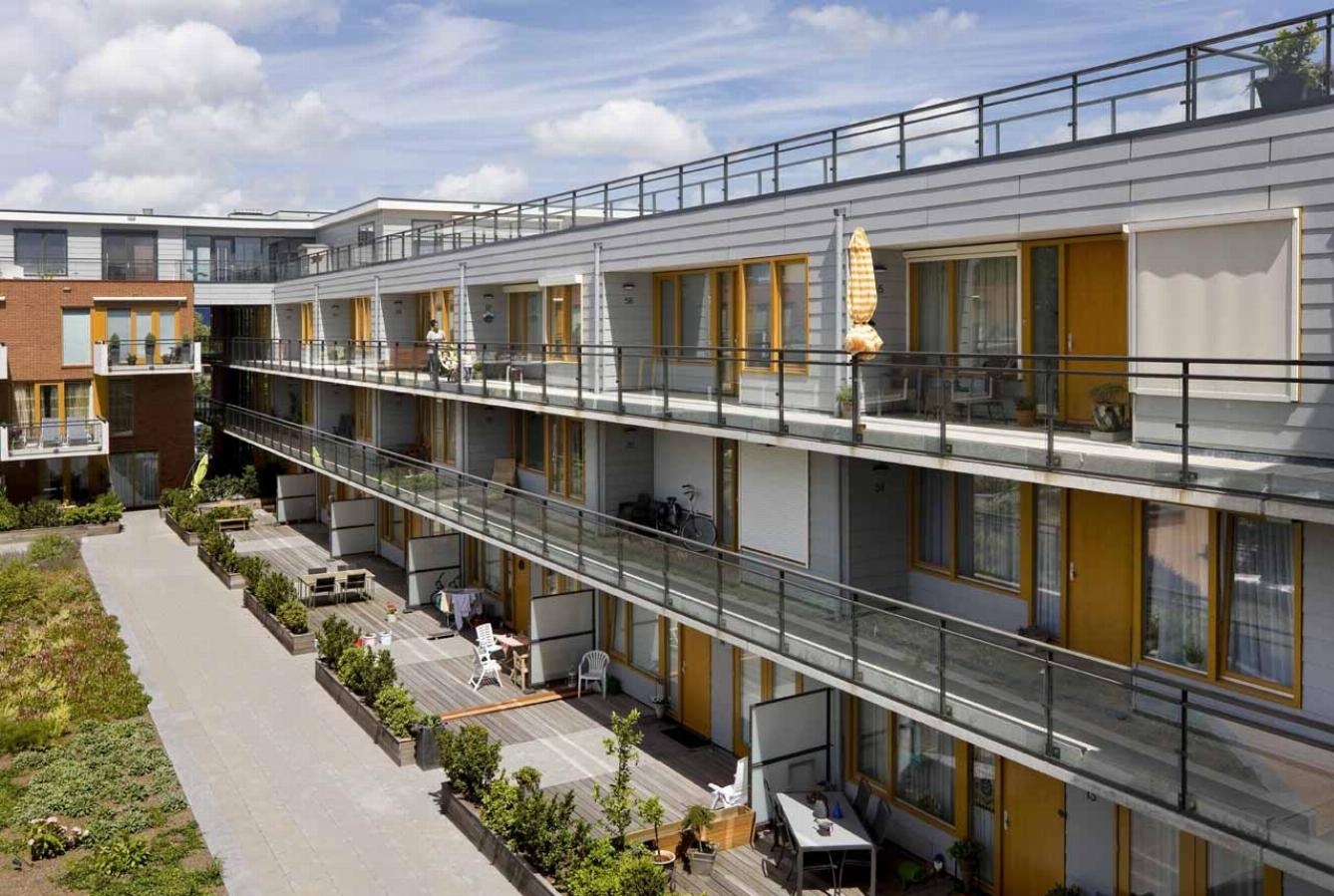
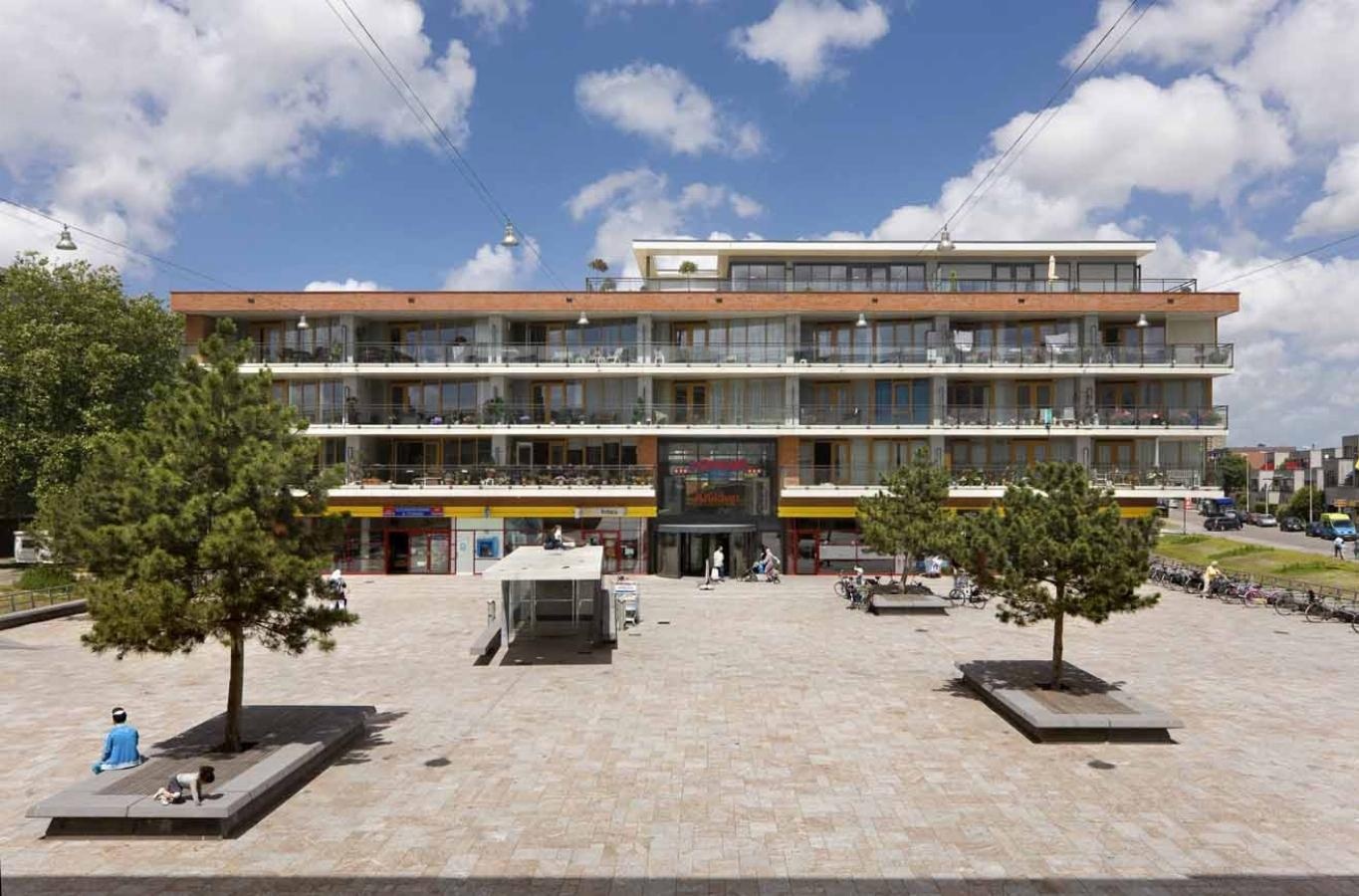
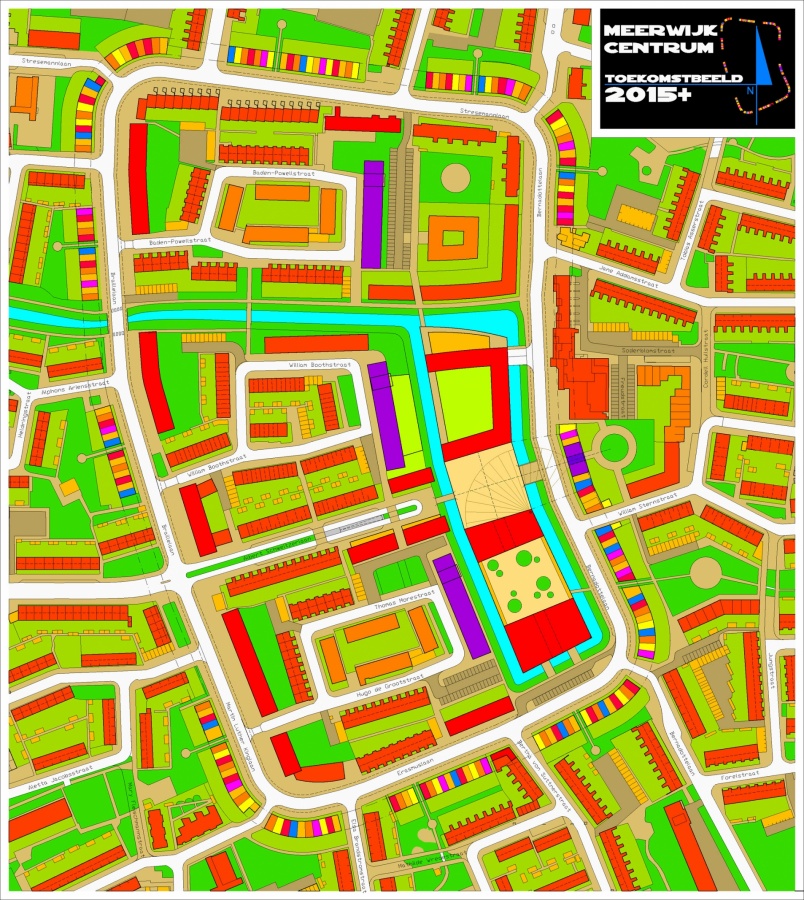
The “Meerwijk” district in Schalkwijk, built in the 1960s, has been built on the corner of Bernadottelaan and Albert Schweizerlaan. This center is part of the urban design that was made by our office in 2001. The building with retail spaces, including the Vomar supermarket, an underground parking garage with 215 places and 74 apartments, is one of the sub-plans of the community center. The whole has a modern, transparent and friendly character and adapts well to the neighborhood.
| Architects | Ronald Knappers |
| Client(s) | Hoorne b.v. |
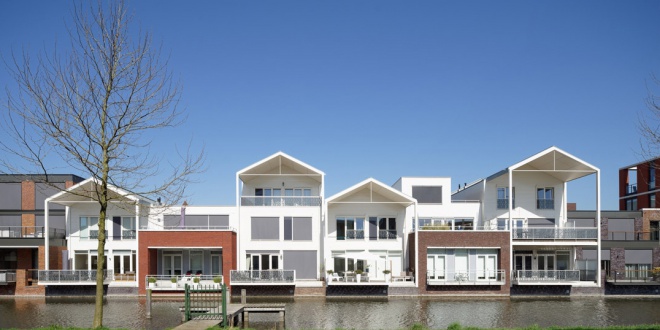
The plan ‘de Biezenhof’ is part of the new residential area ‘Waterrijk Woerden’ and is situated along a natural watery region. The urban scheme of ‘Waterrijk Woerden’ was designed by West 8 and refers to the traditional Dutch water cities such as Delft and Leiden. The design is made in collabiation with Klunder architects. Almost every dwelling is individual and has a specific connection to the water.
The plan of Biezenhof is divided in two parts: there is one block of family houses around a courtyard on the edge of the lake, and there is a row of water houses and apartments along a canal.
The buyers of the houses could choose between several types of houses as well as between four architects. Due to the possibilities in combining type and architect, not one house is the same. Every house has a singular character: the lake houses have a beautiful view on the lake, the street houses have a garden, and the canal houses enclose big terraces. In the public space there are a few parking places, the majority of parking places are organised in garages.
The houses designed by Knappers are characteristic because of the huge roof overhanging the façade. This contributes to the shelter-against-the water identity of the houses, and refers to the greenhouse glass constructions in the low lands. At the street side these houses are made of brick, which gives them a closed and open (to the light and the water) individuality.
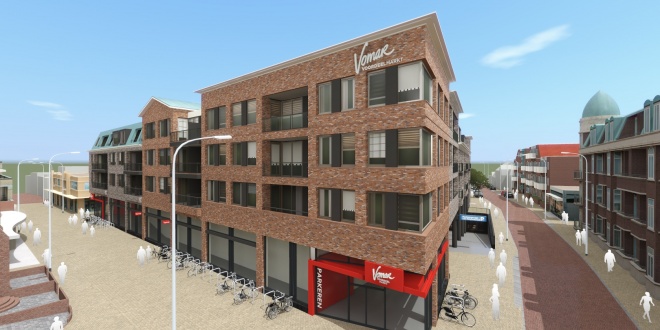
Urban development and architectural integration “Vomar” location, corner of Abraham van Rooijenstraat and Maarten Kruijtstraat in Noordwijk
From an urban planning point of view, the contours and height of the building plan were determined by the municipality of Noordwijk. The plan clearly defines the streets Abraham van Rooijenstraat and Maarten Kruijtstraat, in line with the existing street profiles. Gasthuissteeg will also have a clear boundary with this building plan.
The main mass has an intermediate scale between two worlds present in the environment. On the one hand, there is the smaller-scale village development of the Hoofdstraat and on the other hand, the large-scale hotel development. The mass of the new building block to be built is 3 storeys high plus a roof storey. It is articulated into a number of volumes, softening the scale of the building block. These volumes are made independent by different colors of masonry and roof finishes. With a play of rhythm between balconies, windows, tires, roof moldings and a green-copper-colored roof, the building blends in well with the seaside resort architecture of the environment. The mass on the Gasthuissteeg is 2 storeys high. It has a green facade with window openings. On the north side of the plan, the existing firebreak will be closed and the buildings will close directly on the adjacent plot.
The plan is mainly sustainable because of the triple land use. The building block has an underground floor, on top of that a storey layer, above that a parking deck for the houses and 42 houses.
Abraham van Rooijenstraat is an important access road. That is why functions such as the entrance to the underground parking garage, the entrance to the parking deck on the 1st floor in front of the houses, and the entrance to the expedition have been made here. The Kruisstraat will become more traffic-calmed. This will be the world of shopping as it is at the Hoofdstraat. This is where the shopping functions will be located, which are accessed via two clear entrances at the corners. These entrances are clearly visible from the Hoofdstraat and from the Grent.
The entrance to the houses is on the north side. This will give the existing loading and unloading yard, where other residential accesses are located, a quality impulse. The gallery facade, which is hardly visible from the public space, is conceived as a veranda world. It's a light world of painted wood.
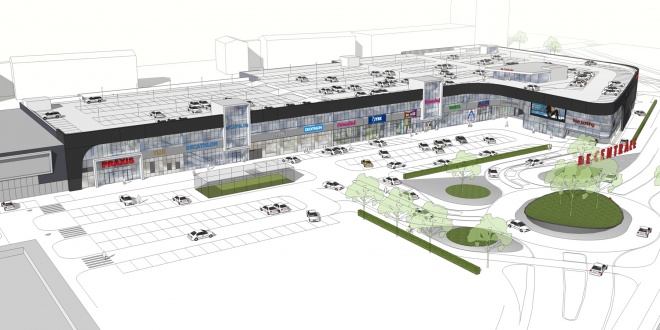
The retail park "De Centrale" takes its name from the power plant (PEB) that was located at this location. With the exception of one Nuon building, everything has been demolished and the location is gradually being transformed into shops. The current retail floor area is over 30.000 m2. This makes De Centrale the regional shopping center of Friesland. The planned expansion of 15.000 m² will further strengthen this regional position. The design has a recognizable shape and brings cohesion between the different buildings, a clear public space and a clear entrance. The advertising is an integral part of the design. In anticipation of this expansion, a new KFC branch has been designed and built on the site (2017).
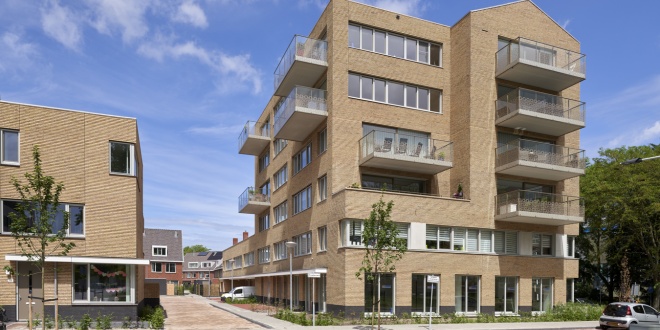
In cooperation with Smits bouwbedrijf, VVKH has won the european tender to develop a new housingarea in district Dieperhout in Leiden. The project consists of 48 dwellings, 12 apartments and a care facility of 1500m². Start of the constructionwork is planned in may 2015, because thats when a current school will move to a new building and the site will be available.