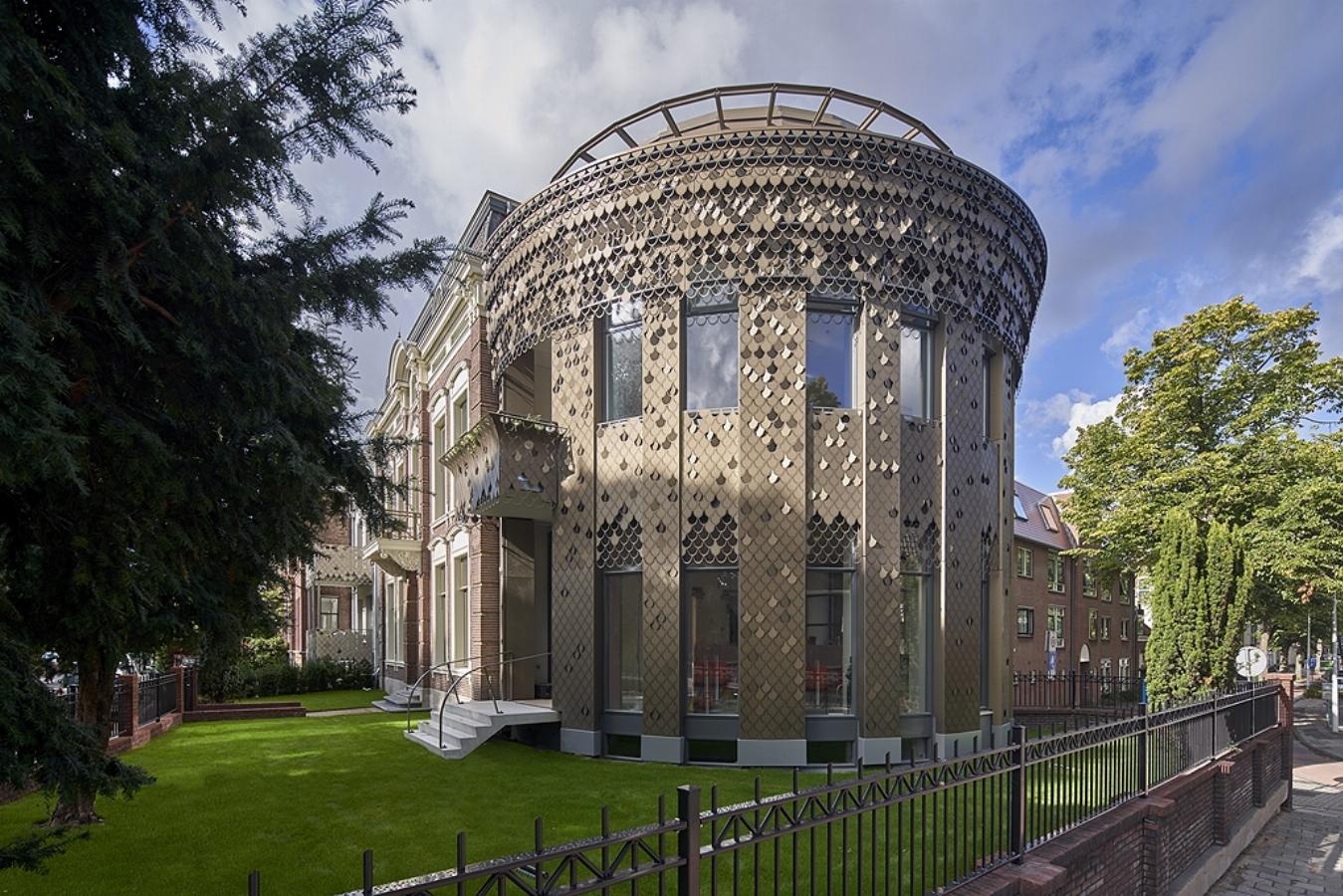
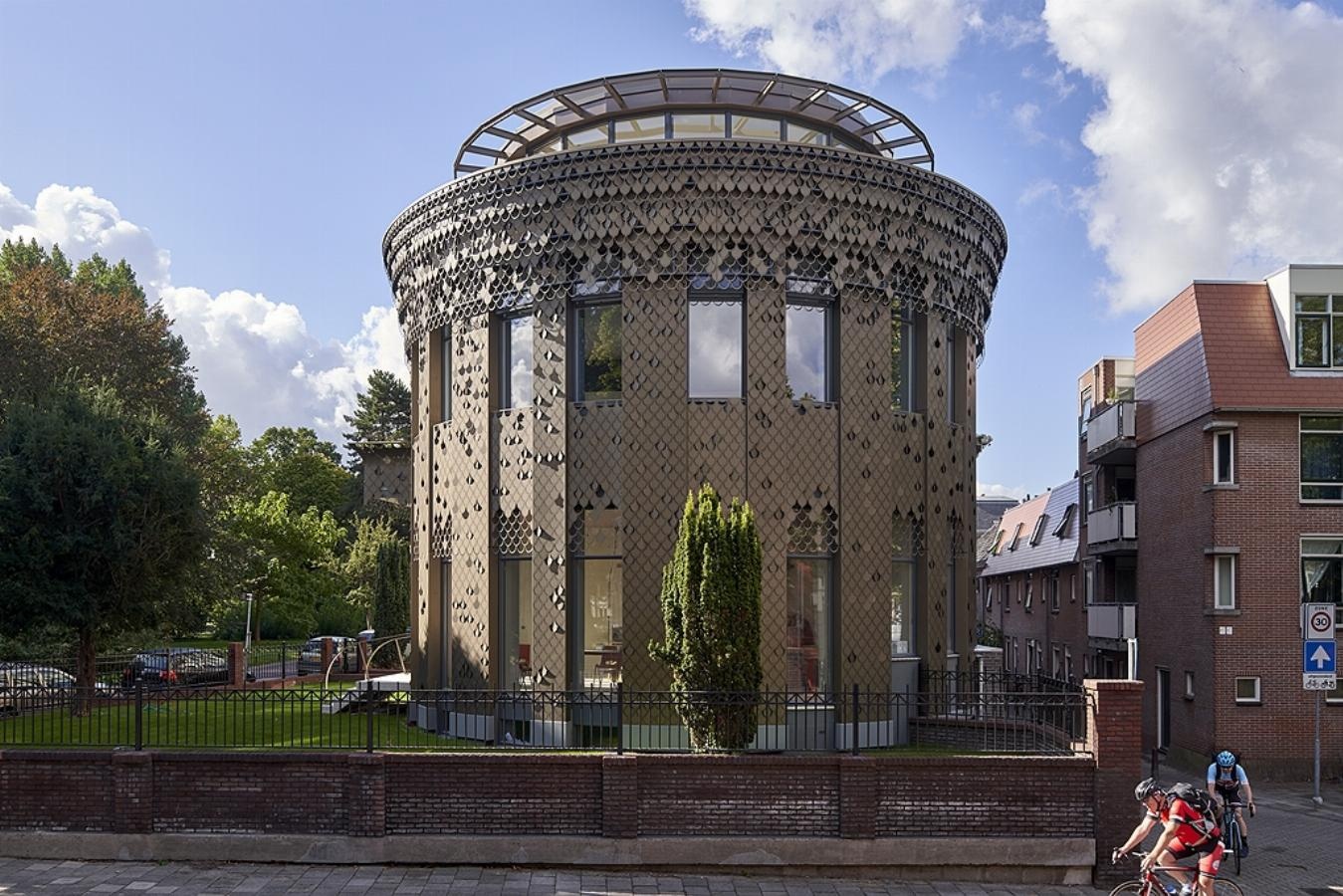
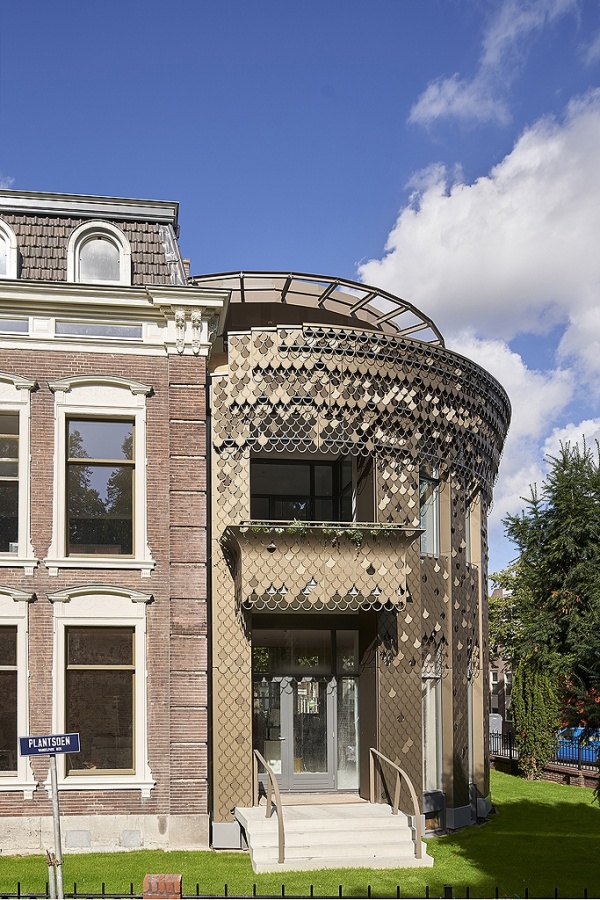
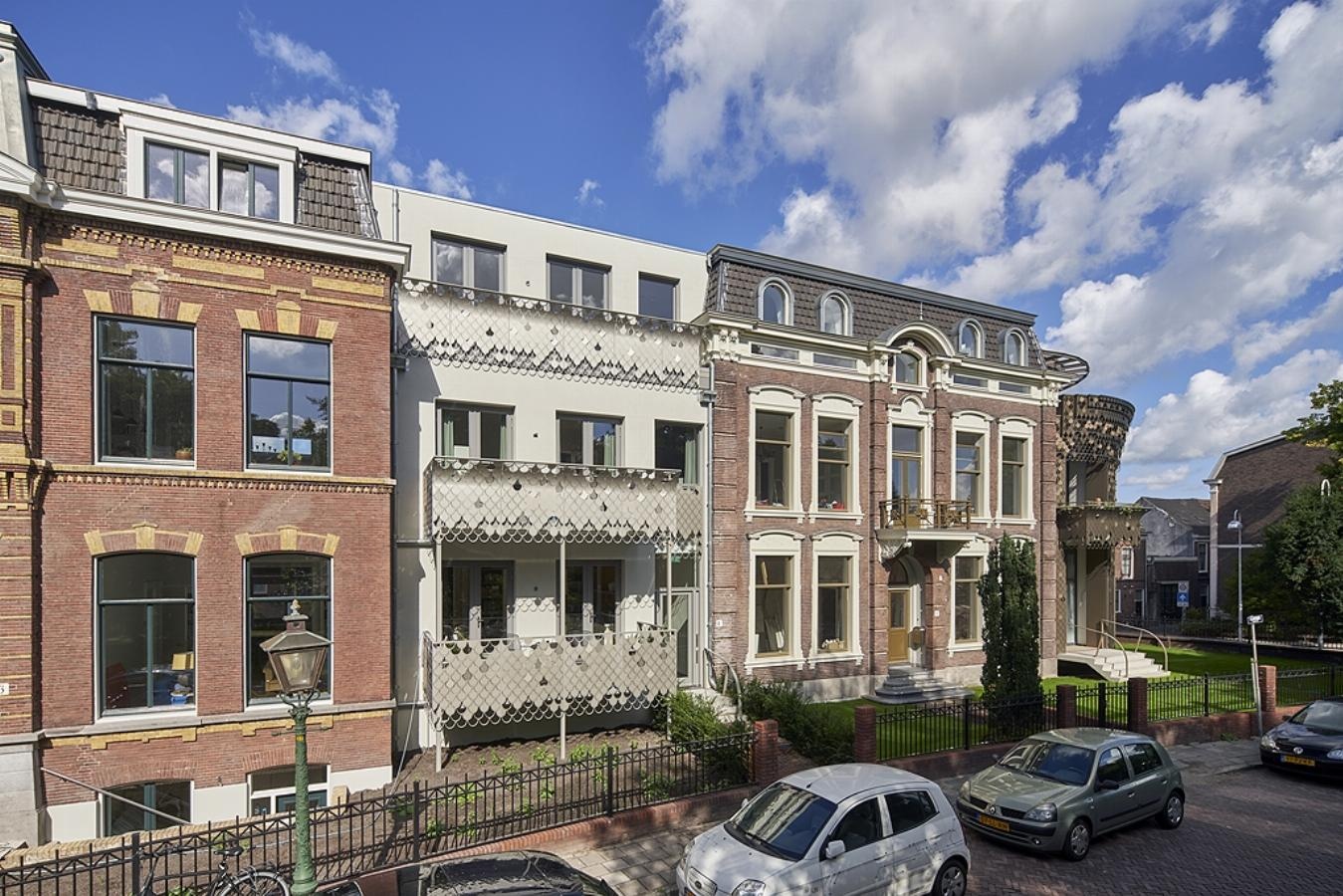
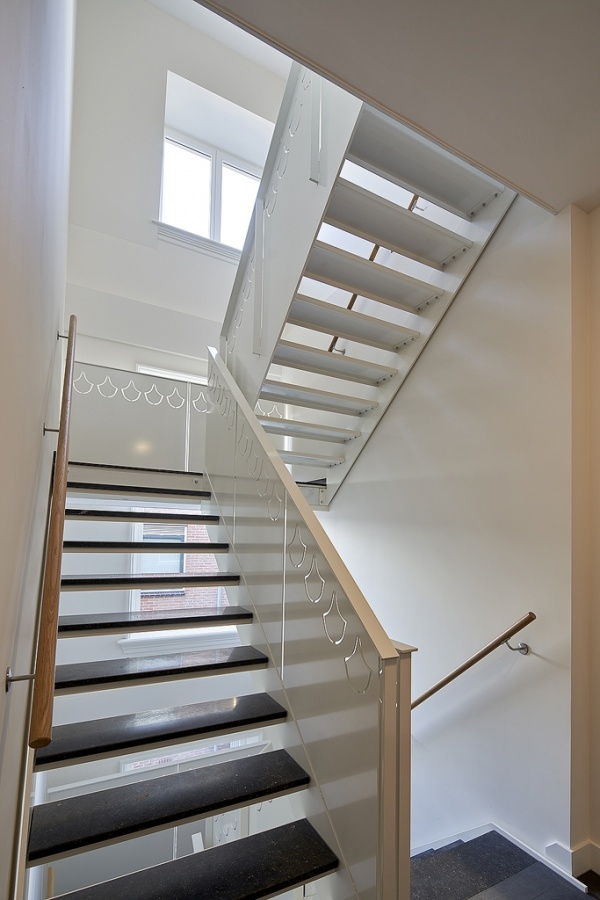
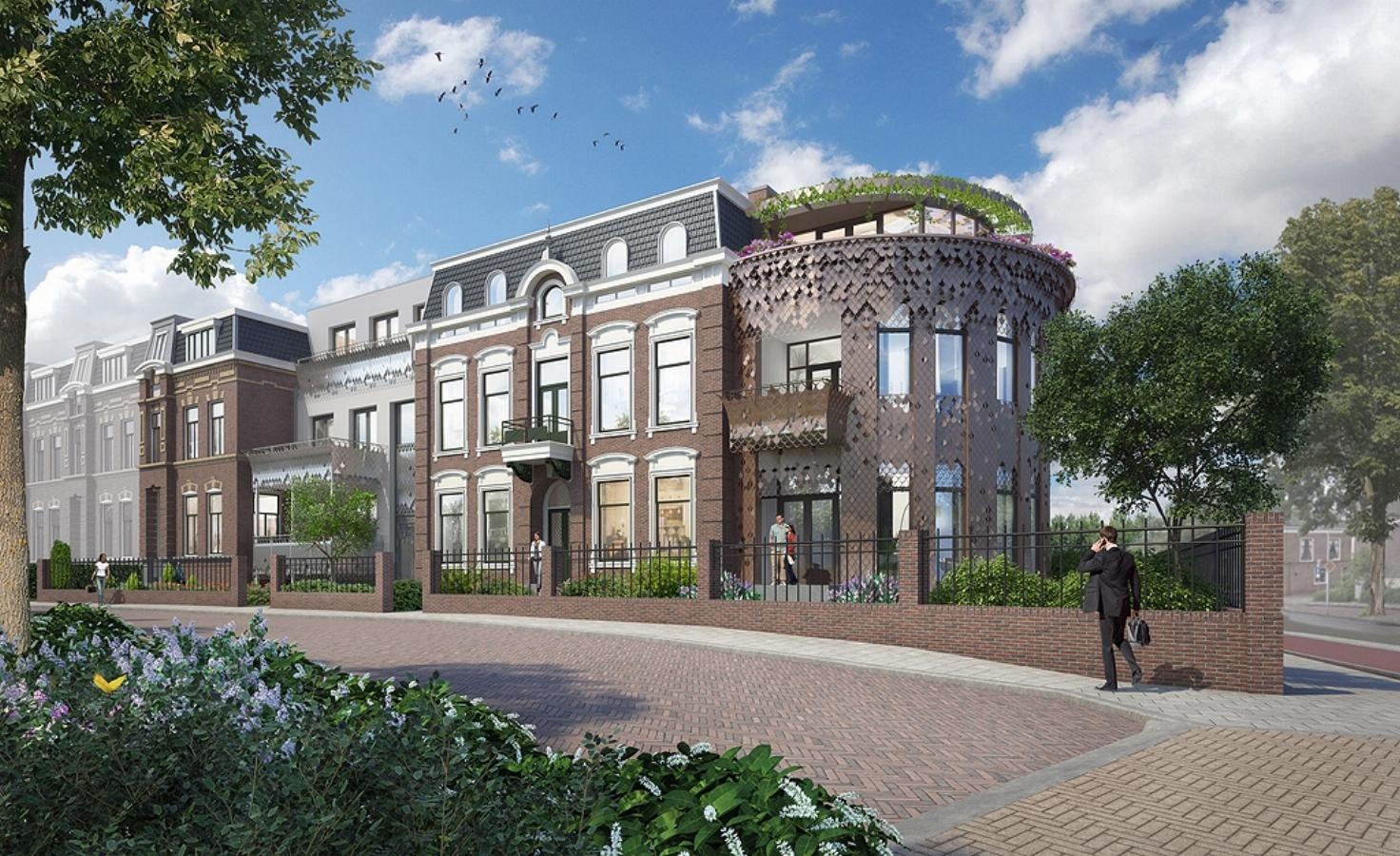
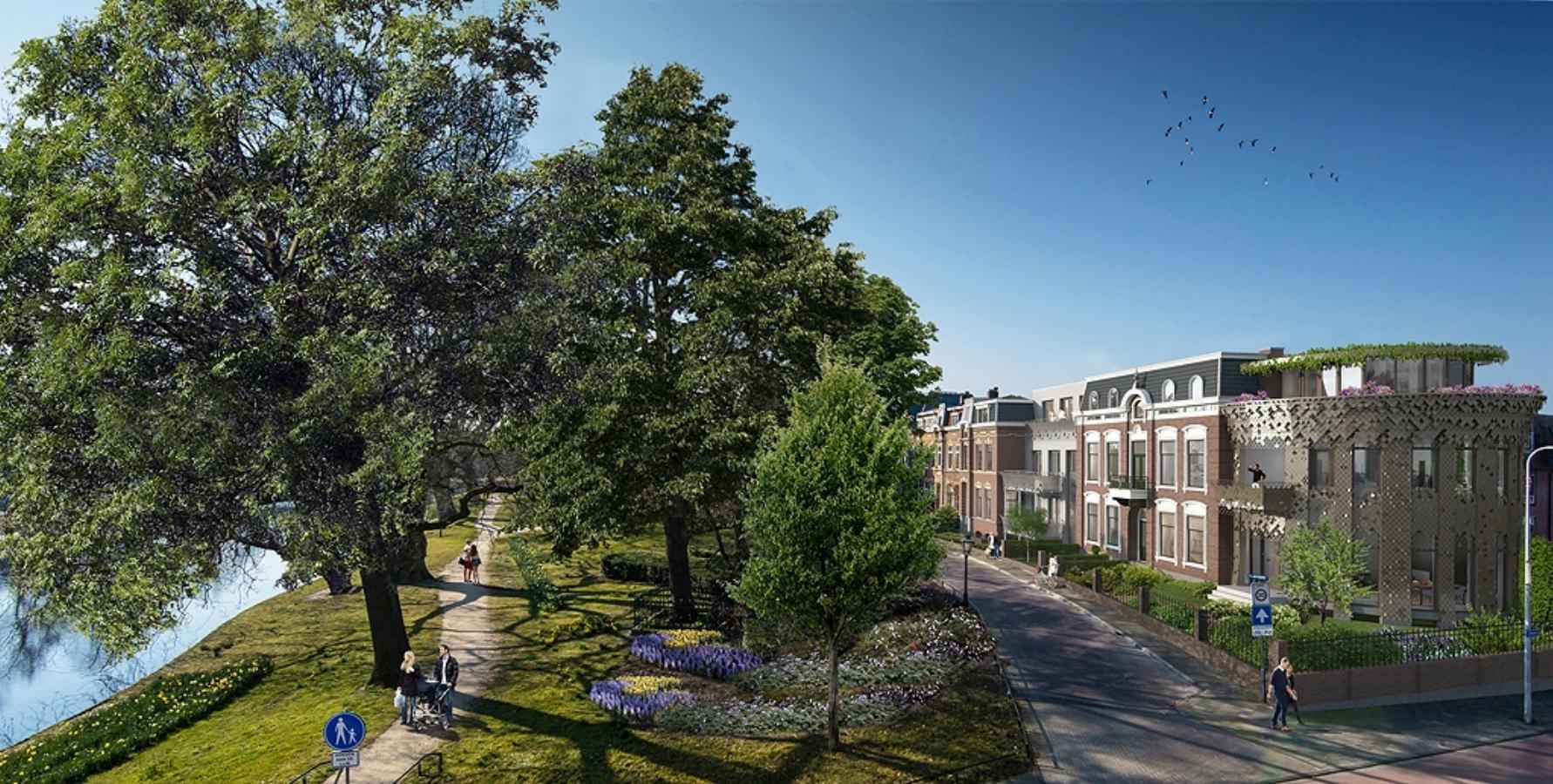
The Plantsoen in Leiden is well known for the historical appearance of both the city park (1836) and the houses of the last quarter of the 19th century. The park was originally landscaped on the edge of the city in the place of an old defense belt. At the entrance of the park at the east side the monumental building Plantsoen 1 – 3 is redeveloped in a complex with 6 apartments. The apartments of about 150 m² are provided with all luxury and comfort, such as a private indoor garage, spacious roof terraces and an elevator, while retaining the historical look and value of the building. Redevelopment also applies to sustainability; obtaining Energy label A. Exterior facades, window frames and roof are additionally insulated. The houses are underfloor heated and solar panels are provided on the roof.
The municipal monument at Plantsoen 1 – 3 is divided over three floors and a basement. The property at number 1 was originally a fully detached house, number 3 was part of a block of 3 houses. Both buildings date from 1875 and were connected in 1957 and converted into one large nursing home. In this function change, the original qualities have largely been lost. The round expansion at number 1 dates from 1993.
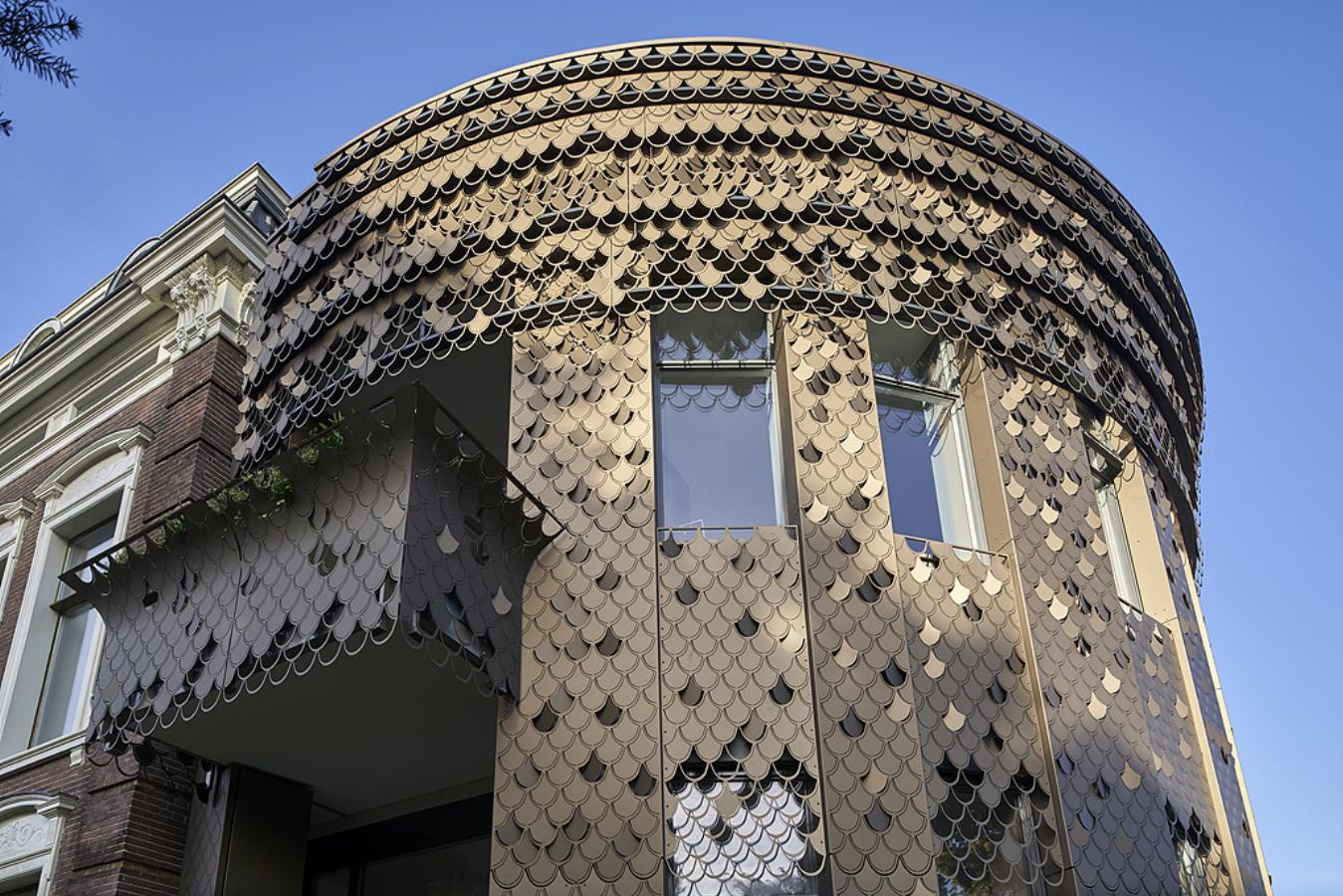
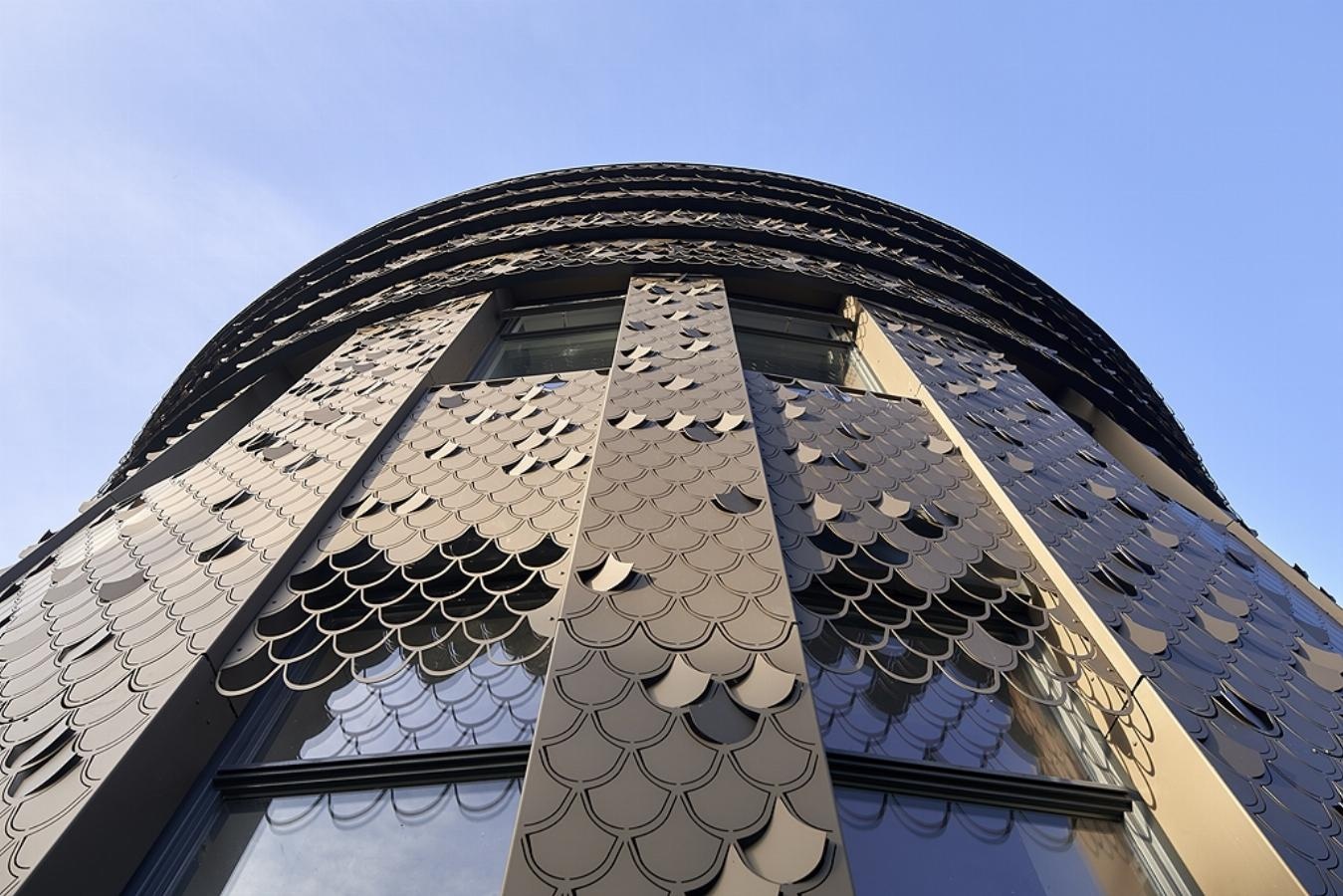
In the new layout with 6 apartment, the monuments are restored to their former glory by restoration contractor Burgy from Leiden. The façade of the intermediate building is renewed and aligned with the monuments. The existing façade of the round building is finished with a bronze wall cladding, a ‘veil‘ with a leaf motif. This pattern is inspired by the leaf motifs and decorations of the 19th century, which can still be found in various places along the Plantsoen. The round with ‘veil’ becomes a special recognition point in the inner city.
Each apartment has both rooms in the monumental area as well as in the newer parts. The interior of the monumental buildings is provided with appropriate details to bring back the historical character as much as possible. This specific part is provided by Verlaan & Bouwstra architects from Vianen.
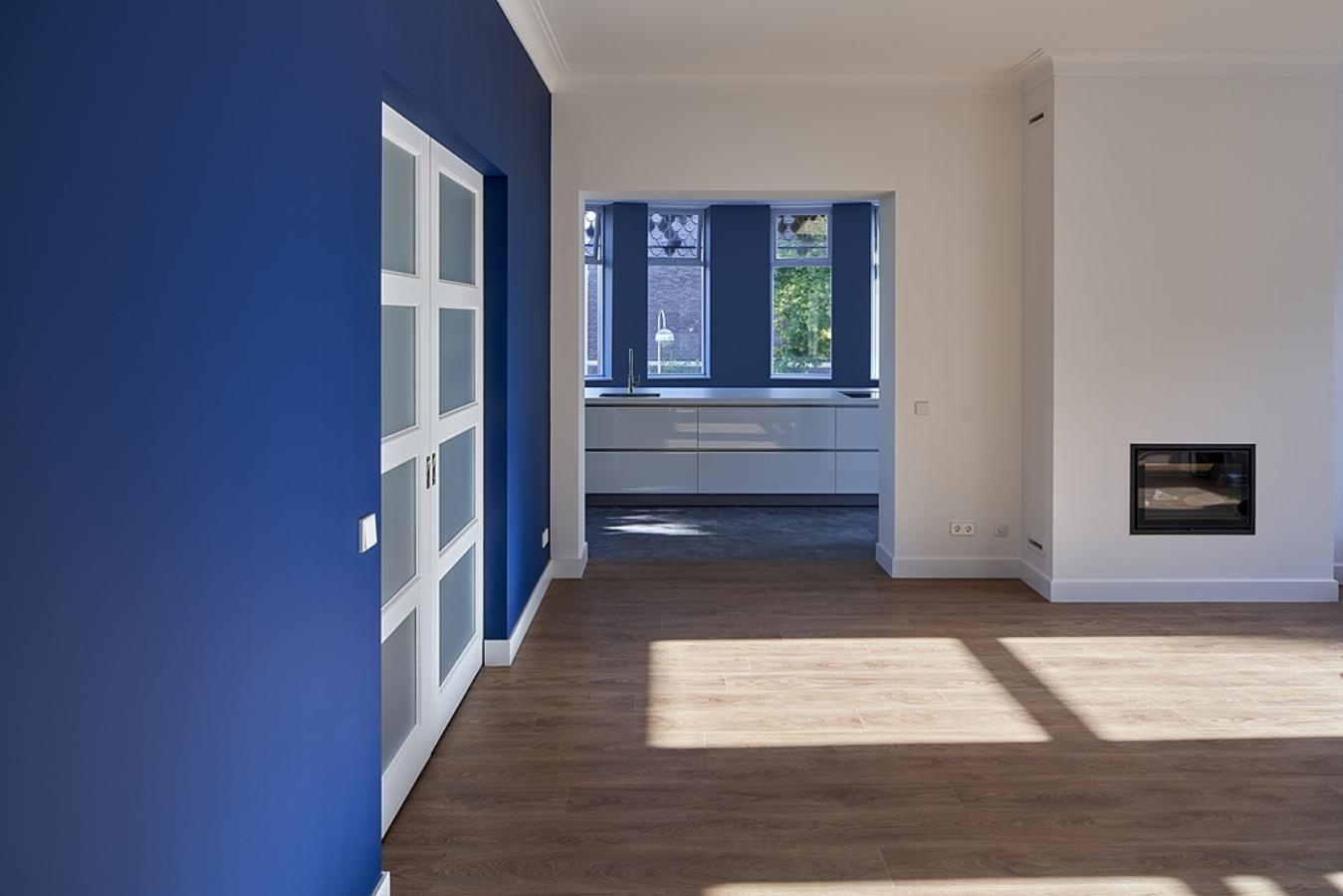
On the inside buyers have a lot of freedom of choice; they can choose for an even richer historical finish with wall tension, panelling and en-suite layout or a tight, modern finish and layout; both are possible. Each apartment is unique, has its own layout and its own character. Only the view is the same for all apartments; they all look out over the beautiful monumental city park the Plantsoen at the town canal.
The redevelopment was completed in July 2018.
| Architects | Ronald Knappers |
| Employees | Krijn Tabbers |
| Client(s) | restoration contractor Burgy, Leiden |
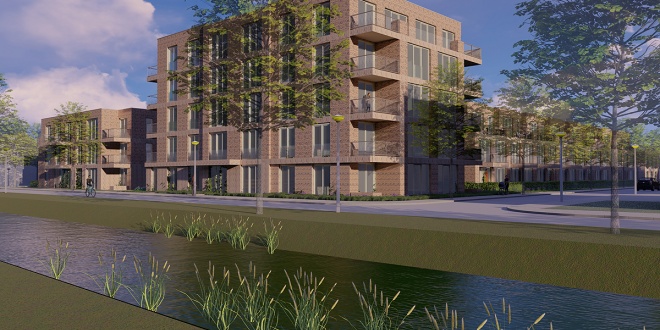
Housing association St. Willibrordus wants to renew 40 duplex houses along Stompwijckstraat in Wassenaar. The program provides for the realization of 86 social rental homes, mainly for starters and seniors. The plan area is located in a village extension from the 1960s. At the time of completion, this was the northernmost district of Wassenaar and it overlooked the meadows and farms. The district is spacious with a focus on greenery. In the development of the plan, we link up with the basic qualities of the neighborhood with spacious profiles with front gardens and lots of greenery. In order to be able to make the closed building block, the Stompwijckstraat in between will be removed. This provides space to solve parking for residents within the building block. The plan also provides for a communal courtyard with a social facility adjacent to it.
To create privacy in the front gardens, we create a green strip between the front gardens and the sidewalk that remains the property of the municipality. The existing structure of mature trees will be maintained. There is a distinction between a formal front, with zoom houses on the ground floor all around that are accessible from the street side, and an informal rear with parking under an open green deck (through which existing large trees protrude) and the access to the houses on the upper floors. through wide galleries. In the long streets, the building blocks match in scale with the buildings on the overlying because the top (third) storey has a setback in relation to the building line. On three sides of the building block, the balconies of the houses on the upper floors hang from the building blocks as ornaments. The balconies provide contact with the street and respond to the orientation with respect to the sun by means of a rotation and still show the echo of the current situation. The building block responds somewhat more robustly to the northern park side. On the northwest side, one of the blocks reacts in height to the adjacent apartment building.
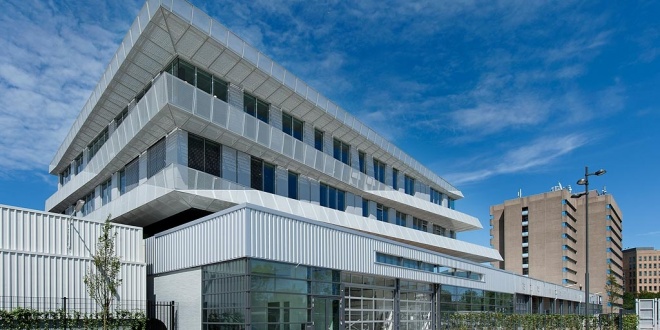
A former Mercedes showroom is rebuild to become the regional ambulance station. From here thirteen ambulances are ready to tear out in an emergency. On top of the existing showroom an new building with offices and a hightech trainingcenter is oriented at the a busy railwayline. The new part is a sturdy building with overhanging balconies which provides shade in summer and window cleaning. In the front facade, at the Vondellaan, a small ambulance museum is created.
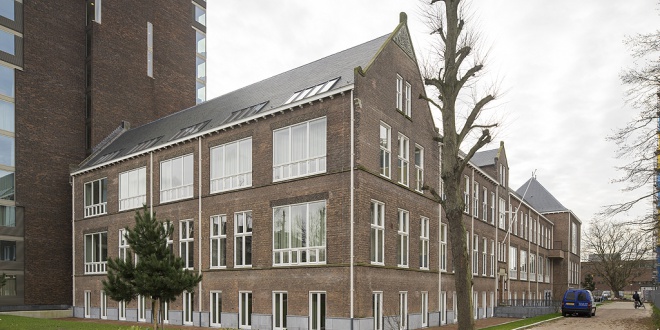
On the Boerhaave Campus, part of the Bio Science park in Leiden, the historical anatomy-building has been transformed into housing for Phd-students and researchers of the Leiden University. The new apartments are characterized by their high ceilings and old constructions. A small mezzanine is created to function as a bedroom. Right beside the existing building a new appartmentbuilding is erected, designed by Van Gameren of Mecanoo Architects. The total complex contains 166 apartments and is the first step in the complete transformation of the Boerhaave Campus.
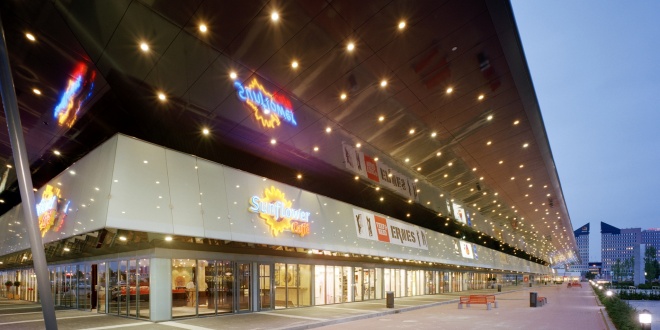
For the large-scale shopping and business center De Herven, dating from 1979, there was a threat of emptying out and impoverishment, including through screaming facade advertising. A redevelopment plan was implemented in 2003 to reverse this negative spiral. With important but relatively simple interventions, such as a uniform facade layout and advertising to be conducted according to fixed rules, as well as a generous continuous and cantilevered awning of 13 meters, a high-quality and pleasant residential area has again been created. The immediate surroundings, the walking area and the parking lot, have also been redesigned and constructed.