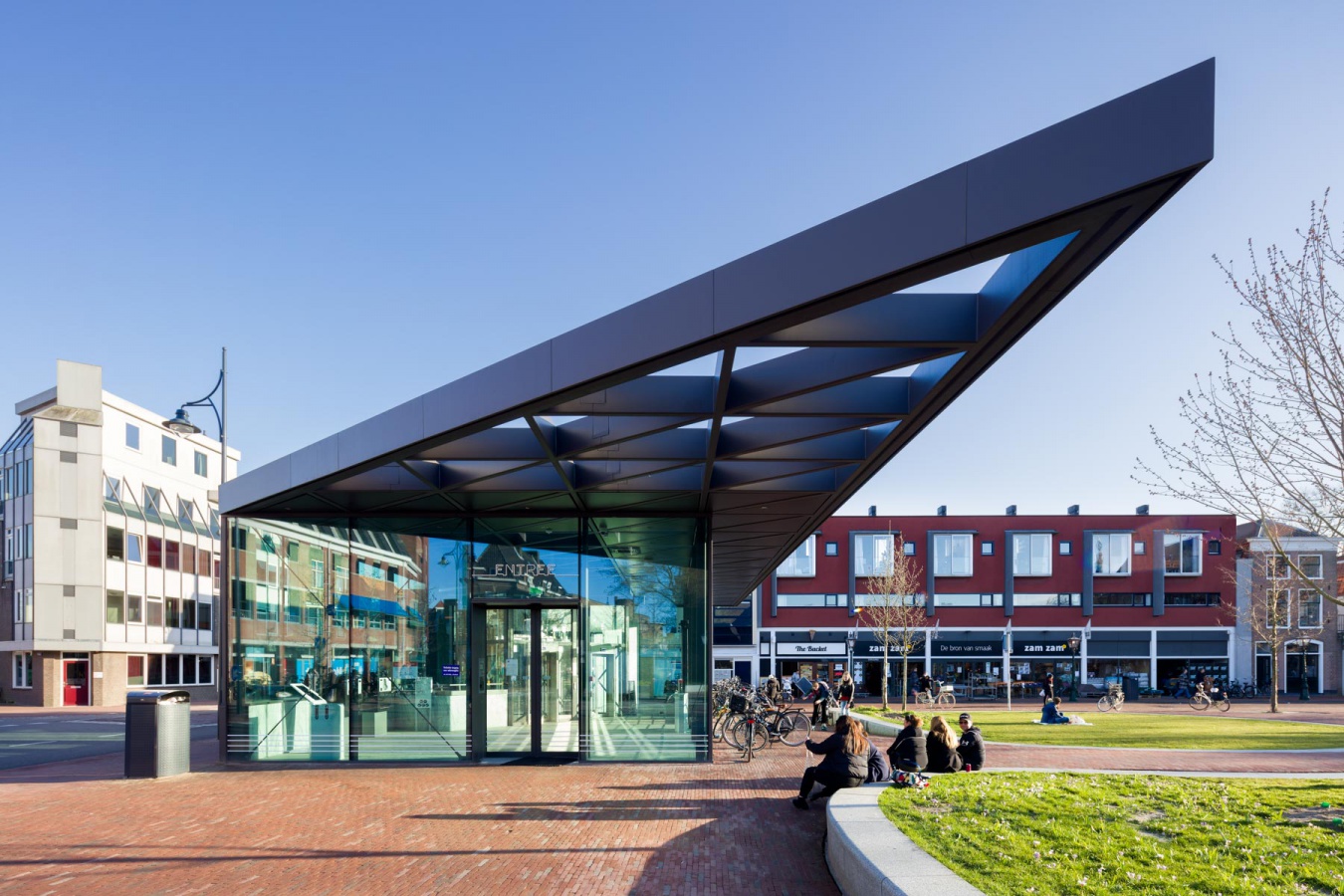
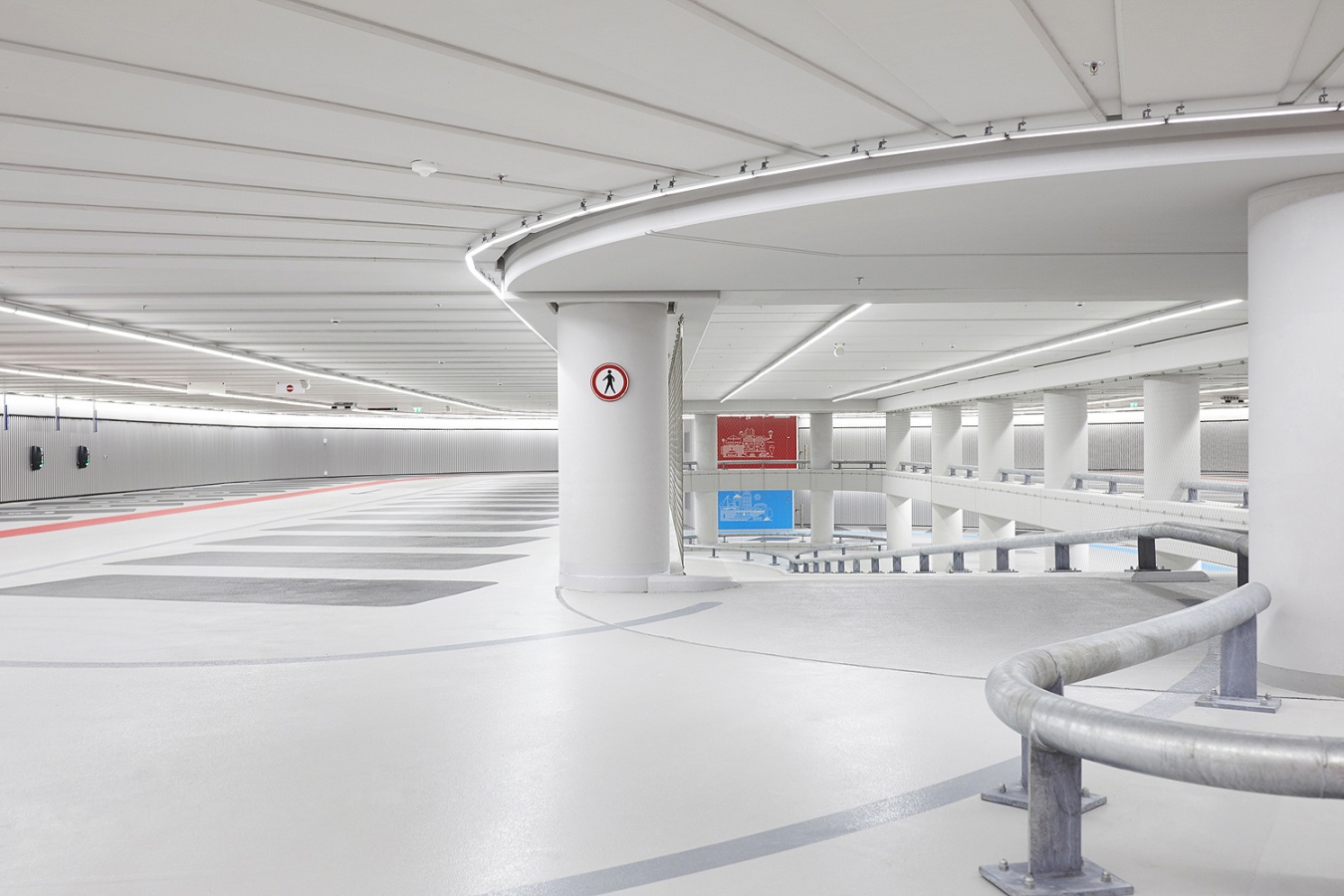
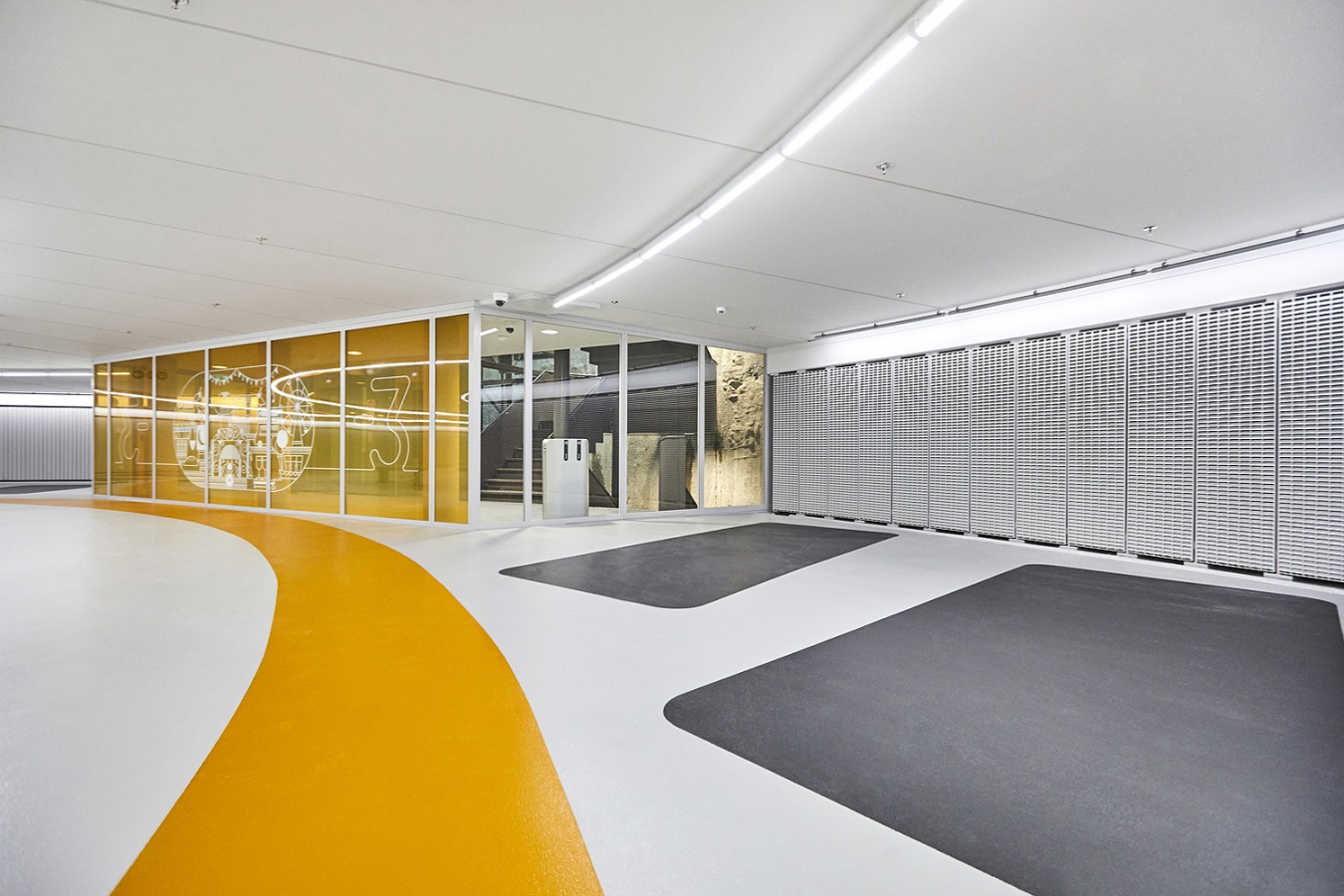
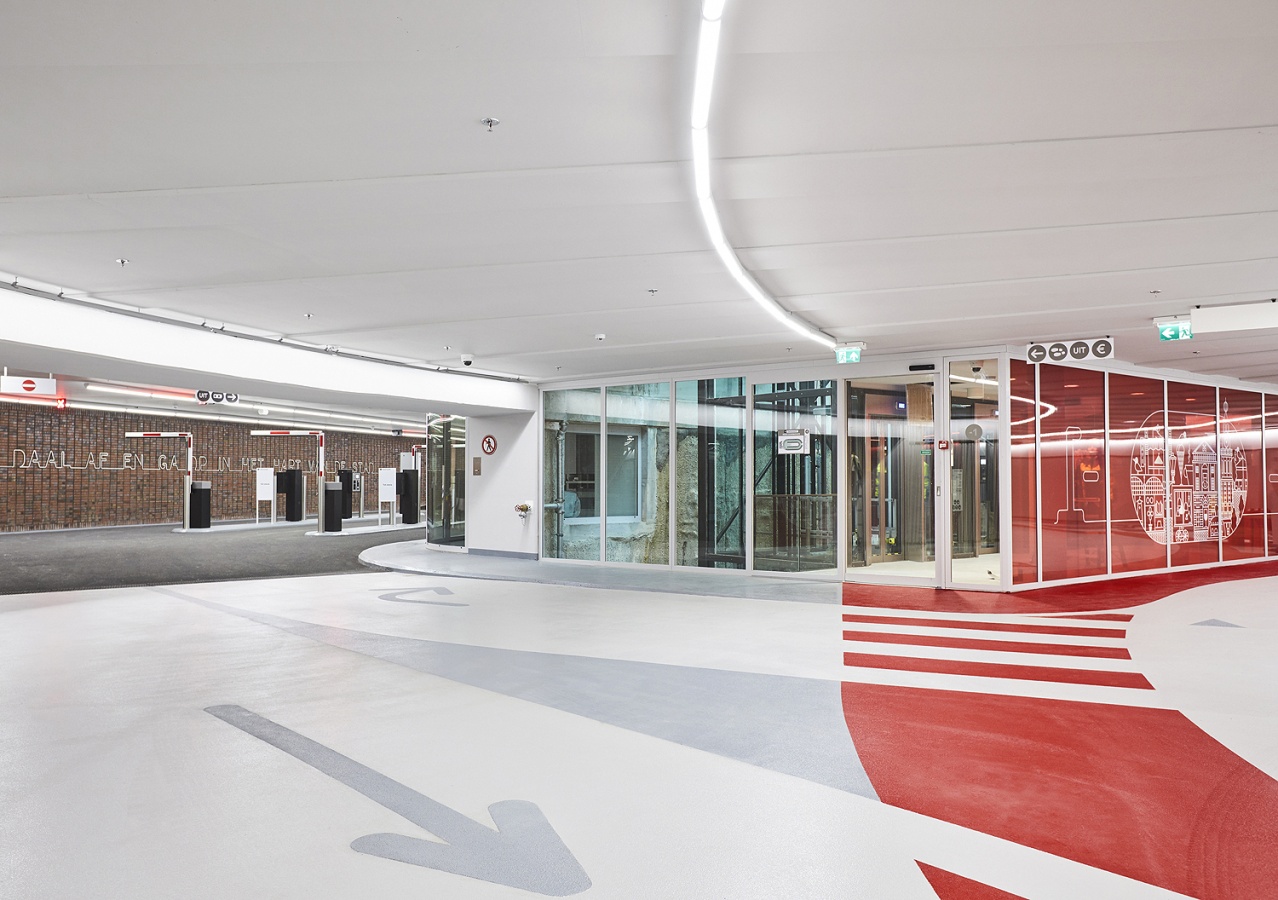
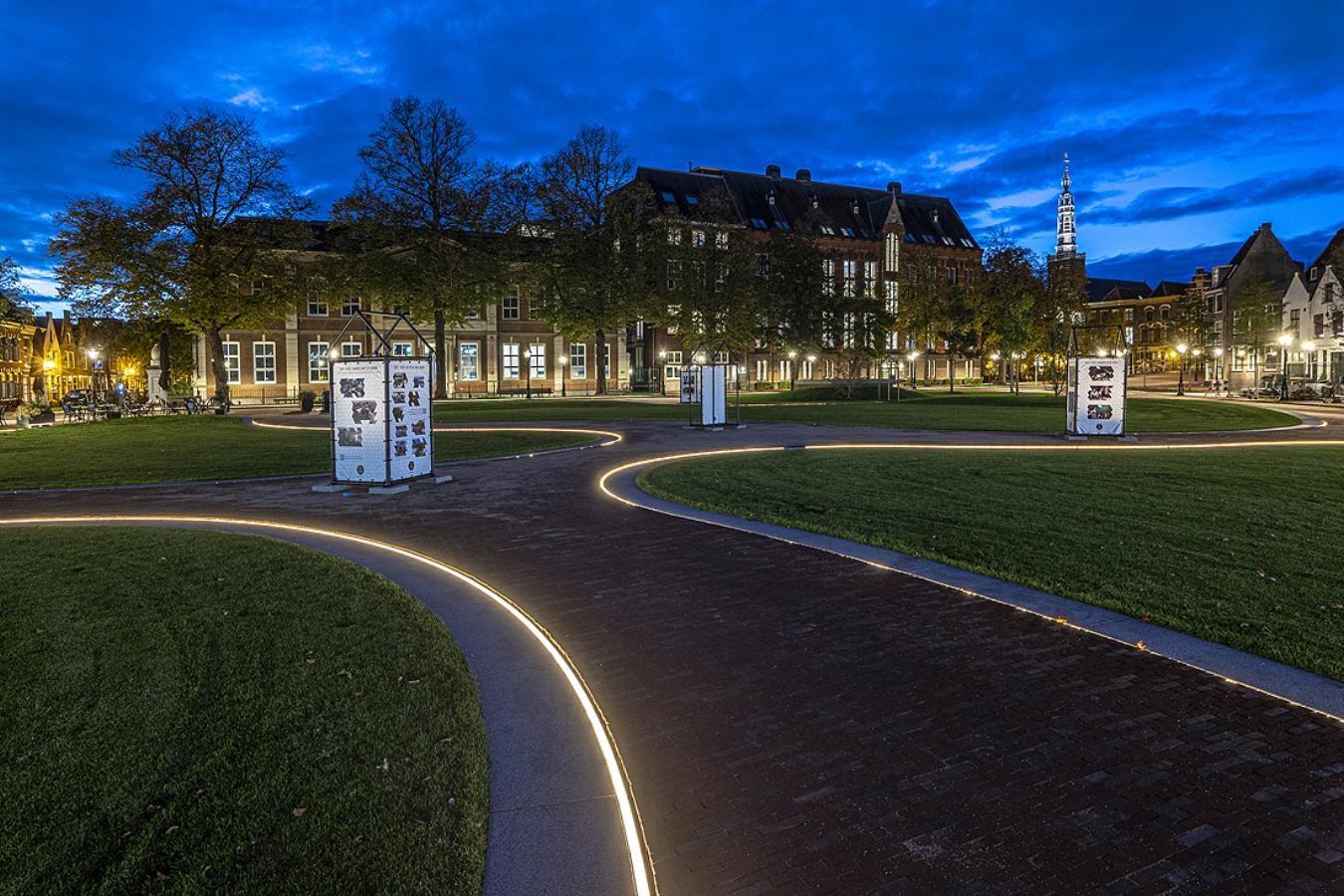
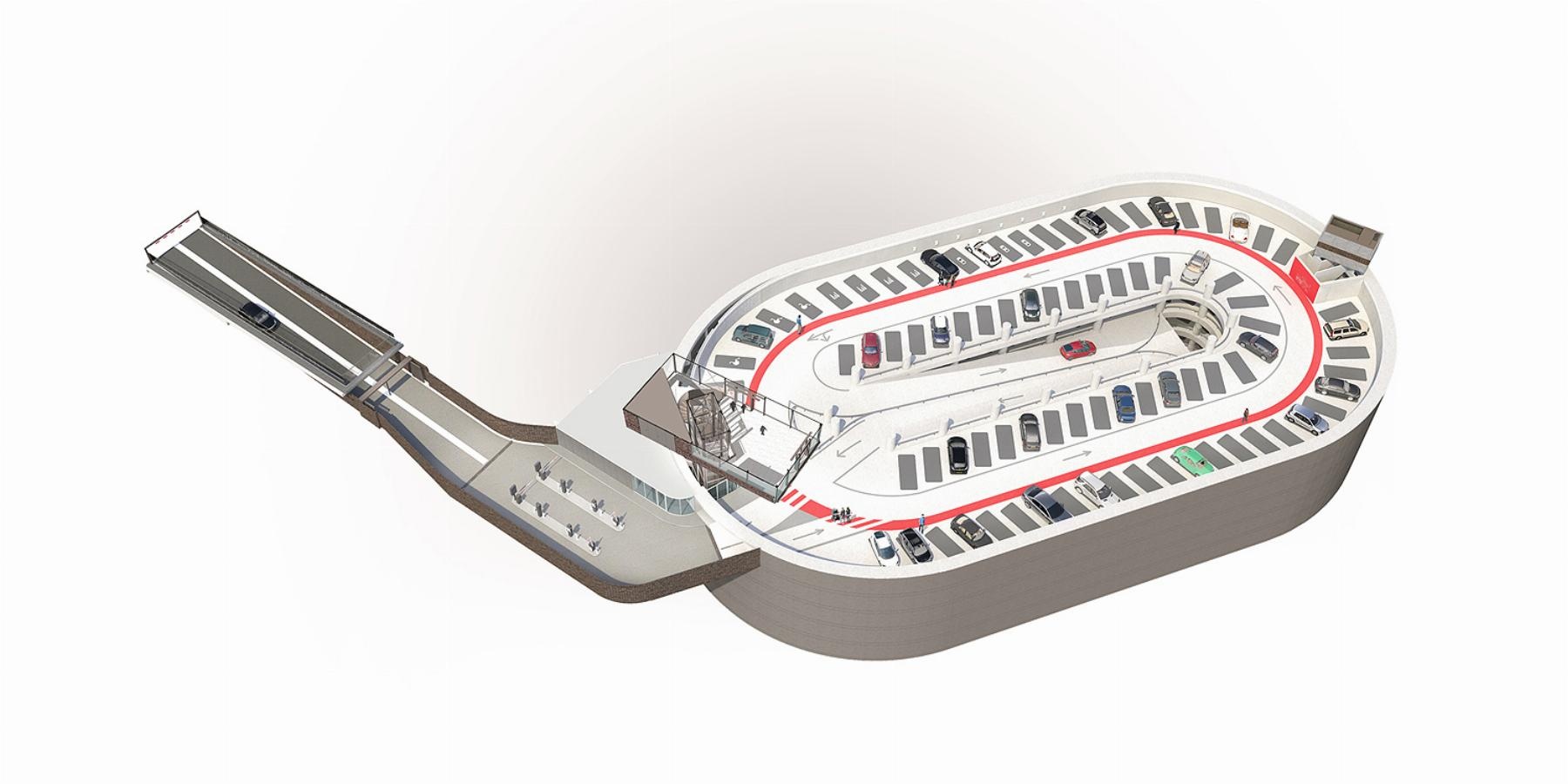
The team with VVKH Architects, Dura Vermeer and Besix has been selected for the design and build of a five-story underground parkinggarage in the historical center of Leiden.
| Status | design 2013 |
| Architects | Ronald Knappers, Thomas Gillet |
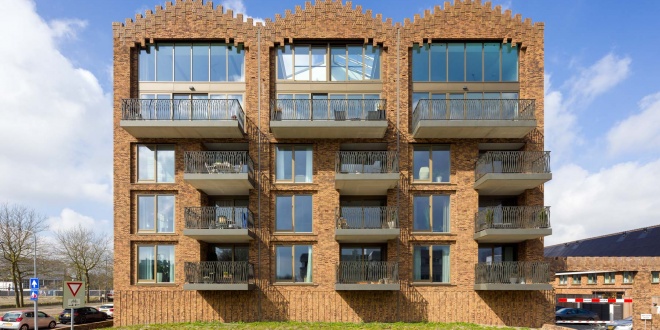
At the beginning of the Kruisweg, the housing project ‘Gemaalhuis’ marks the entrance to Hoofddorp. In collaboration with Timpaan, RROG Urban Planning and Landscape and IBB, moes have been realized in a place where offices used to dominate in the past.
The design for 83 dwellings near the center of Hoofddorp provides a transition between the village ribbon development along the Kruisweg and the large, urban scale that Hoofddorp aspires to. At the design site, the original polder structure was situated perpendicular to the direction of the rest of the Haarlemmermeer. In the design, a passage has been made here in the building block: a quiet residential court without cars and shared use of public space. The buildings are all-sided, refers to the past and seems to have been there for some time without being historicizing. The architecture is robust and stony. Rich brick details refer to the steam pumping stations that stood at the beginning of the creation of Hoofddorp. The complex is a neighbourhood in itself and has variety of housing typologies; single-family houses, veranda houses, terrace houses and apartments. The apartments are designed as freely divisible lofts.
The homes were completed in June 2020.
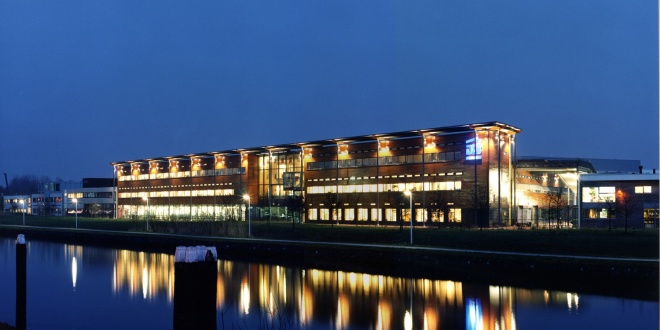
This new building offers accommodation for De Zijl Bedrijven, a municipal organisation for social jobs and reintegration. The 9000 square meter building offfers productionareas, offices and warehouses. The majority of parkingspaces are situated on the roof. VVKH also provided the interior design.
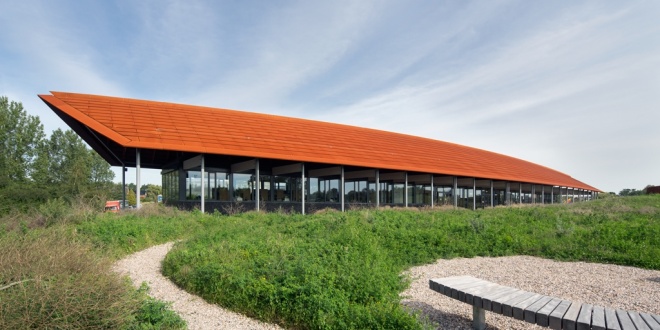
House Hilde lies on the dunes, on the tourist route between Station Castricum and dunes. The building opened in January 2015 and combines a depot with a museum function. The archaeological center is named Hilde, a woman from the fourth century AD and found in 1995 during an excavation in Castricum.
Hilde house was commissioned by the Province of North-Holland. Every Dutch province is responsible for the preservation and exhibition of archaeological finds within its borders. The old depot of North Holland in Wormer was too small, the climate was bad manageable and it was only limited accessible to visitors. The building on the Zanderij in Castricum offers plenty of space for storage and exhibiting archaeological finds and collections.
Hilde house has a floor area of 4,480 m2 and is divided into a pavilion and an underground depot. The building is designed with the surrounding landscape. The draft refers to an old dune landscape (so called “nollen” landscape) that is much older than the current shifting sand dunes and can still be found at various places in North-Holland. In the aboveground elongated pavilion on the one side the main entrance, with desk, museum shop, and a space for temporary exhibitions, cloakroom and toilets are situated, on the other side the office staff. On the first floor is a small restaurant with terrace and auditorium. The elongated shape and the 70-meter roof of the building refer to the early medieval farms, as they have been in the area. The curved roof structure is finished with Corten steel sheeting as a reference to thatched farms. The large overhangs of the roof protect the interior from direct sunlight, which allows the use of large glass surfaces. The façade is decorated with stone from Morocco, fossil pintail squid in it, a reference to the archaeological feature of the building. This stone also comes back into the interior.
The depot is about 2,200 m2 and is divided into several archives and the centrally located exhibition space. The hilly “nollen” landscape is, as it were, pulled over the depot. By placing a meter of sand on top of this part of the building a stable climate is achieved in a passive way and only limited installations are necessary in order to maintain a constant temperature and humidity in the depot. By putting strong in design and construction on sustainability House Hilde has an average score of 8.6 on the sustainability label. In addition, the integration of buildings with the landscape certainly has a symbolic value: in the ground is the best place to preserve archaeological treasures.
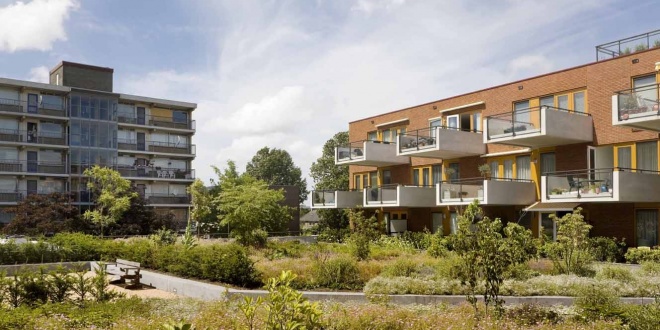
The “Meerwijk” district in Schalkwijk, built in the 1960s, has been built on the corner of Bernadottelaan and Albert Schweizerlaan. This center is part of the urban design that was made by our office in 2001. The building with retail spaces, including the Vomar supermarket, an underground parking garage with 215 places and 74 apartments, is one of the sub-plans of the community center. The whole has a modern, transparent and friendly character and adapts well to the neighborhood.