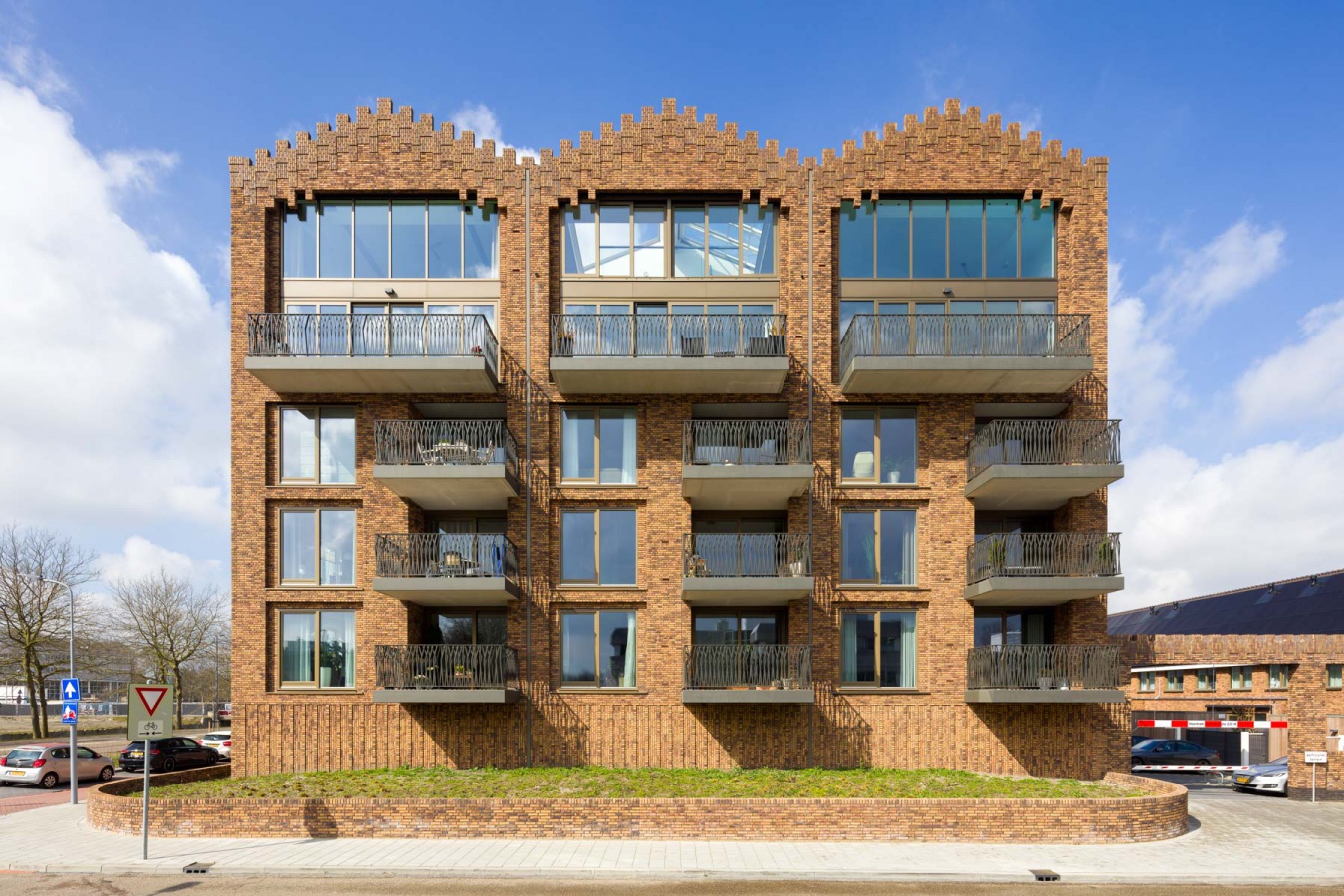
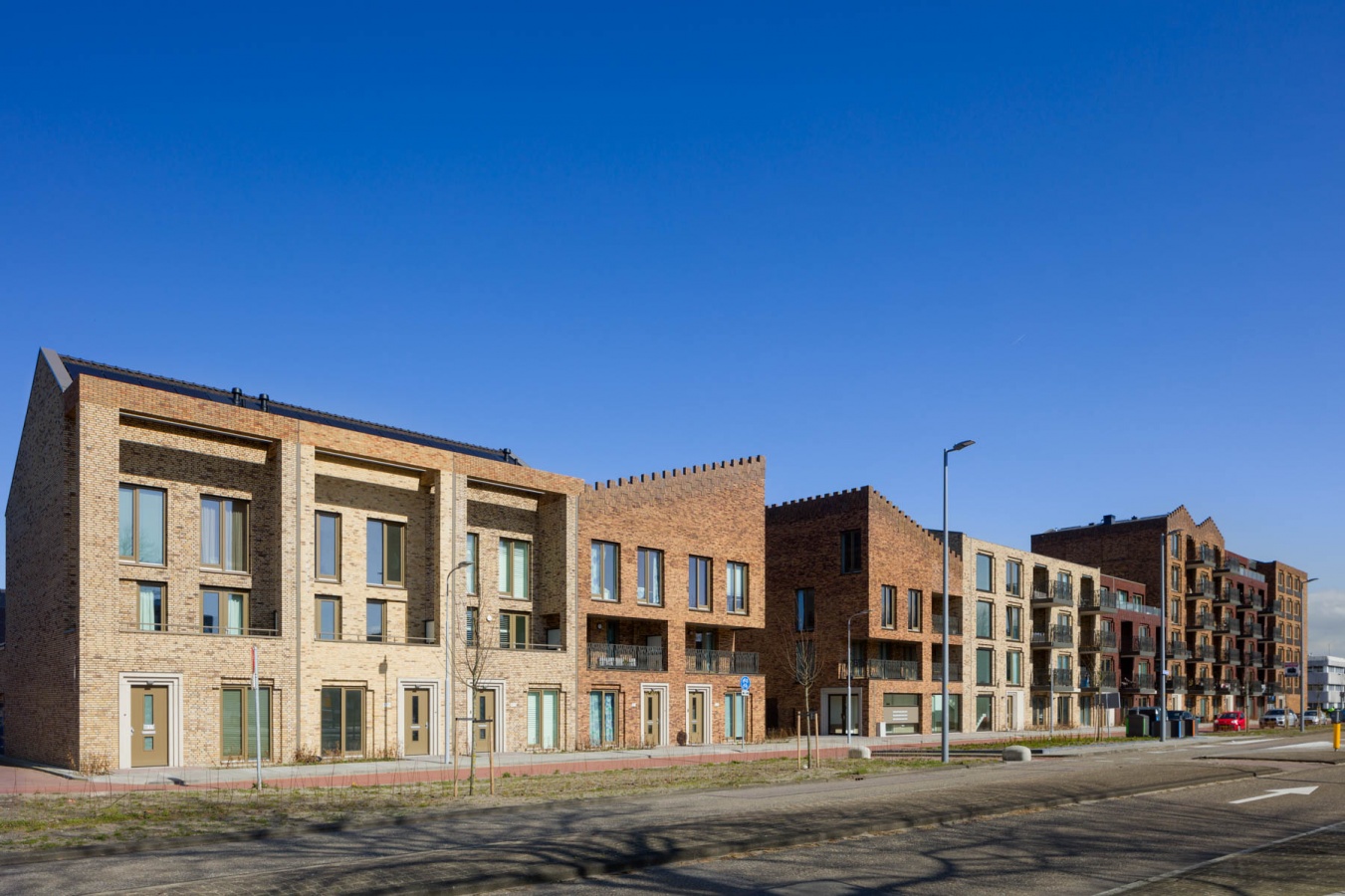
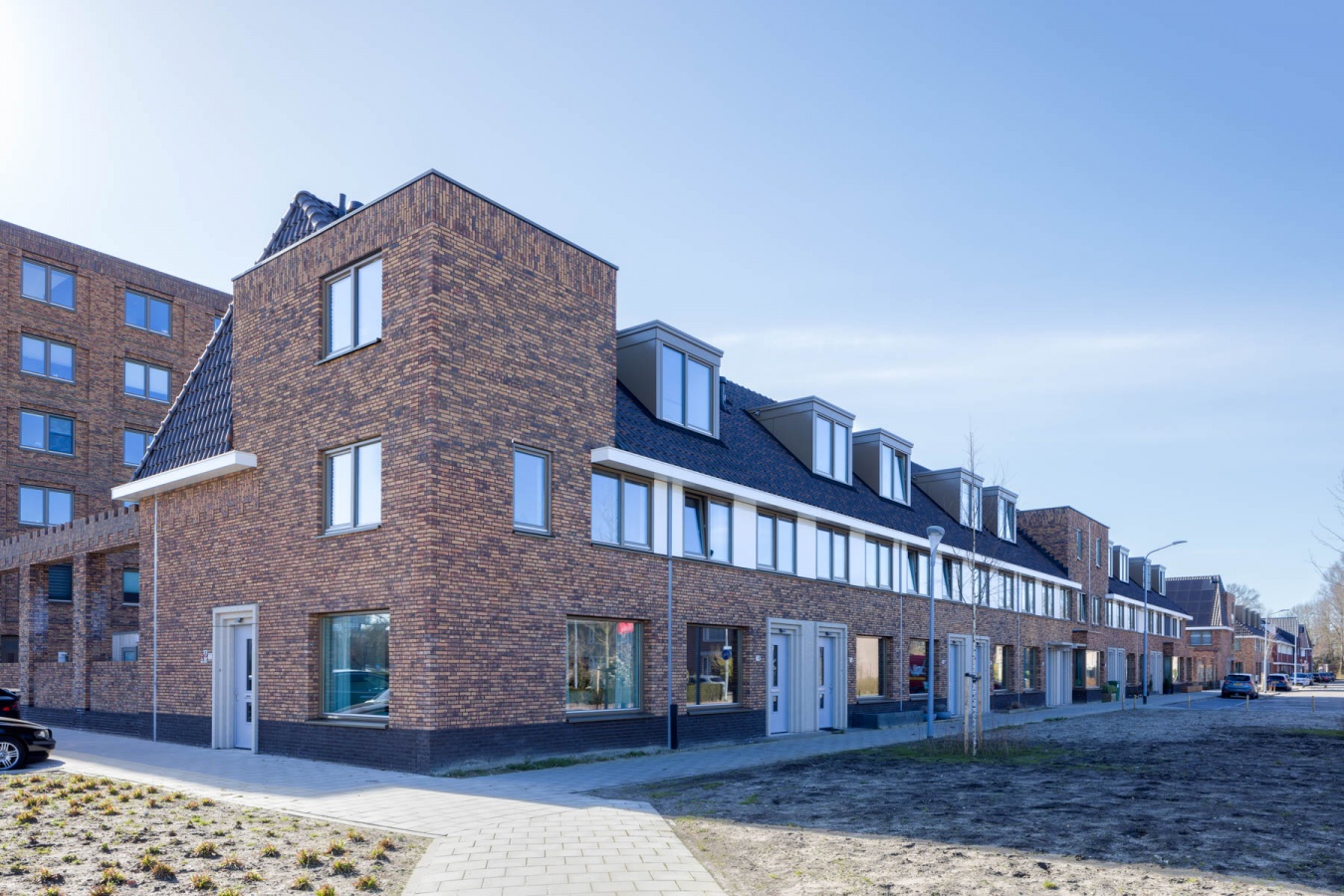
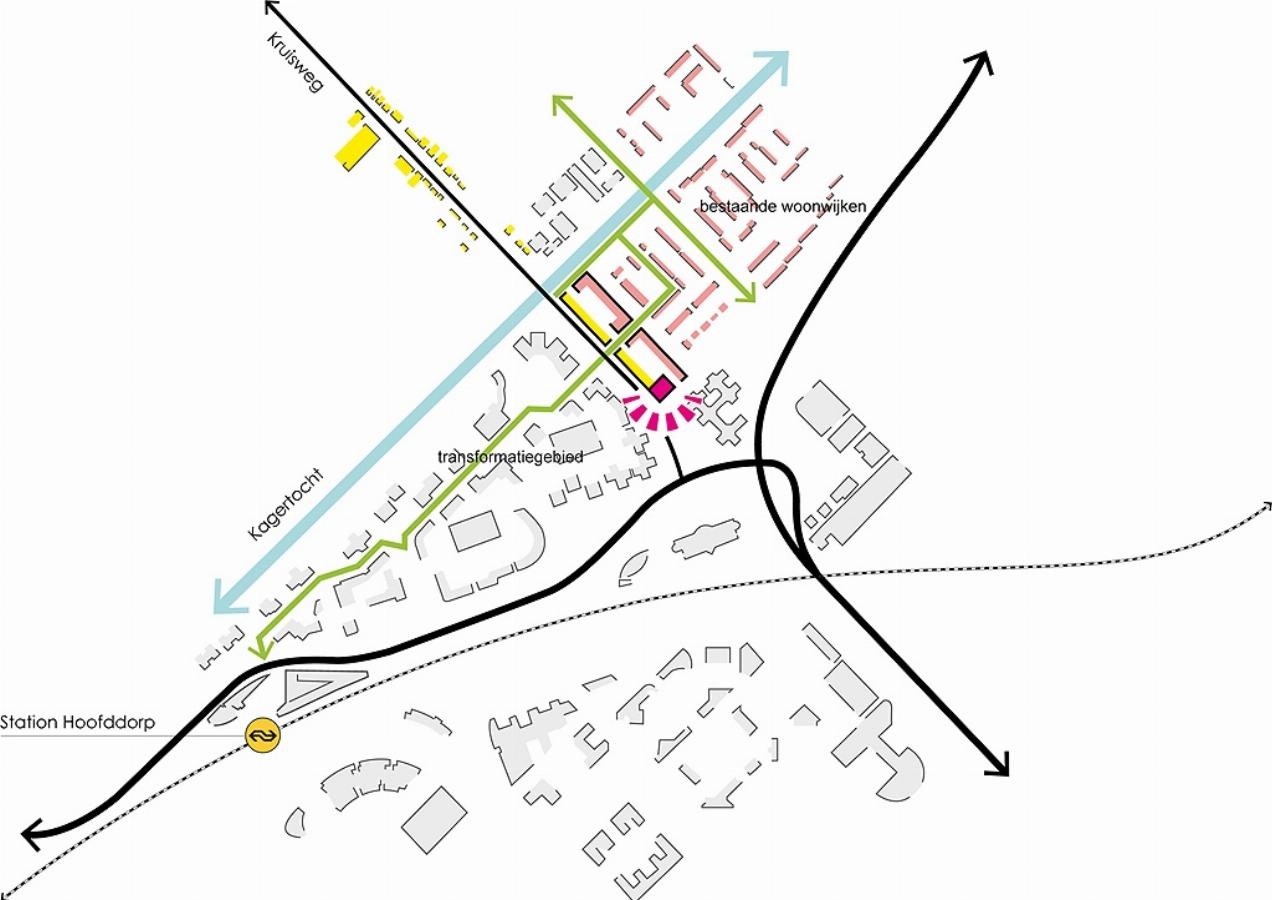
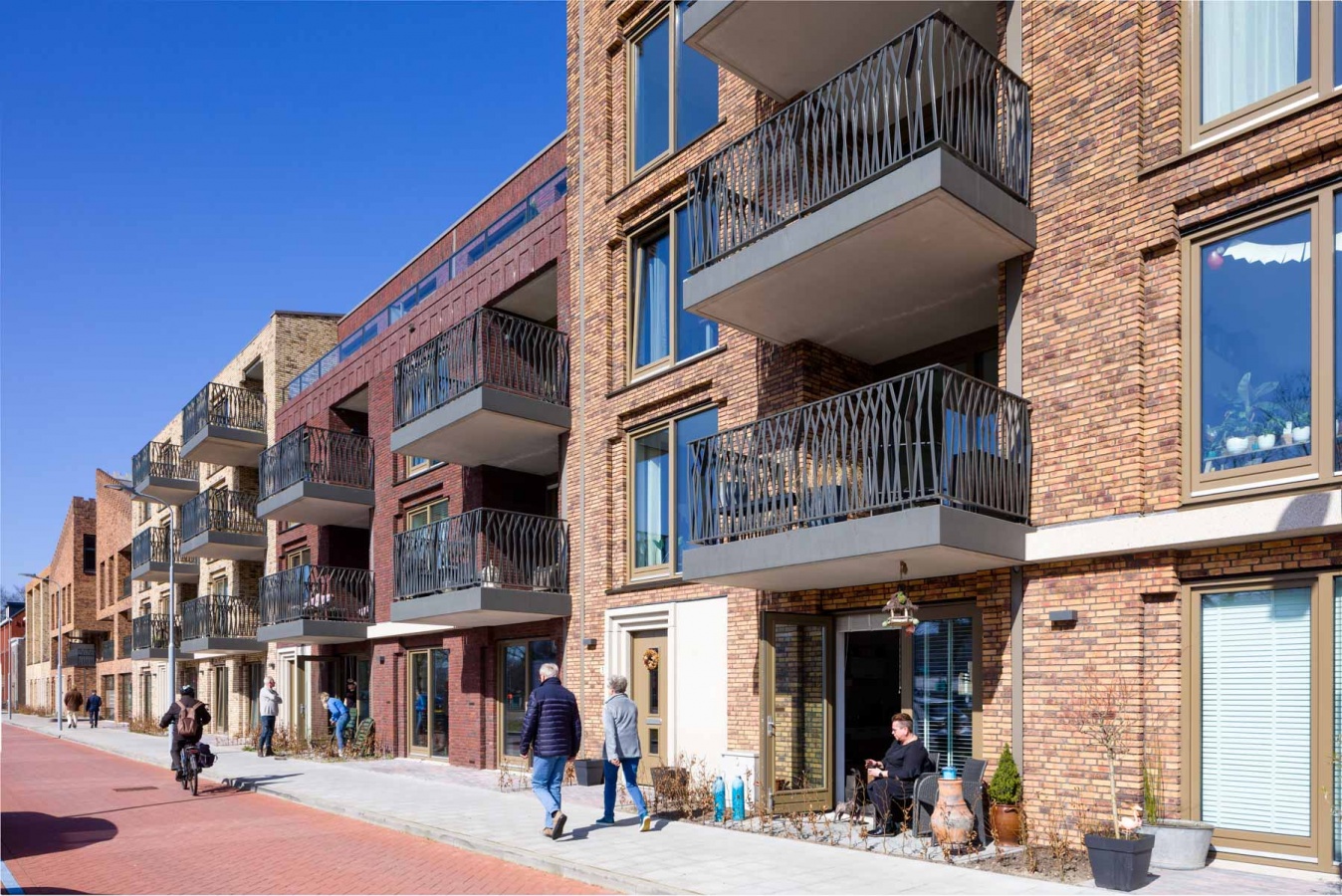
At the beginning of the Kruisweg, the housing project ‘Gemaalhuis’ marks the entrance to Hoofddorp. In collaboration with Timpaan, RROG Urban Planning and Landscape and IBB, moes have been realized in a place where offices used to dominate in the past.
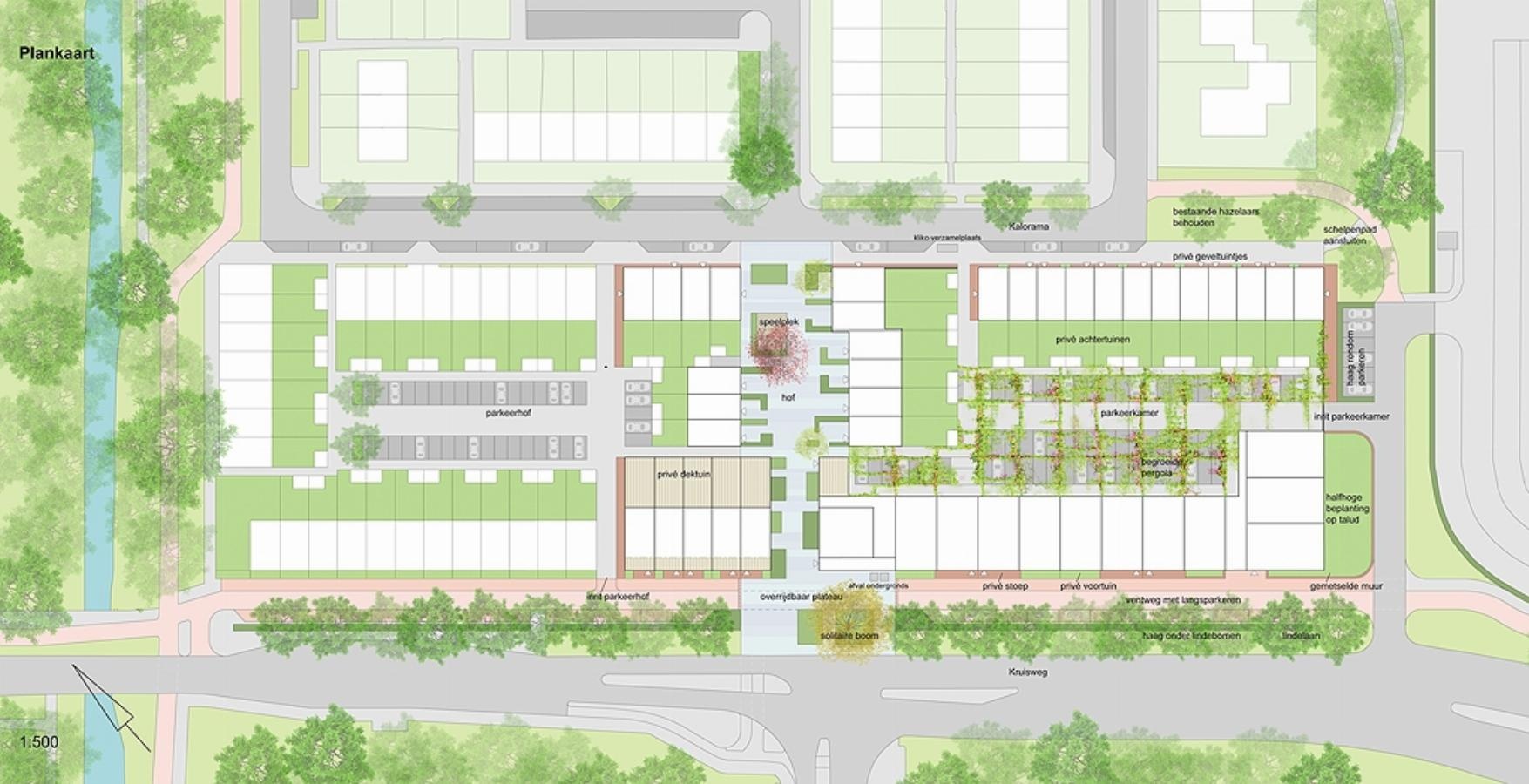
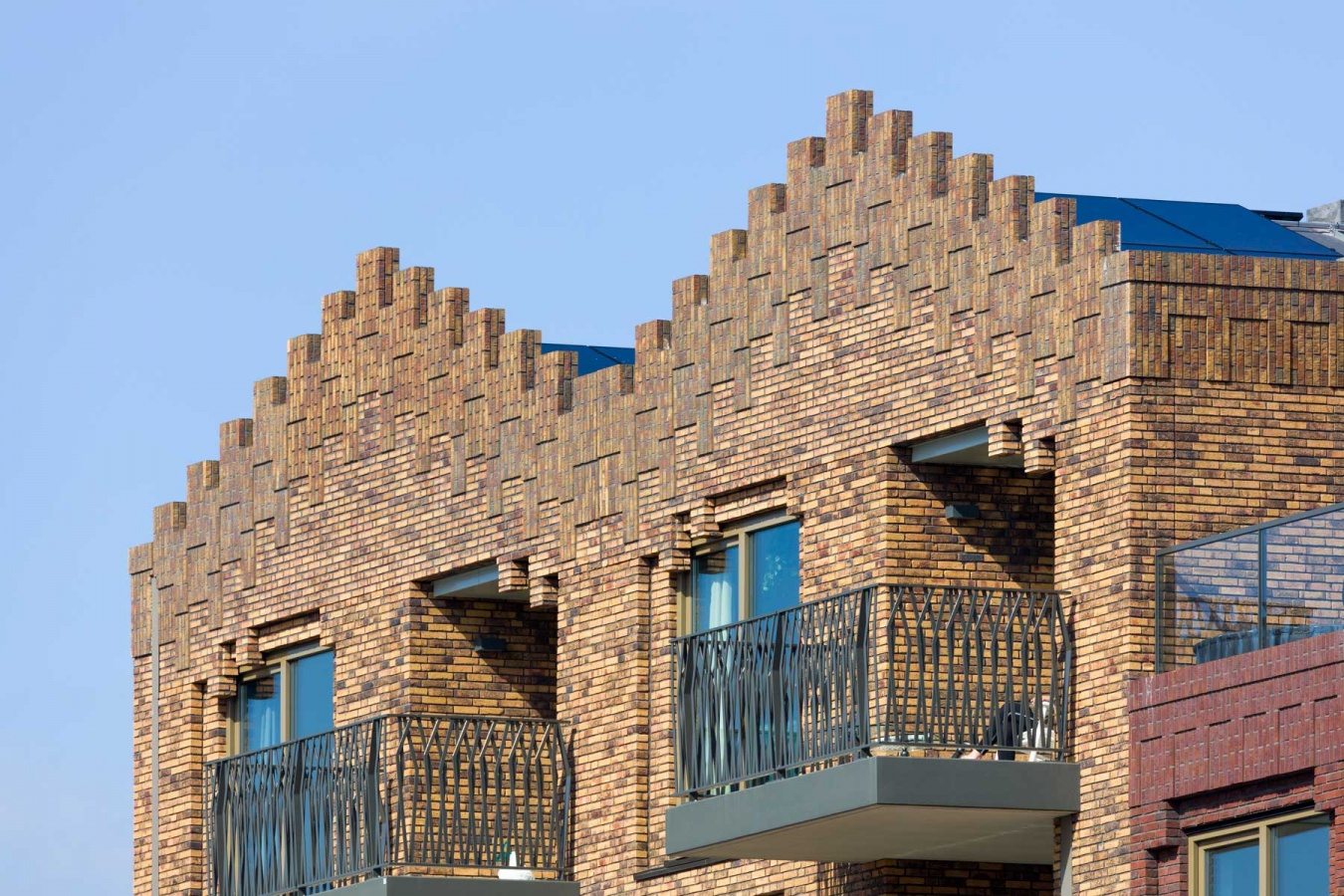
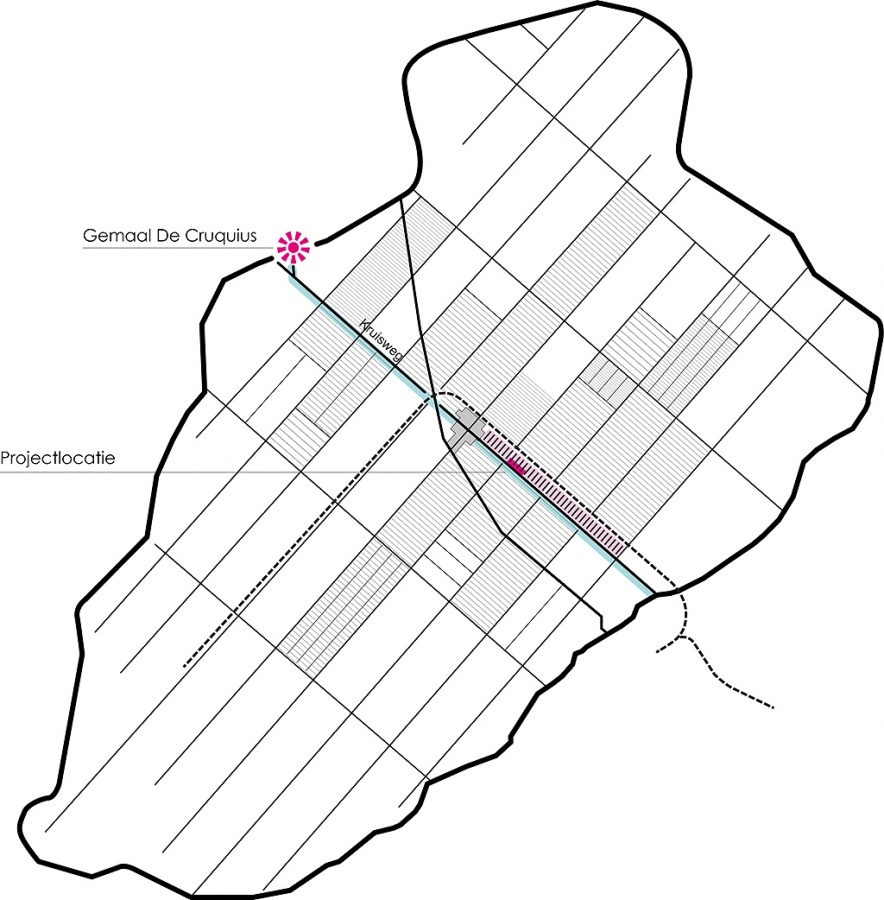
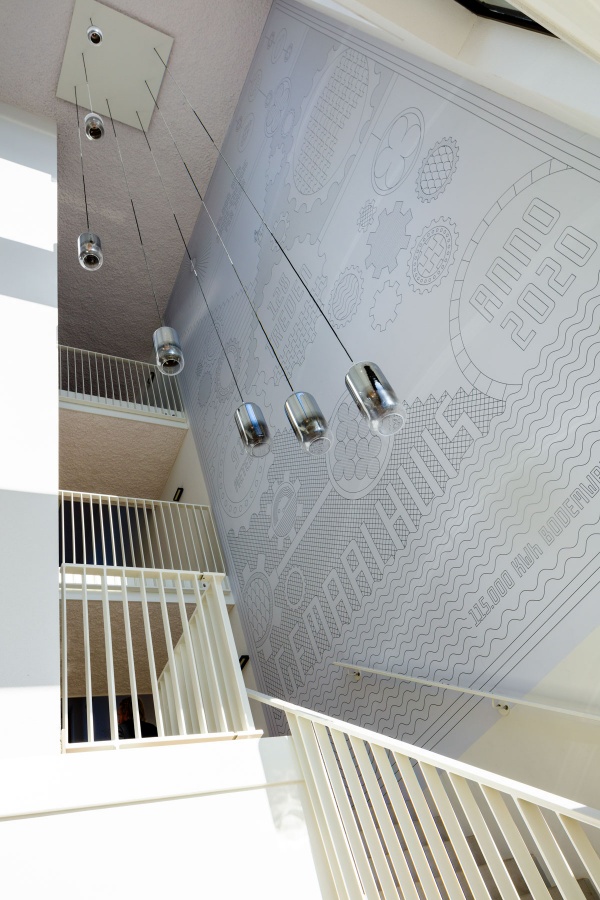
The design for 83 dwellings near the center of Hoofddorp provides a transition between the village ribbon development along the Kruisweg and the large, urban scale that Hoofddorp aspires to. At the design site, the original polder structure was situated perpendicular to the direction of the rest of the Haarlemmermeer. In the design, a passage has been made here in the building block: a quiet residential court without cars and shared use of public space. The buildings are all-sided, refers to the past and seems to have been there for some time without being historicizing. The architecture is robust and stony. Rich brick details refer to the steam pumping stations that stood at the beginning of the creation of Hoofddorp. The complex is a neighbourhood in itself and has variety of housing typologies; single-family houses, veranda houses, terrace houses and apartments. The apartments are designed as freely divisible lofts.
The homes were completed in June 2020.
| Architects | Ronald Knappers, Thomas Gillet |
| Client(s) | Timpaan |
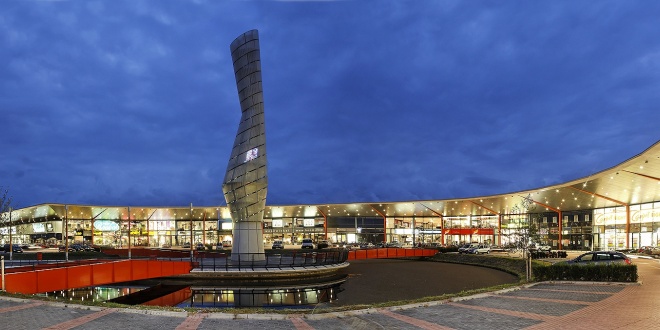
Cruquius Plaza, near Hoofddorp, municipality of Haarlemmermeer is the result of a competition that was organized in 1999 on behalf of the municipality of Haarlemmermeer to boost shopping in Cruquius. The competition was won by ING Vastgoed and VVKH. The existing residential boulevard has been completely renovated and adapted to the requirements of today. In addition, 30,000 m2 of retail space and 25,000 m2 of industrial space have been added. A flexible building, particularly with regard to the shops, and a water feature with a square at the shop entrances have been realized at the location. The cantilevered awning offers provides shelter for a pleasant shopping climate. The supply takes place from two expedition entrances on the company side. Via the internally located expedition corridors on the ground floor and first floor, the shops can be supplied freely from the shoppers. The 30-meter-high Cruquius Tower, the luminous center of the square, is a clear landmark of the residential boulevard.
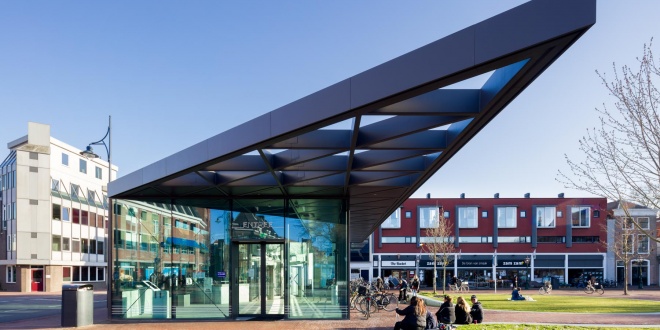
The team with VVKH Architects, Dura Vermeer and Besix has been selected for the design and build of a five-story underground parkinggarage in the historical center of Leiden.
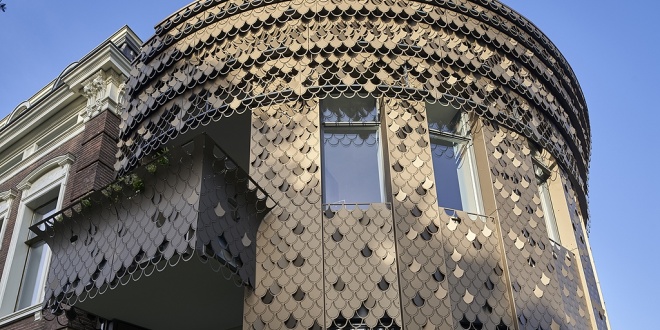
The Plantsoen in Leiden is well known for the historical appearance of both the city park (1836) and the houses of the last quarter of the 19th century. The park was originally landscaped on the edge of the city in the place of an old defense belt. At the entrance of the park at the east side the monumental building Plantsoen 1 – 3 is redeveloped in a complex with 6 apartments. The apartments of about 150 m² are provided with all luxury and comfort, such as a private indoor garage, spacious roof terraces and an elevator, while retaining the historical look and value of the building. Redevelopment also applies to sustainability; obtaining Energy label A. Exterior facades, window frames and roof are additionally insulated. The houses are underfloor heated and solar panels are provided on the roof.
The municipal monument at Plantsoen 1 – 3 is divided over three floors and a basement. The property at number 1 was originally a fully detached house, number 3 was part of a block of 3 houses. Both buildings date from 1875 and were connected in 1957 and converted into one large nursing home. In this function change, the original qualities have largely been lost. The round expansion at number 1 dates from 1993.
In the new layout with 6 apartment, the monuments are restored to their former glory by restoration contractor Burgy from Leiden. The façade of the intermediate building is renewed and aligned with the monuments. The existing façade of the round building is finished with a bronze wall cladding, a ‘veil‘ with a leaf motif. This pattern is inspired by the leaf motifs and decorations of the 19th century, which can still be found in various places along the Plantsoen. The round with ‘veil’ becomes a special recognition point in the inner city.
Each apartment has both rooms in the monumental area as well as in the newer parts. The interior of the monumental buildings is provided with appropriate details to bring back the historical character as much as possible. This specific part is provided by Verlaan & Bouwstra architects from Vianen.
On the inside buyers have a lot of freedom of choice; they can choose for an even richer historical finish with wall tension, panelling and en-suite layout or a tight, modern finish and layout; both are possible. Each apartment is unique, has its own layout and its own character. Only the view is the same for all apartments; they all look out over the beautiful monumental city park the Plantsoen at the town canal.
The redevelopment was completed in July 2018.
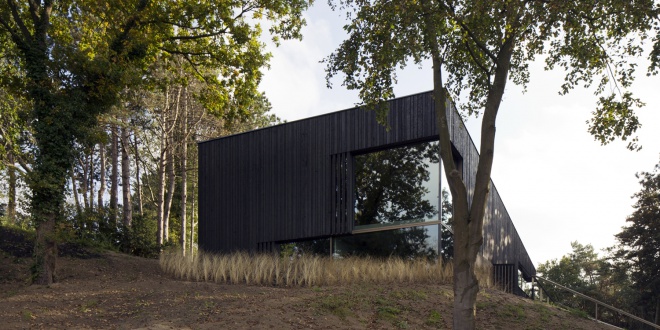
Villa Meijendel takes its name from the nature reserve in which it is located, where a forest meets a valley of dunes. The house is constructed from concrete and set into the side of a sandy slope. The building's design aims to create a dialogue with its surroundings, both through the way the form and materials engage with the landscape, and through the use of glass to provide views out from and into the house.
The boxy geometric structure is entirely clad in charred timber, creating a textured black surface that appears different depending on how sunlight falls on it. The exterior finish, inspired by the ancient Japanese shou sugi ban technique, also helps to preserve the wood. Sometimes the house is almost invisible against the dark edge of the forest, sometimes it sparkles in the sunlight because of the glittering charred wood, as such forming a background for the play of shadows of tree trunks and branches. The villa hides and reveals itself in the landscape.
The property has its entrance on a middle level accommodating an office and two bedrooms. Stairs ascend to an open-plan kitchen and living space, and drop down to a master bedroom and gym room.
The living room features a full-height corner window that looks out through the trees towards the dune valley. A lower window facing to the rear and a large glazed surface lining the adjacent double-height circulation area face out onto the forest. At the far end of the first floor, sliding glass doors lead out from the kitchen onto a terrace.
The material palette –concrete, steel and anodised aluminium– was chosen to complement the tones and textures of the surrounding environment. Each material is applied in a raw, untreated form. Internally, the walls are finished with smooth concrete, while the rough-sawn Douglas fir beams supporting the ceilings feature a distinctive grain.
West 8, Adriaan Geuze, is responsible for the garden design.
Photography is by Christian van der Kooy