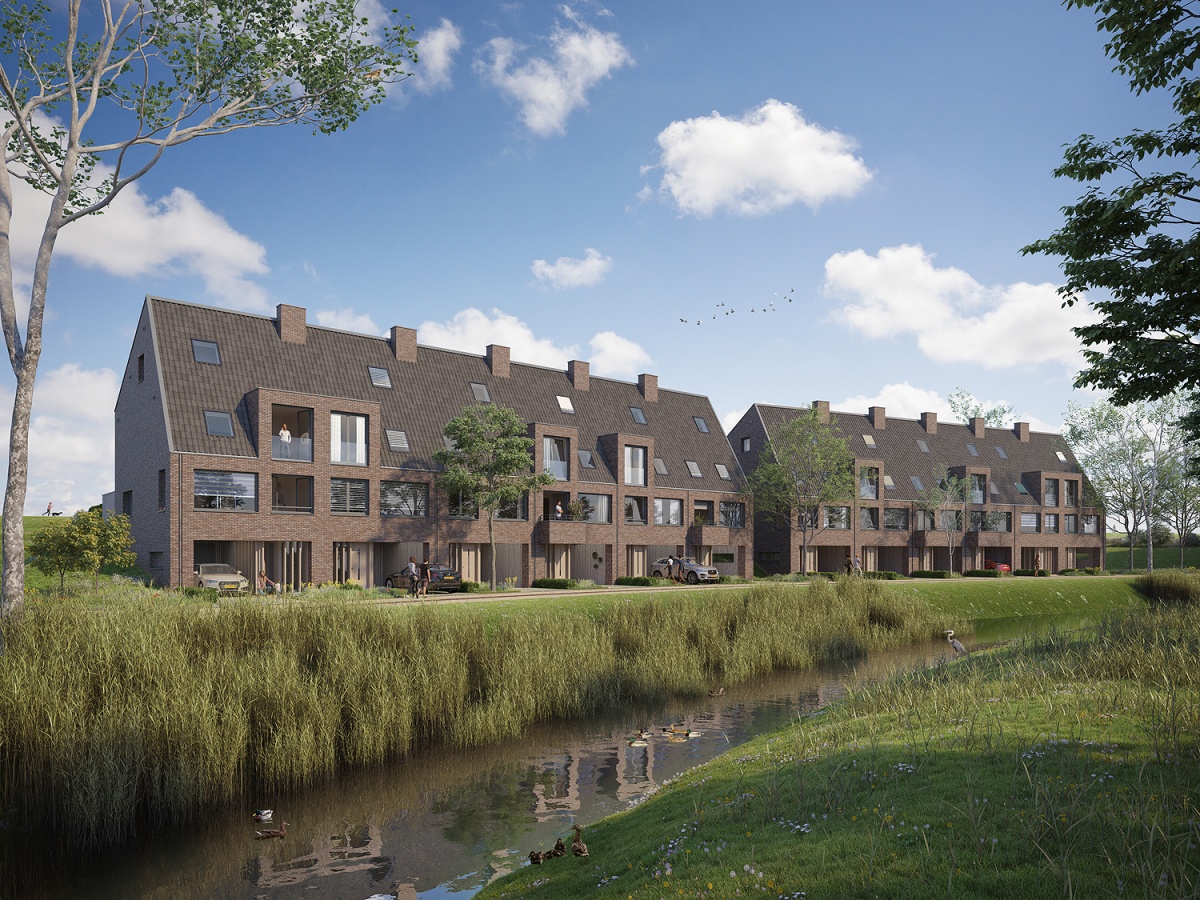
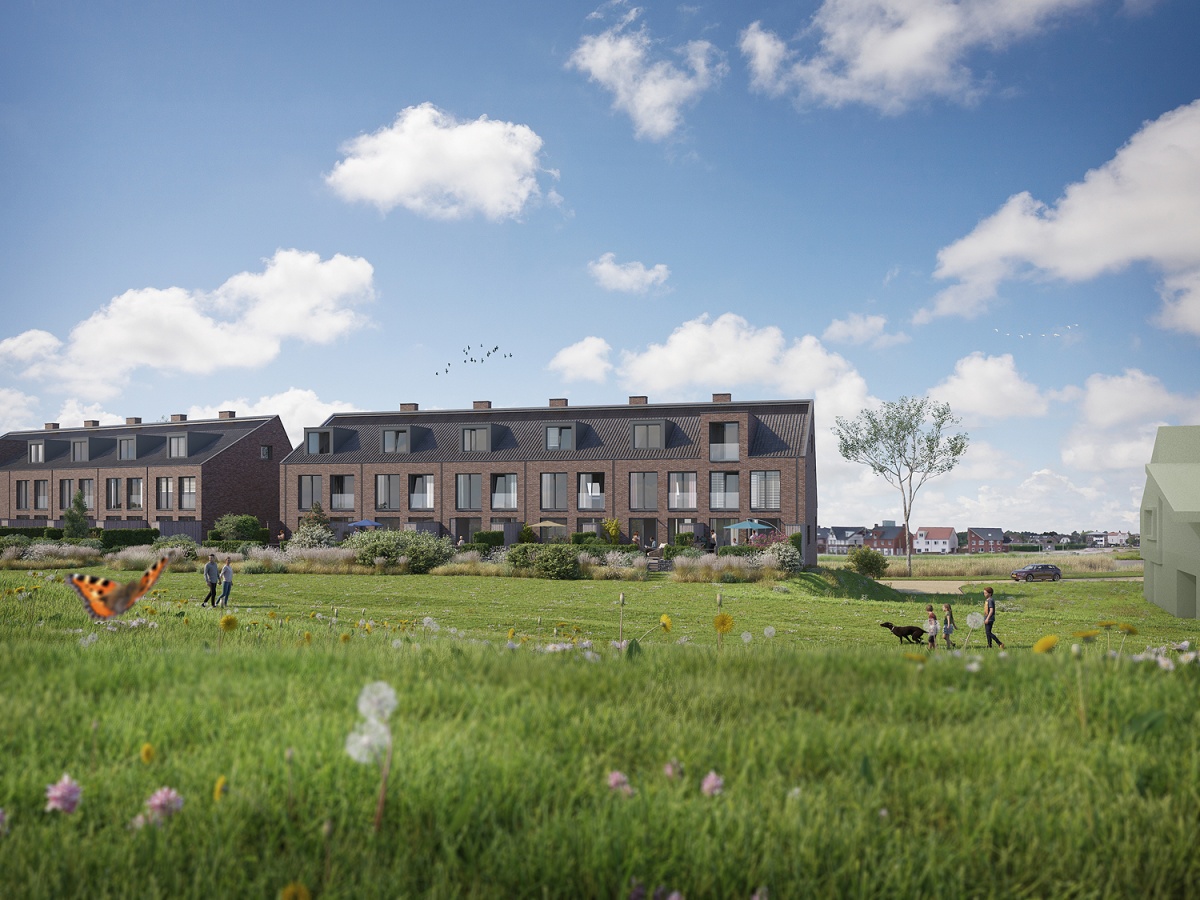
A total of 269 houses and apartments are being built by various parties in the Stelt Zuid, part of the “Waalsprong” near Nijmegen. De Stelt Zuid occupies a special position as a green enclave between the village of Lent and the river. Four combinations of architectural firm and developer work together here on a new residential area, with a central orchard and the dike zone as structuring elements.
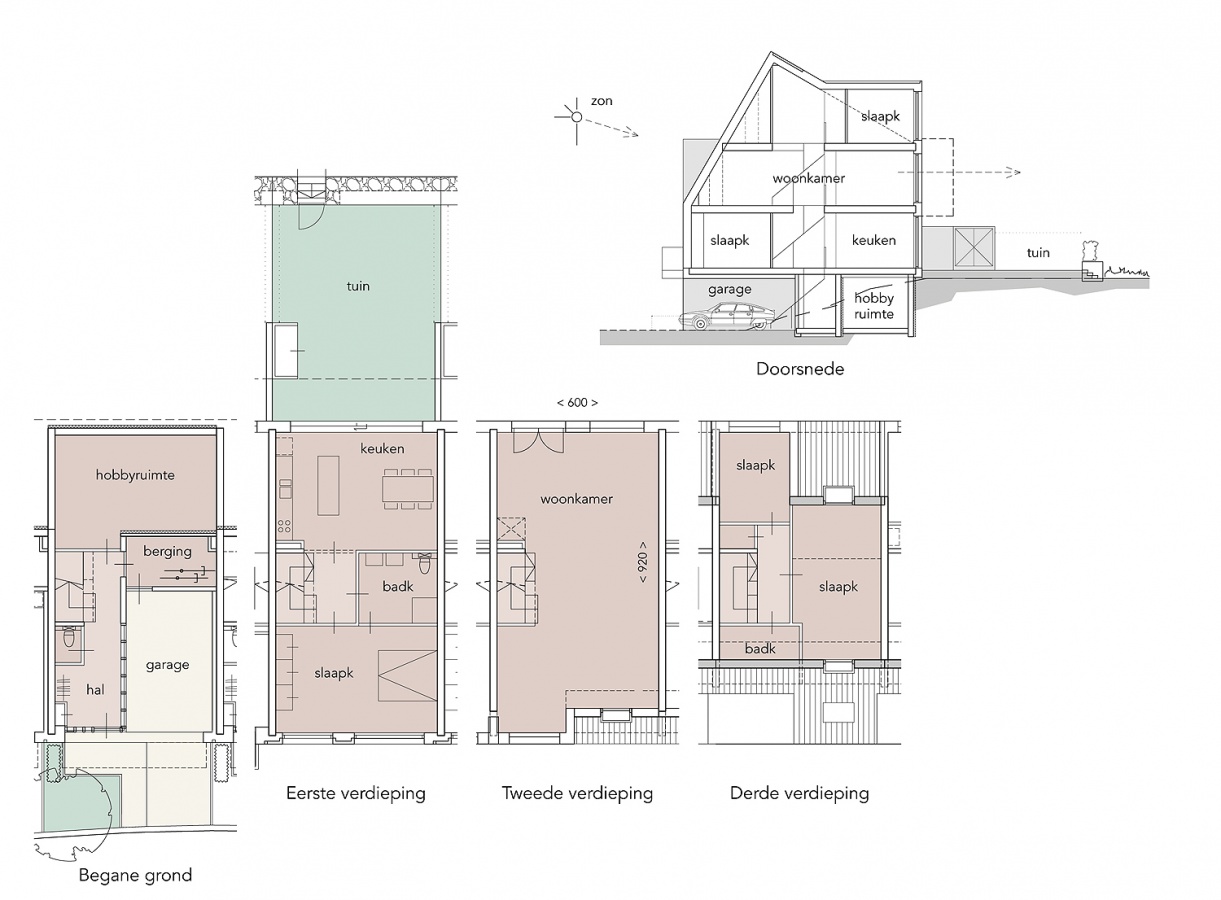
Commissioned by BPD, we made the design for 12 dike houses in the dike zone. The houses have a living area of approximately 190 m2 and all have a fantastic view from the living floor over the Waal and the city of Nijmegen. There is parking at the bottom of the houses, on the first floor the master bedroom, kitchen and backyard are situated on the dike, on the second floor the living room with a view of the Waal and the third floor can be set up as a sleeping and / or work space. The houses are gas-free and the roof is fitted with solar panels.
The height differences of the dike area are reflected in the gardens and the transition to the struing area along the dike. From the terrace of the houses you can walk towards the banks of the Waal.
The houses were put on sale in December 2019.
| Architects | Ronald Knappers, Krijn Tabbers |
| Client(s) | BPD |
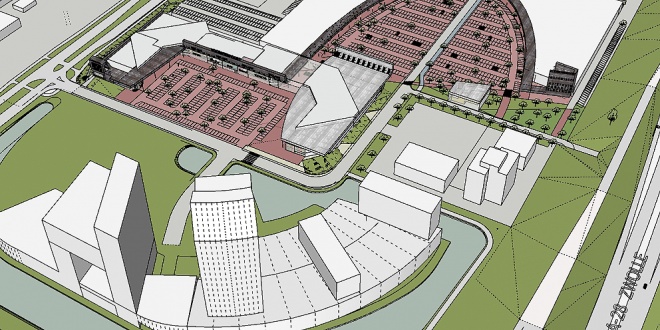
Woonboulevard Voorsterpoort in Zwolle is a well-running residential boulevard near the exit of the A28 motorway. Market research shows that there is room for expansion with more than 30,000 m² GFA for large-scale retail. Plots are available for expansion behind the existing boulevard. In our vision, the expansion will be realized around an oval square with parking at ground level. All shops are visible from anywhere on the square. Landmarks will be realized at the ends. The extension will be connected to the existing boulevard through a gate. The existing boulevard will be renovated, so that the shopping center will eventually again present itself as a cohesive complex. The plan can be realized in phases.
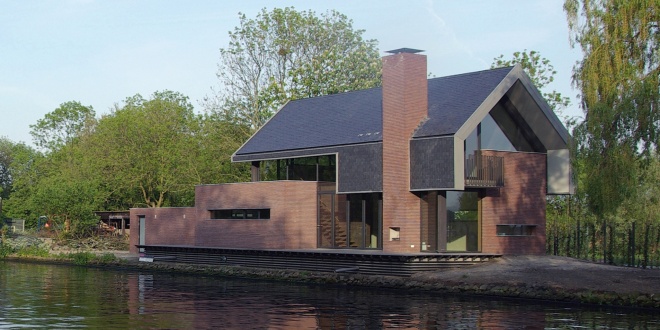
On a triangular plot, where the historical Vlietweg diverts from canal the Vliet, VVKH designed a house based on experiencing the Vliet. Rough, brick walls engage each other, vaging what is inside and outside. Water and landscape are part of the house.
At the entrance you're being received in a yard with monumental trees. The aperture in the wall give a first glance of the Vliet. From the high entrance it's three steps up to enter the livingroom giving a panoramic view over the Vliet, but shielded from the road.The folding window opens completely and extents the livingroom straight to the edge of the water. A stair with cantilevered steps and a glass balustrade leads to the first floor.
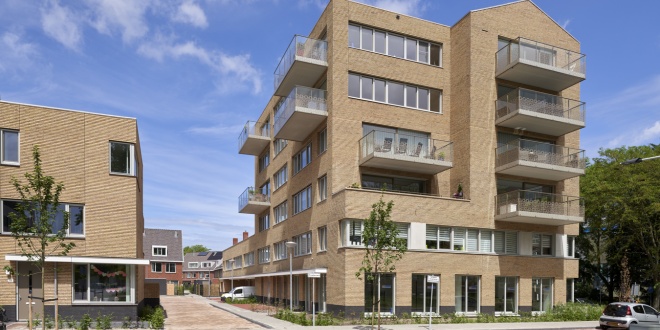
In cooperation with Smits bouwbedrijf, VVKH has won the european tender to develop a new housingarea in district Dieperhout in Leiden. The project consists of 48 dwellings, 12 apartments and a care facility of 1500m². Start of the constructionwork is planned in may 2015, because thats when a current school will move to a new building and the site will be available.
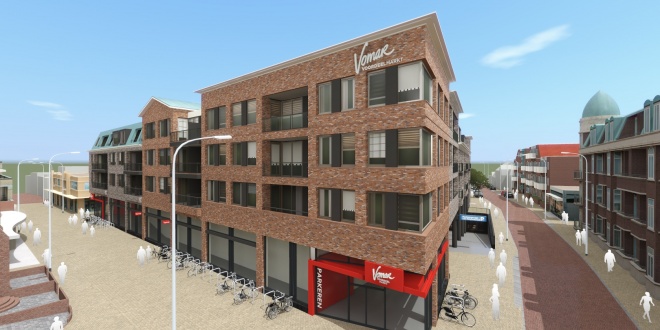
Urban development and architectural integration “Vomar” location, corner of Abraham van Rooijenstraat and Maarten Kruijtstraat in Noordwijk
From an urban planning point of view, the contours and height of the building plan were determined by the municipality of Noordwijk. The plan clearly defines the streets Abraham van Rooijenstraat and Maarten Kruijtstraat, in line with the existing street profiles. Gasthuissteeg will also have a clear boundary with this building plan.
The main mass has an intermediate scale between two worlds present in the environment. On the one hand, there is the smaller-scale village development of the Hoofdstraat and on the other hand, the large-scale hotel development. The mass of the new building block to be built is 3 storeys high plus a roof storey. It is articulated into a number of volumes, softening the scale of the building block. These volumes are made independent by different colors of masonry and roof finishes. With a play of rhythm between balconies, windows, tires, roof moldings and a green-copper-colored roof, the building blends in well with the seaside resort architecture of the environment. The mass on the Gasthuissteeg is 2 storeys high. It has a green facade with window openings. On the north side of the plan, the existing firebreak will be closed and the buildings will close directly on the adjacent plot.
The plan is mainly sustainable because of the triple land use. The building block has an underground floor, on top of that a storey layer, above that a parking deck for the houses and 42 houses.
Abraham van Rooijenstraat is an important access road. That is why functions such as the entrance to the underground parking garage, the entrance to the parking deck on the 1st floor in front of the houses, and the entrance to the expedition have been made here. The Kruisstraat will become more traffic-calmed. This will be the world of shopping as it is at the Hoofdstraat. This is where the shopping functions will be located, which are accessed via two clear entrances at the corners. These entrances are clearly visible from the Hoofdstraat and from the Grent.
The entrance to the houses is on the north side. This will give the existing loading and unloading yard, where other residential accesses are located, a quality impulse. The gallery facade, which is hardly visible from the public space, is conceived as a veranda world. It's a light world of painted wood.