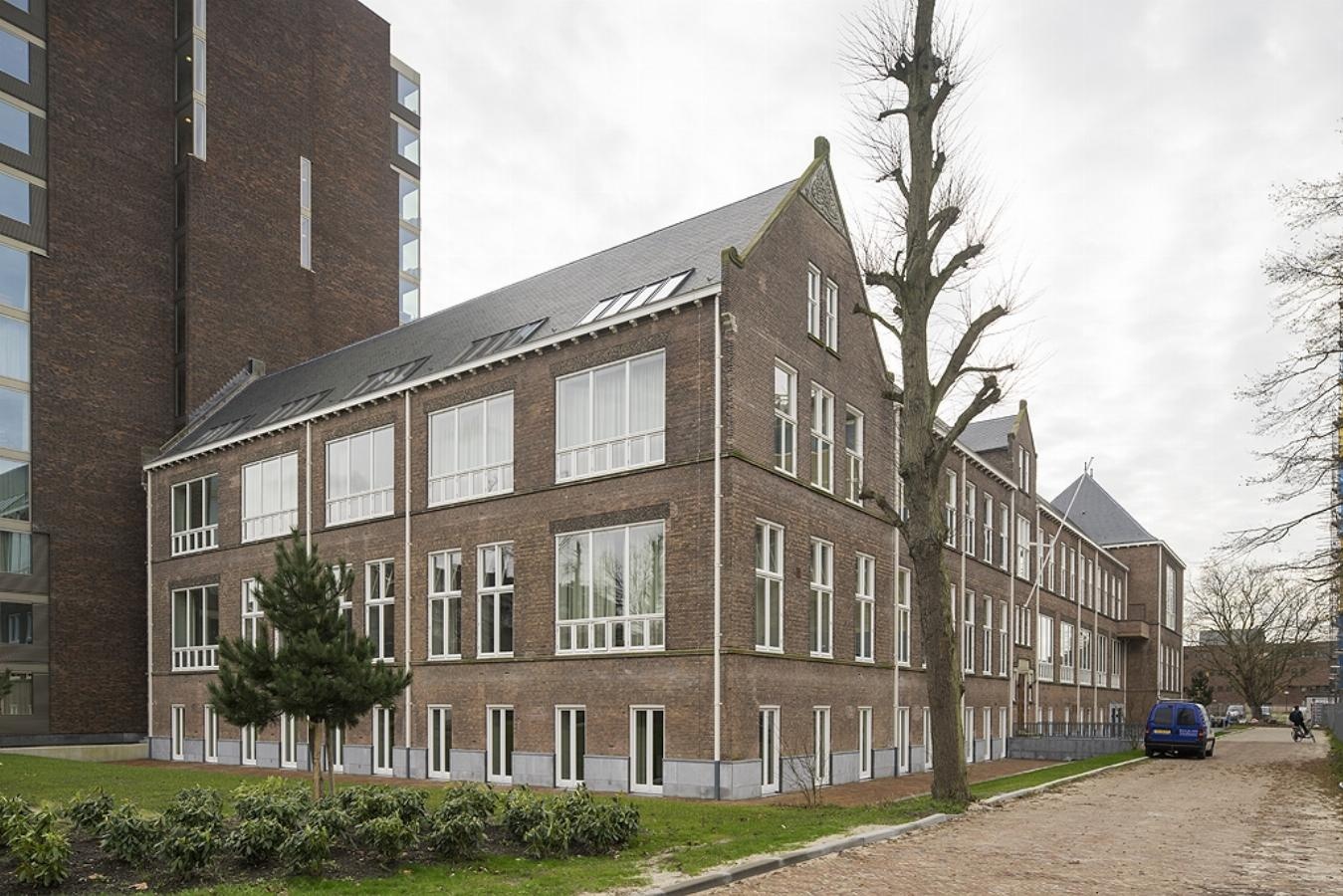
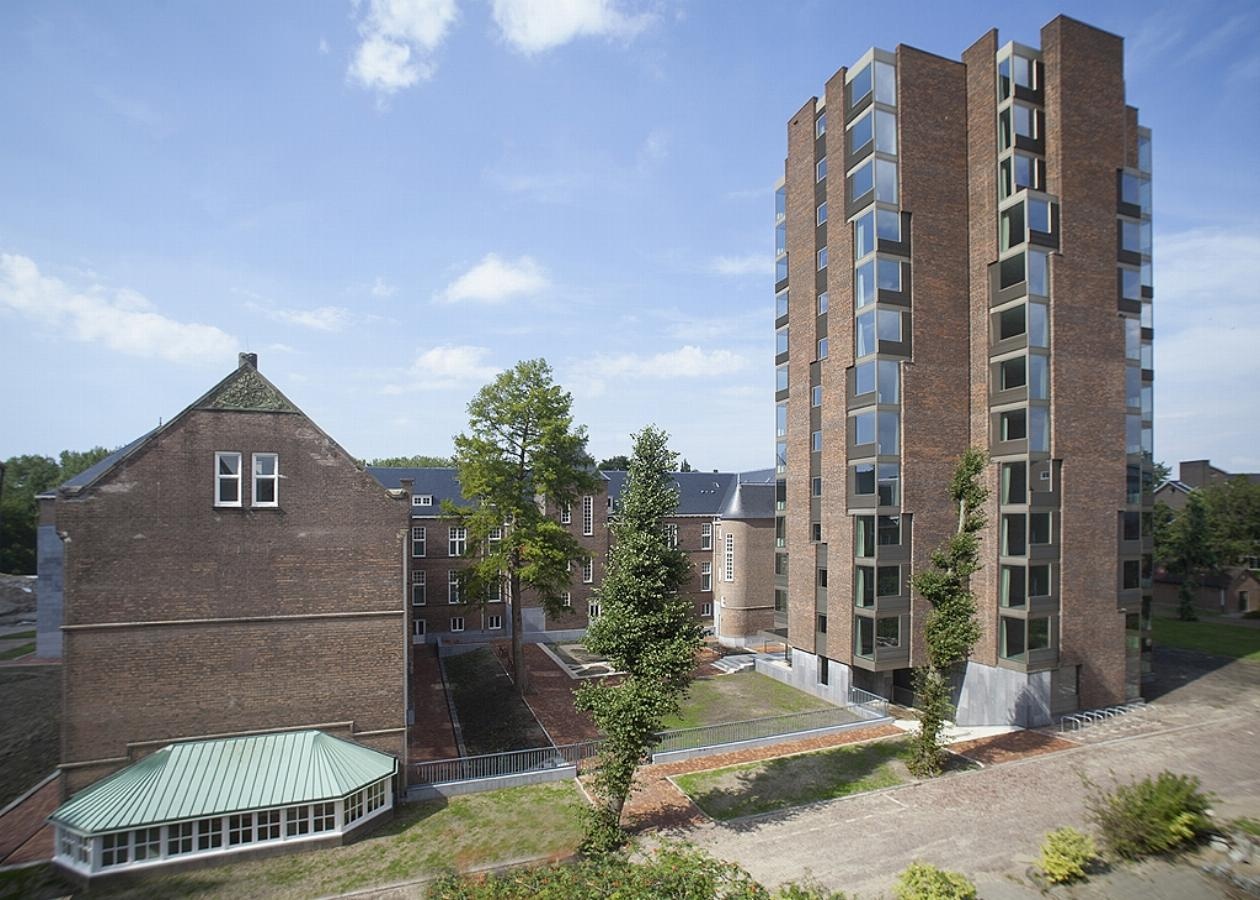
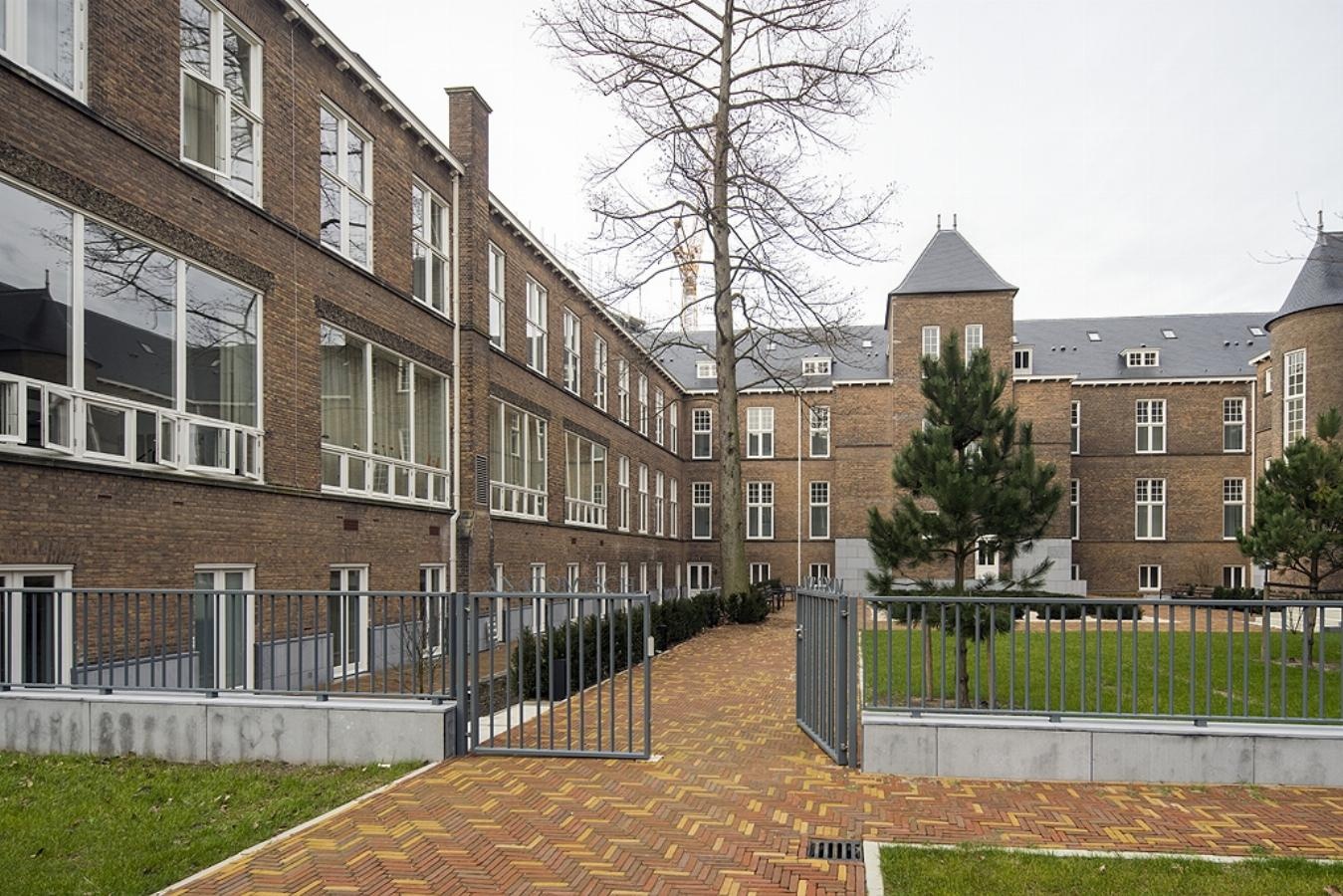
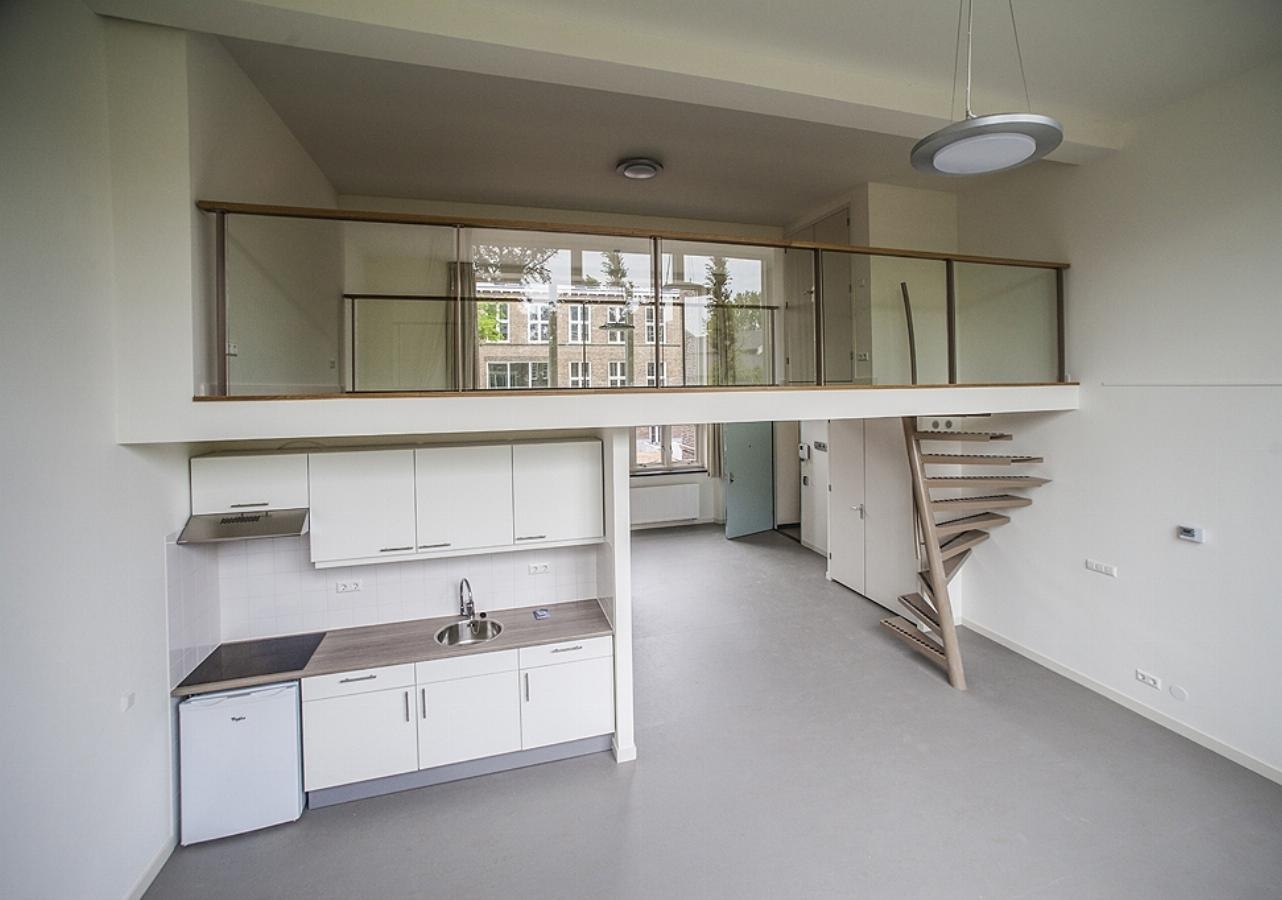
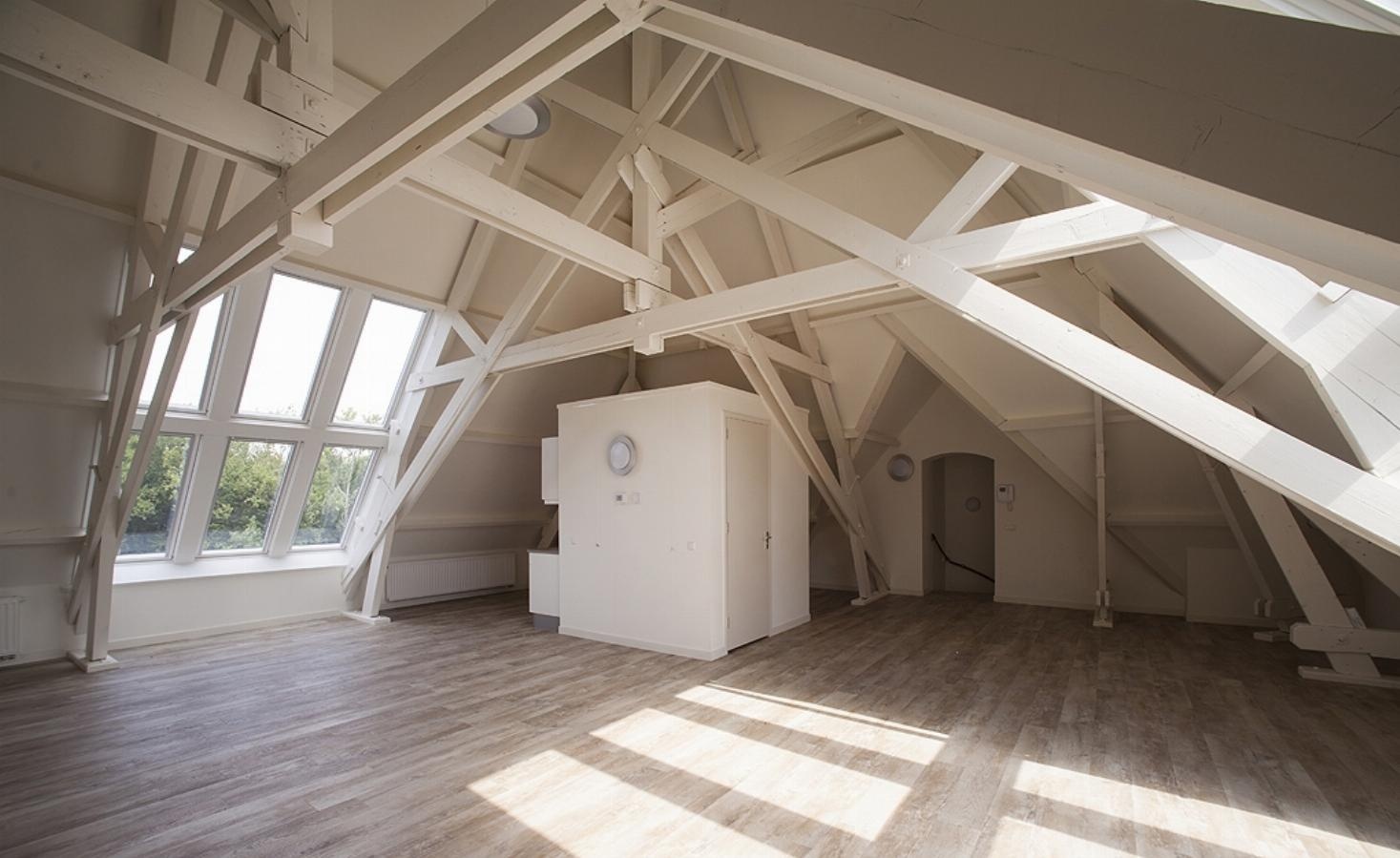
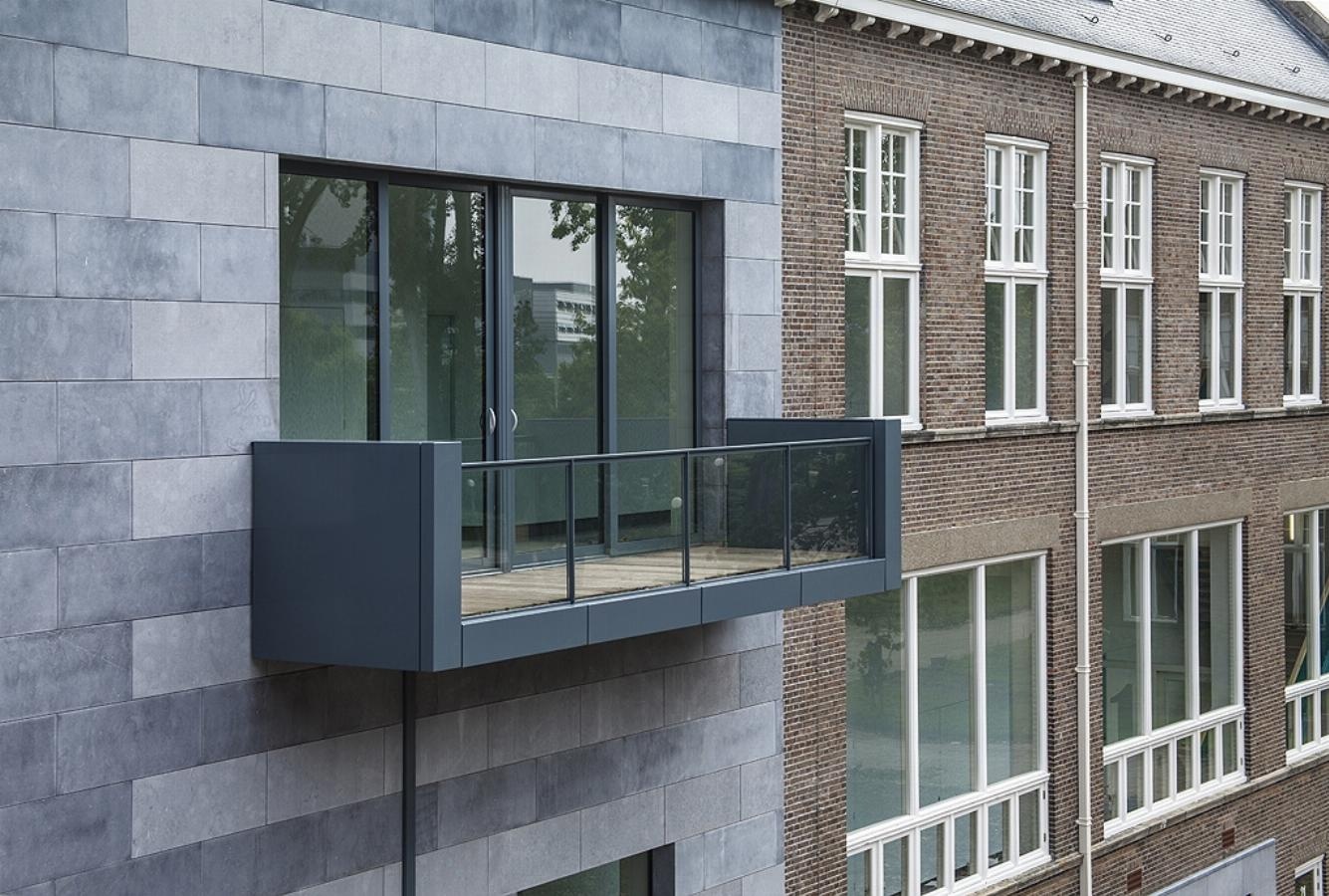
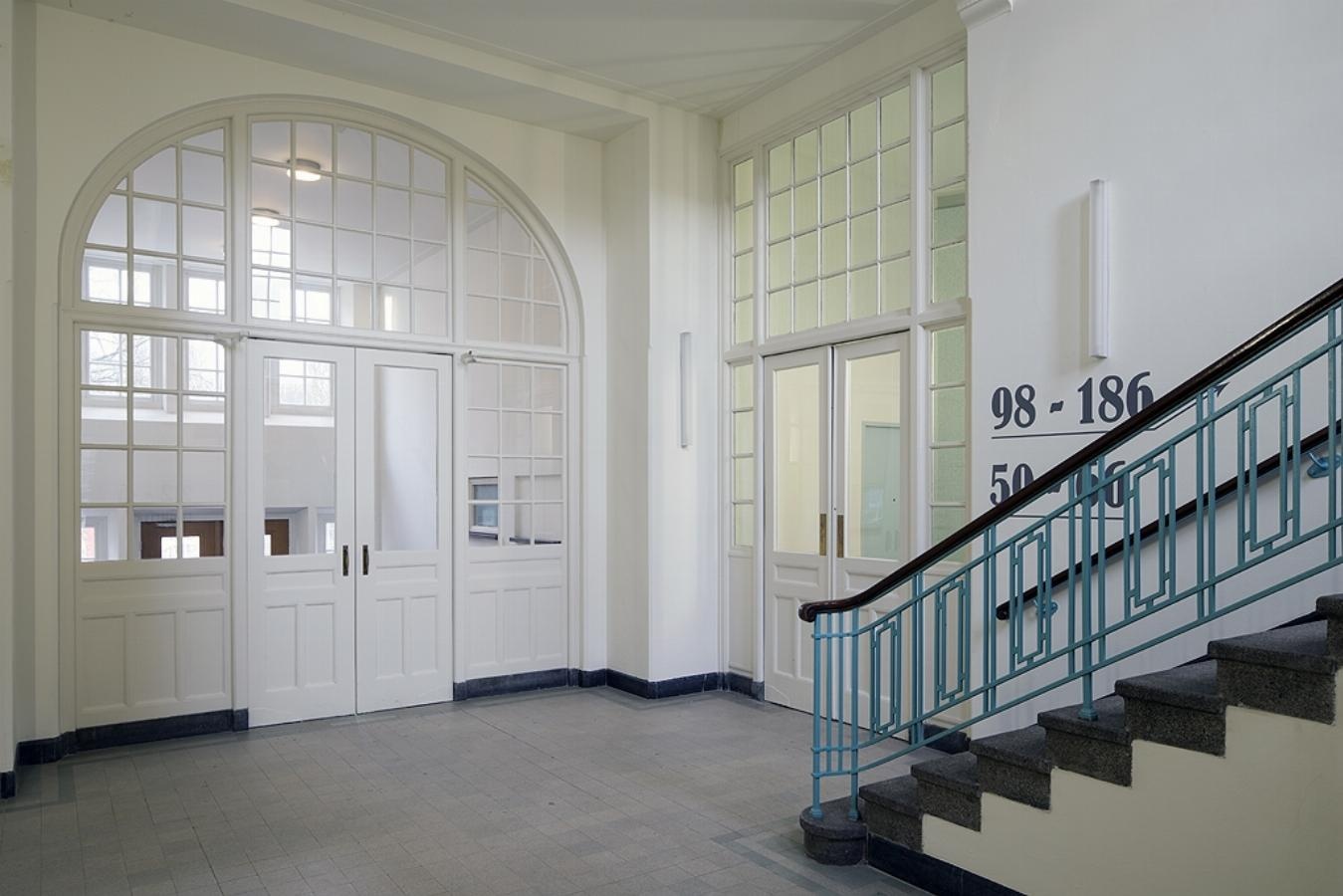
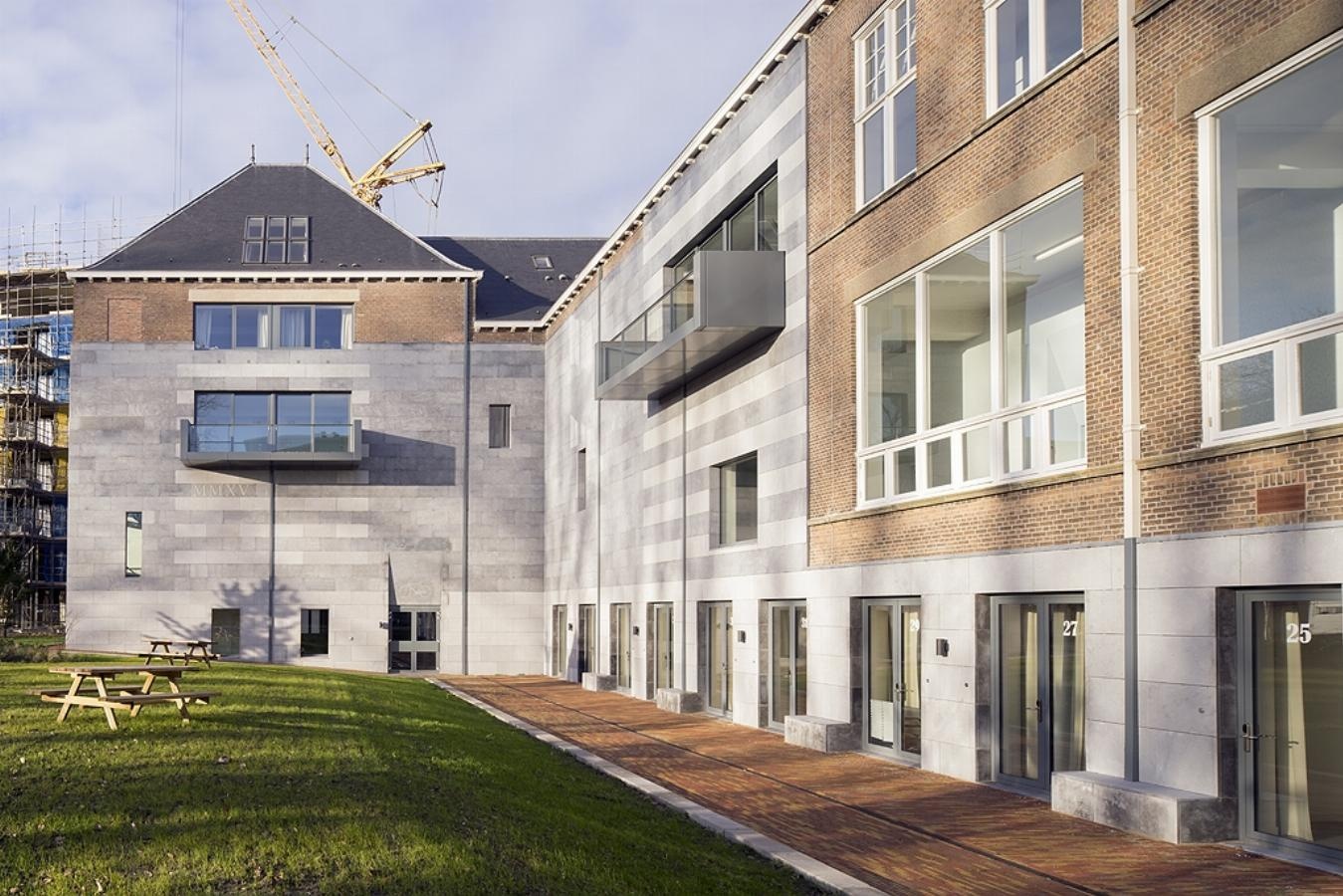
On the Boerhaave Campus, part of the Bio Science park in Leiden, the historical anatomy-building has been transformed into housing for Phd-students and researchers of the Leiden University. The new apartments are characterized by their high ceilings and old constructions. A small mezzanine is created to function as a bedroom. Right beside the existing building a new appartmentbuilding is erected, designed by Van Gameren of Mecanoo Architects. The total complex contains 166 apartments and is the first step in the complete transformation of the Boerhaave Campus.
| Architects | Fons Verheijen, Krijn Tabbers |
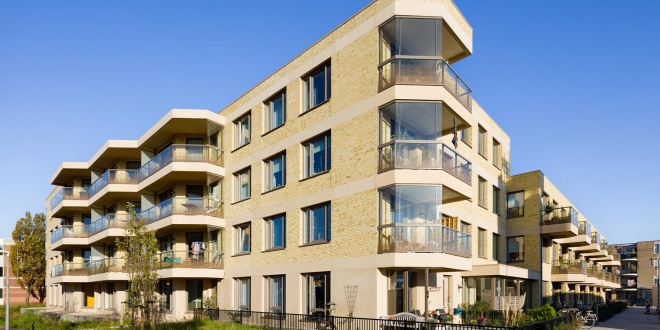
The plot Oeverpolder is located in the central part of the Hoornespolder, a 1960s reconstruction area. In recent years, this district has undergone a transformation, where living is more focused on the public space and a clearer separation is made between public and private.
In the design for the new-build location, a U-shaped courtyard building was chosen, which in terms of architecture and grain size connects to the existing buildings. The green structure of the neighborhood is reinforced with the design. The transition between the residential building and the public space has been carefully designed. There are no garages, storage rooms and blind facades in the public space. The U-shaped building contains a total of 52 apartments of 53-88 m2. The building on Hoorneslaan has 4 storeys, the other two sides are 3 storeys high. The houses are all accessible via (widened) galleries in the courtyard, parking is partly in the courtyard and partly on public land, on the street.
The masonry architecture is in line with previous transformations on Hoorneslaan, but also fits in well with the existing modern reconstruction architecture of, for example, the adjacent Pniëlkerk. Due to the sloping boundary of the plot on Hoorneslaan, the building block has been given characteristic staggered façades here. It is an all-round designed building that at the same time has a new and unique character, but also fits well in the neighborhood.
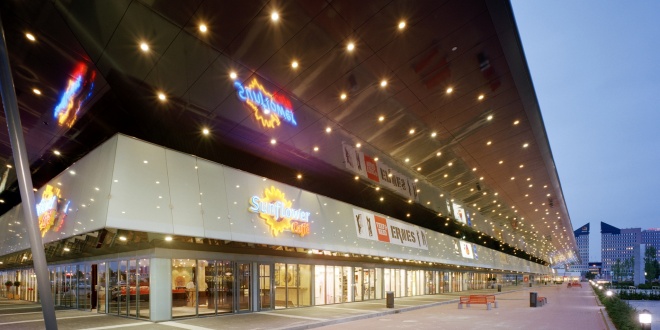
For the large-scale shopping and business center De Herven, dating from 1979, there was a threat of emptying out and impoverishment, including through screaming facade advertising. A redevelopment plan was implemented in 2003 to reverse this negative spiral. With important but relatively simple interventions, such as a uniform facade layout and advertising to be conducted according to fixed rules, as well as a generous continuous and cantilevered awning of 13 meters, a high-quality and pleasant residential area has again been created. The immediate surroundings, the walking area and the parking lot, have also been redesigned and constructed.
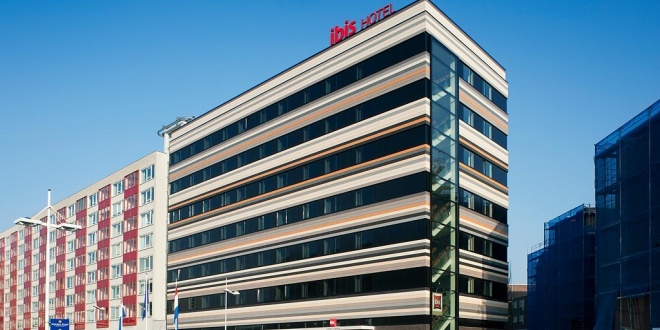
The former university building at the Stationsweg, has been renovated and expanded into a 118-room economy hotel. It is the first franchise hotel of all 870 Ibis hotels in the world and the first Ibis hotel according to the new Ibis generation formula. The new hotel is located opposite Leiden station and is clearly visible from the railway and station.
The 60s building has a completely new facade. The horizontality of the original facade has been enhanced even more in the new facade by providing the parapets of all floors with relatively narrow bands of ceramic elements, placed in varying colors. The black frames and cladding are fitted with a deep gap in relation to the ceramic elements. This makes the colorful horizontal ceramic elements iconic. The facade is continued above the roof. The high, slightly recessed eaves provides a clear termination and also shields the installations on the roof. The plinth of the building is made of a robust stone and a lot of glass. Together with the long white stately canopy of light concrete, they form the basis for the horizontally articulated facade on the one hand and an inviting entrance to the hotel on the other. The high ground floor has been made suitable for public functions such as reception, bar, lounge and dining room, also designed by VVKH. In addition to the "Ibis identifiers", the program of requirements and the wishes of the owner, the zoning, materialization, the existing height and the characteristic concrete construction were also the starting point for the interior design.
photography: Roos Aldershoff ©
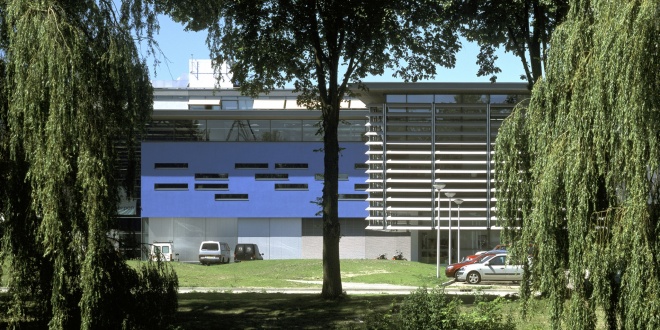
The new faculty OCP of Delft university of technology, accommodates the disciplines of Mechanical, Maritime and Industrial Design. During the constructionworks school continued. The new building shows a contemporary, logical and efficient architectural structure with it's own recognizable facade in the TU-district. The interior design is executed as an integral part of the whole plan.