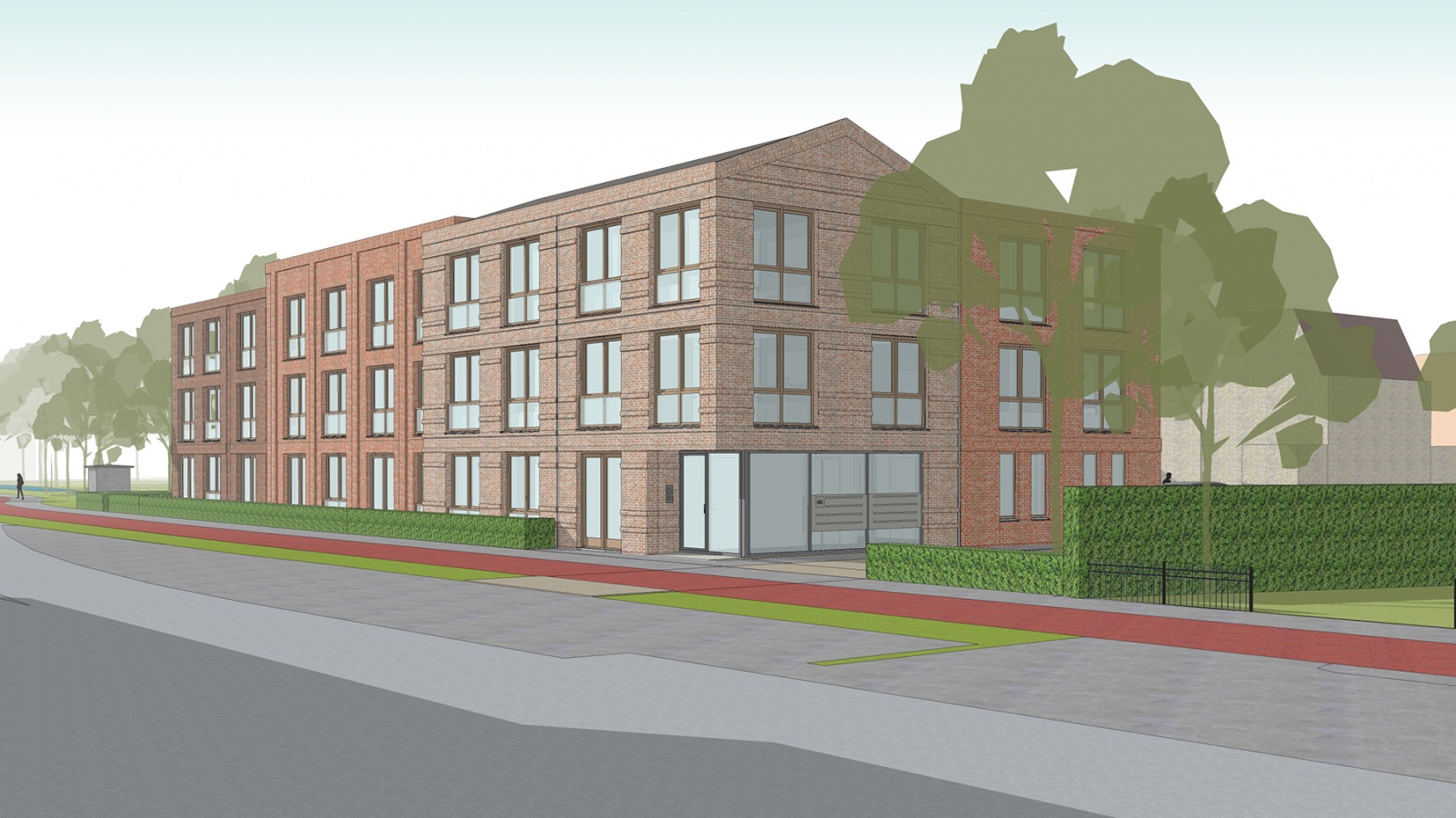
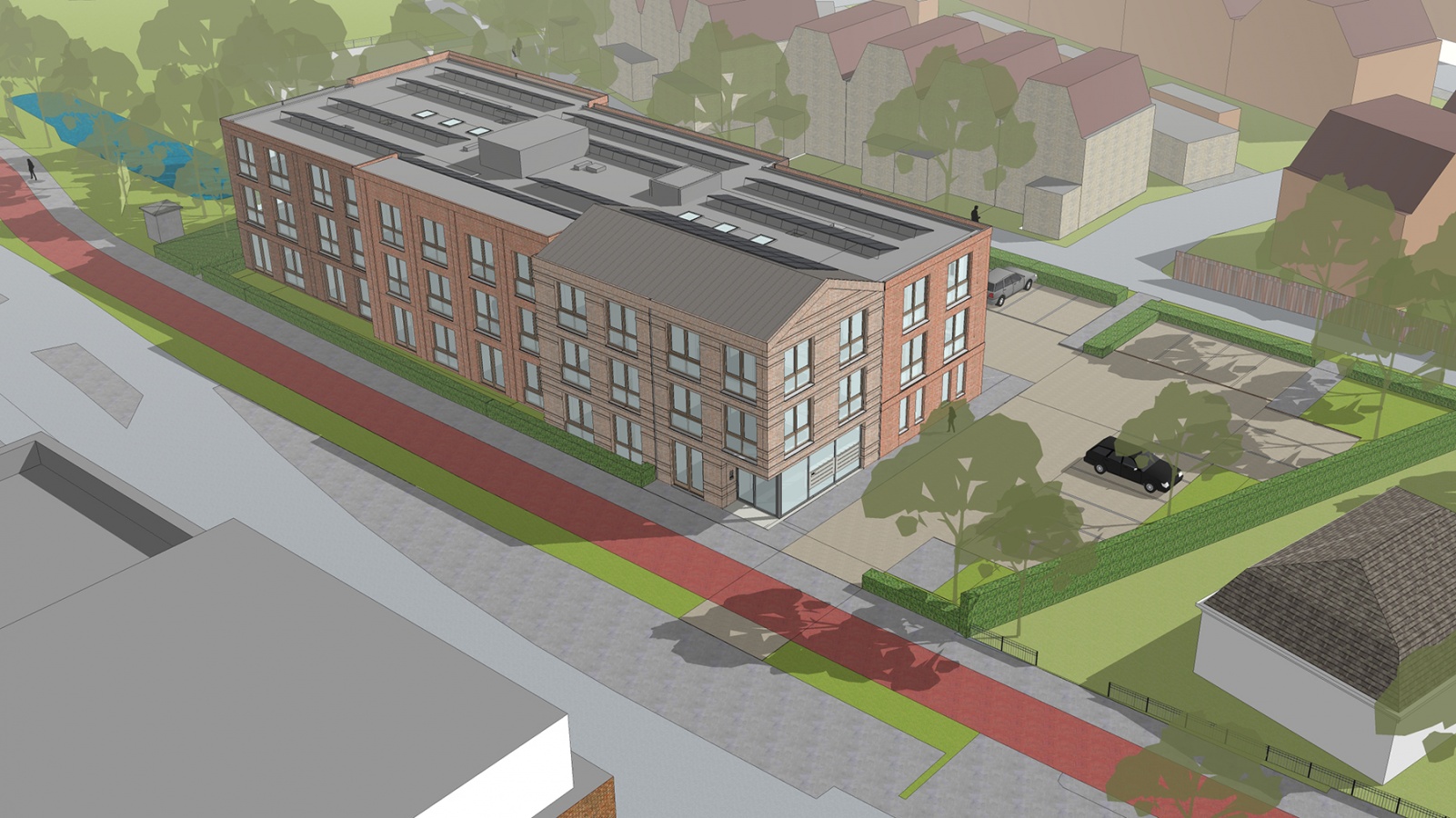
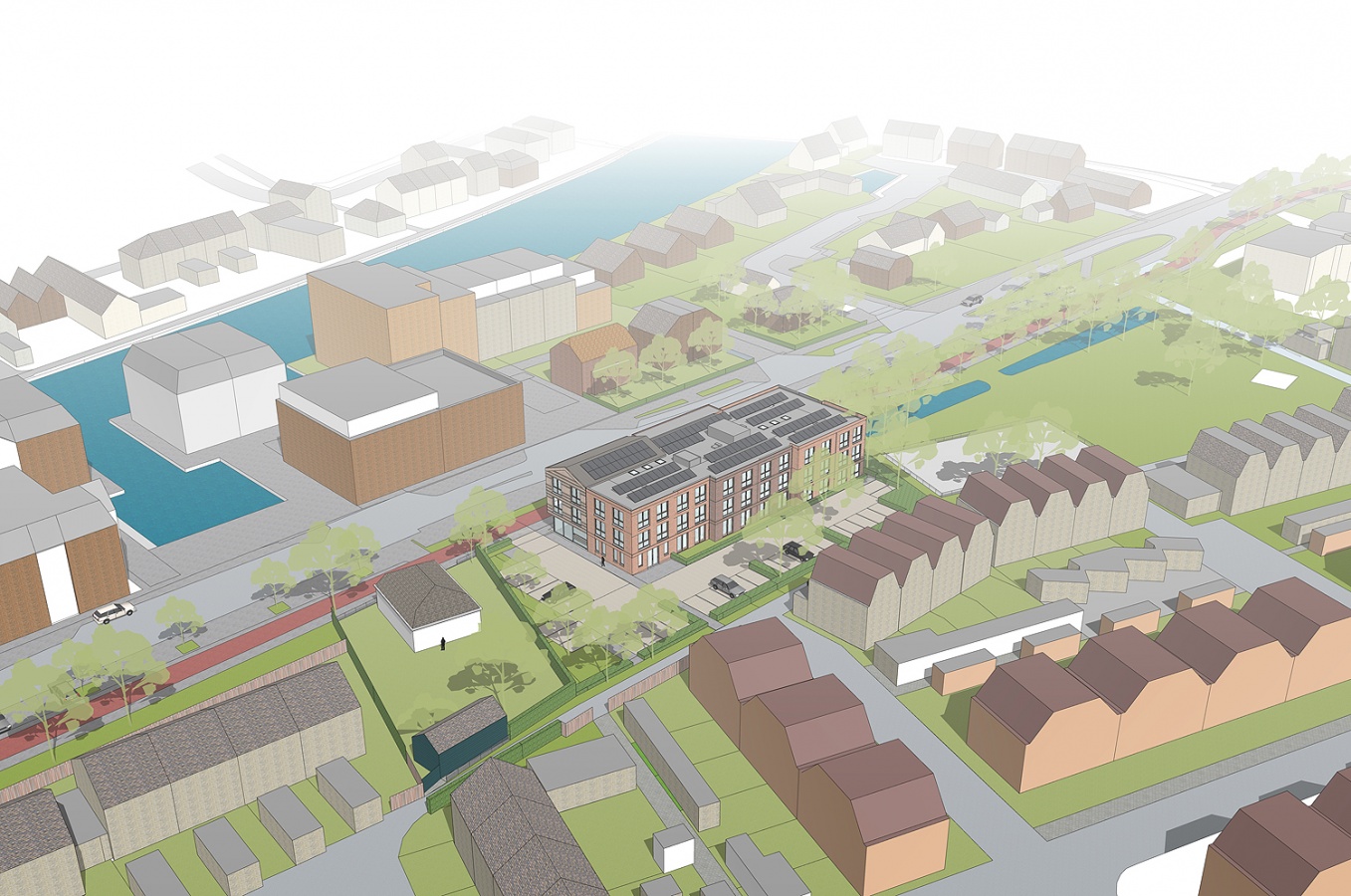
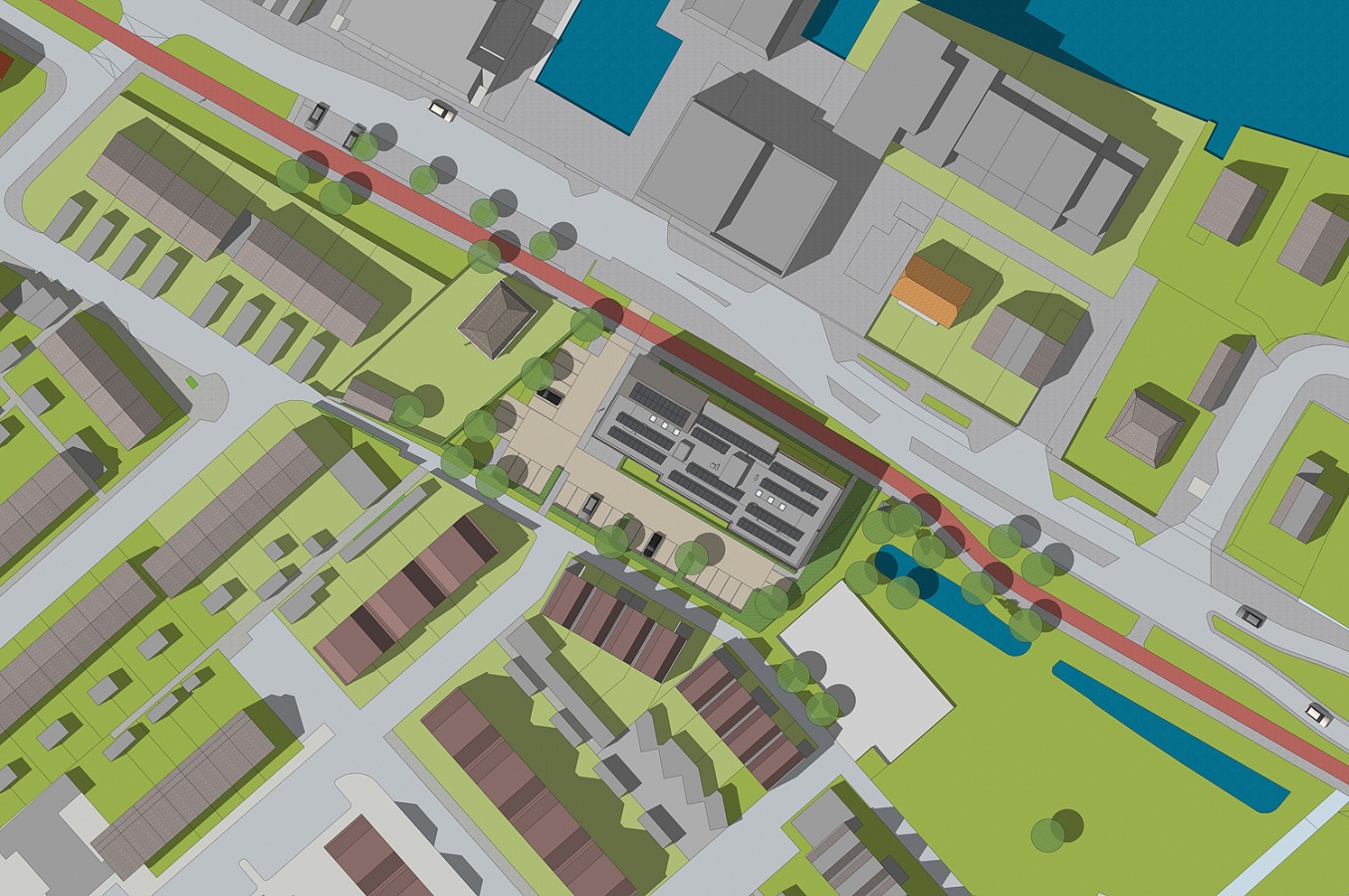
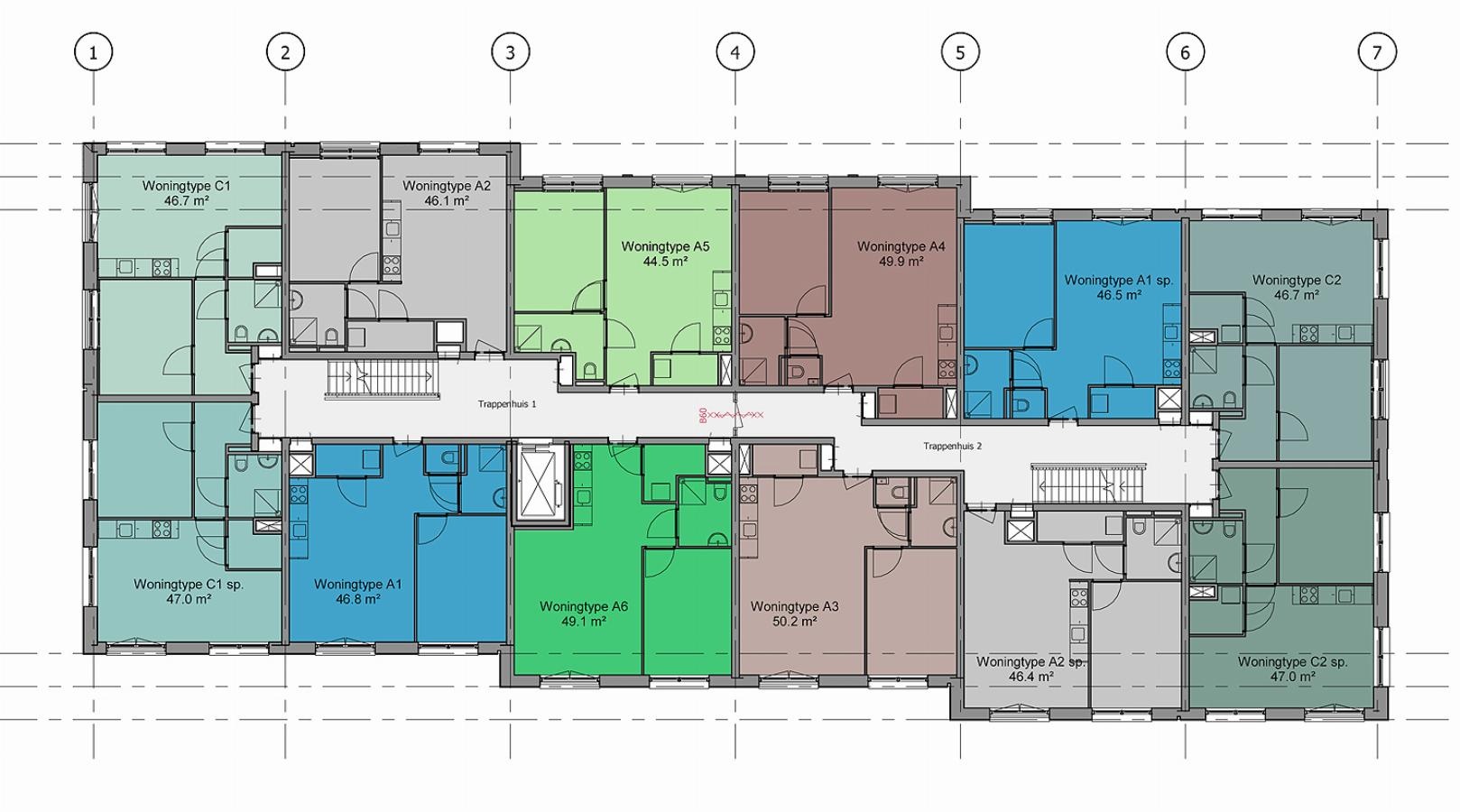
For the Hoge Rijndijk location in Zoeterwoude, a new construction plan has been developed for an apartment building with starter homes, after demolition of the existing office building. The building stands on the edge of the large-scale buildings that are currently being built between the Oude Rijn and the Hoge Rijndijk, and the existing residential area from the 1980s. It adjacents to a small park on the east side. The new building has been placed in the building line of the Rijndijk and thus strengthens the profile of the road. The parking spaces are located in the rear area, lined by green. By dividing the building mass in three, a smaller scale is created, which is further reinforced with differences in brickwork and roof shape. The building will contain 34 residential units of approximately 50 m2 and a bicycle storage. An extremely energy-efficient and sustainable design is achieved with individual heat pumps and solar panels on the roof.
The permit application is being processed, implementation is expected in 2021.
| Architects | Ronald Knappers, Krijn Tabbers |
| Client(s) | Rijzo Vastgoed |
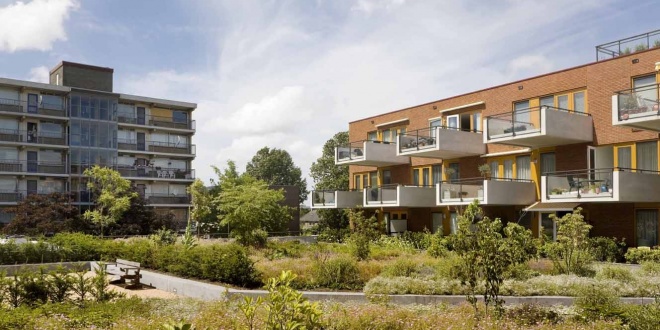
The “Meerwijk” district in Schalkwijk, built in the 1960s, has been built on the corner of Bernadottelaan and Albert Schweizerlaan. This center is part of the urban design that was made by our office in 2001. The building with retail spaces, including the Vomar supermarket, an underground parking garage with 215 places and 74 apartments, is one of the sub-plans of the community center. The whole has a modern, transparent and friendly character and adapts well to the neighborhood.
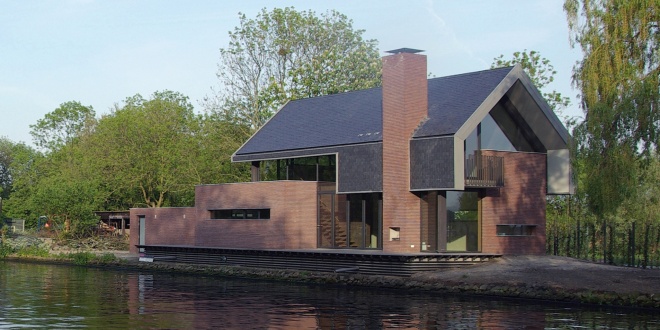
On a triangular plot, where the historical Vlietweg diverts from canal the Vliet, VVKH designed a house based on experiencing the Vliet. Rough, brick walls engage each other, vaging what is inside and outside. Water and landscape are part of the house.
At the entrance you're being received in a yard with monumental trees. The aperture in the wall give a first glance of the Vliet. From the high entrance it's three steps up to enter the livingroom giving a panoramic view over the Vliet, but shielded from the road.The folding window opens completely and extents the livingroom straight to the edge of the water. A stair with cantilevered steps and a glass balustrade leads to the first floor.
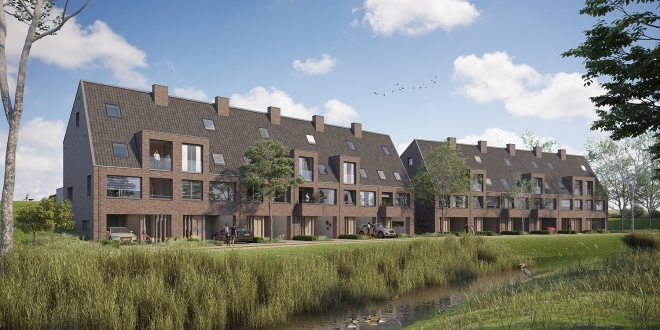
A total of 269 houses and apartments are being built by various parties in the Stelt Zuid, part of the “Waalsprong” near Nijmegen. De Stelt Zuid occupies a special position as a green enclave between the village of Lent and the river. Four combinations of architectural firm and developer work together here on a new residential area, with a central orchard and the dike zone as structuring elements.
Commissioned by BPD, we made the design for 12 dike houses in the dike zone. The houses have a living area of approximately 190 m2 and all have a fantastic view from the living floor over the Waal and the city of Nijmegen. There is parking at the bottom of the houses, on the first floor the master bedroom, kitchen and backyard are situated on the dike, on the second floor the living room with a view of the Waal and the third floor can be set up as a sleeping and / or work space. The houses are gas-free and the roof is fitted with solar panels.
The height differences of the dike area are reflected in the gardens and the transition to the struing area along the dike. From the terrace of the houses you can walk towards the banks of the Waal.
The houses were put on sale in December 2019.
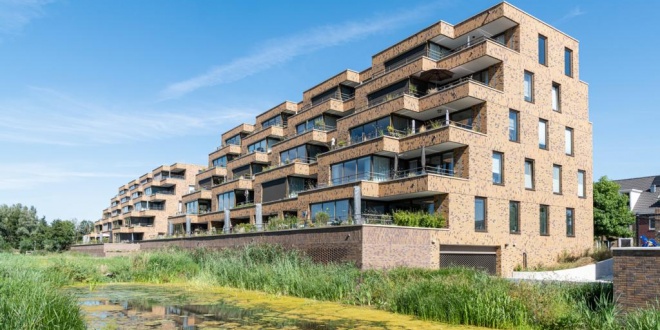
"PURE LIVING"; the winning housing concept for the ‘Klop’ location in Alphen aan den Rijn
Together with Bemog Projectontwikkeling we have developed a vision for 3rd stage of this location in Alphen aan den Rijn. The location is the final piece of the residential area of Kerk en Zanen. It is located on the edge of the Green Heart, with beautiful sight lines on the polders. From the N11, the peripheral buildings will become the first sight of Alphen aan den Rijn.
A sustainable plan has been developed for this location (zero on the meter), which in terms of architecture fits seamlessly into the green environment. The 'Pure Living' concept consists of 40 terrace apartments, 20 water houses, 16 linked villas, a utility and neighborhood facility and a built-in parking facility. The peripheral buildings with the linked water houses and the two apartment buildings form the green boundary of the polder landscape of ‘het Groene Hart’. The greenery of the polder is visually extended into the buildings by giving each apartment its own (terrace) garden. The semi-detached villas are positioned in various ways and are adapted according to buyer's wishes.