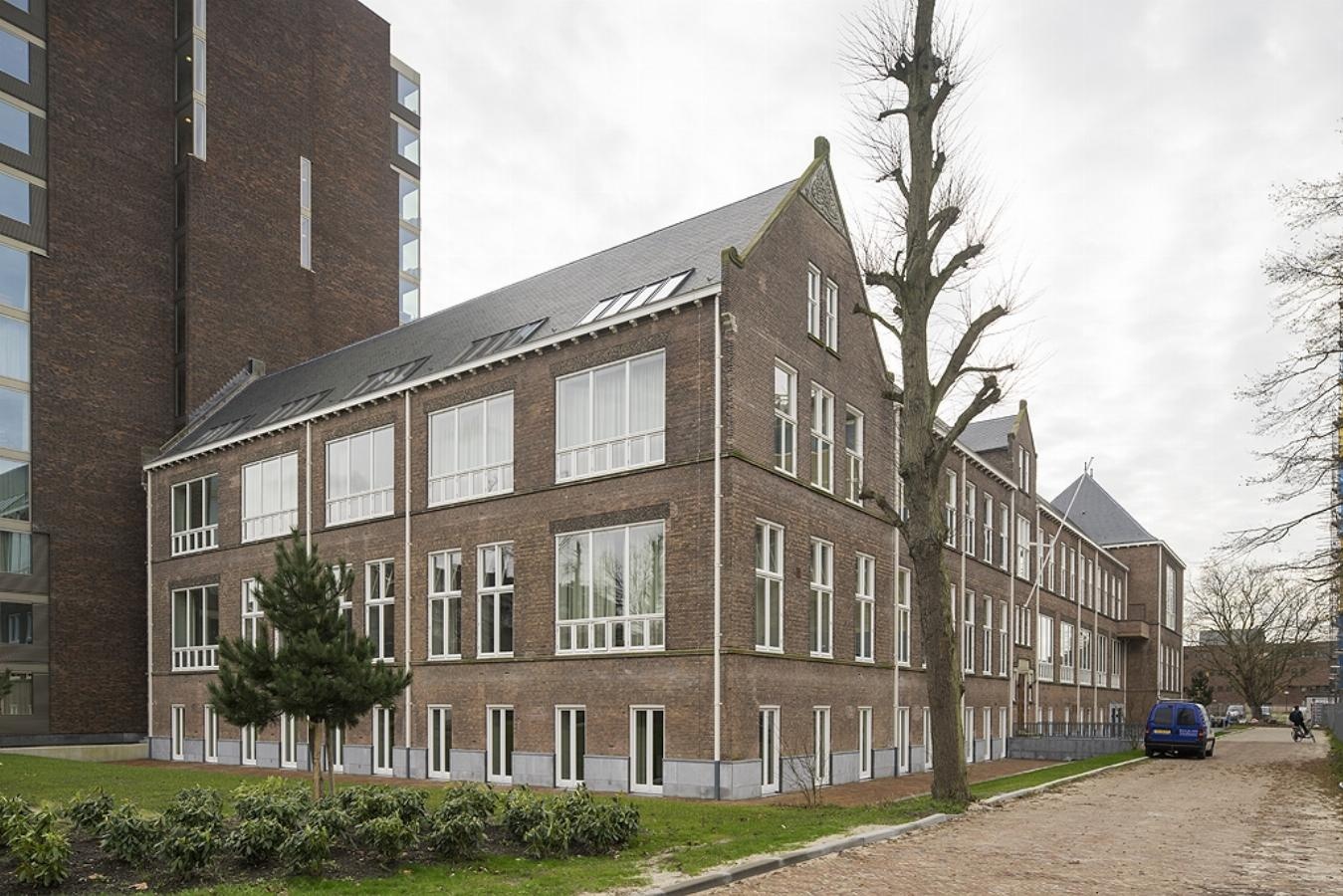
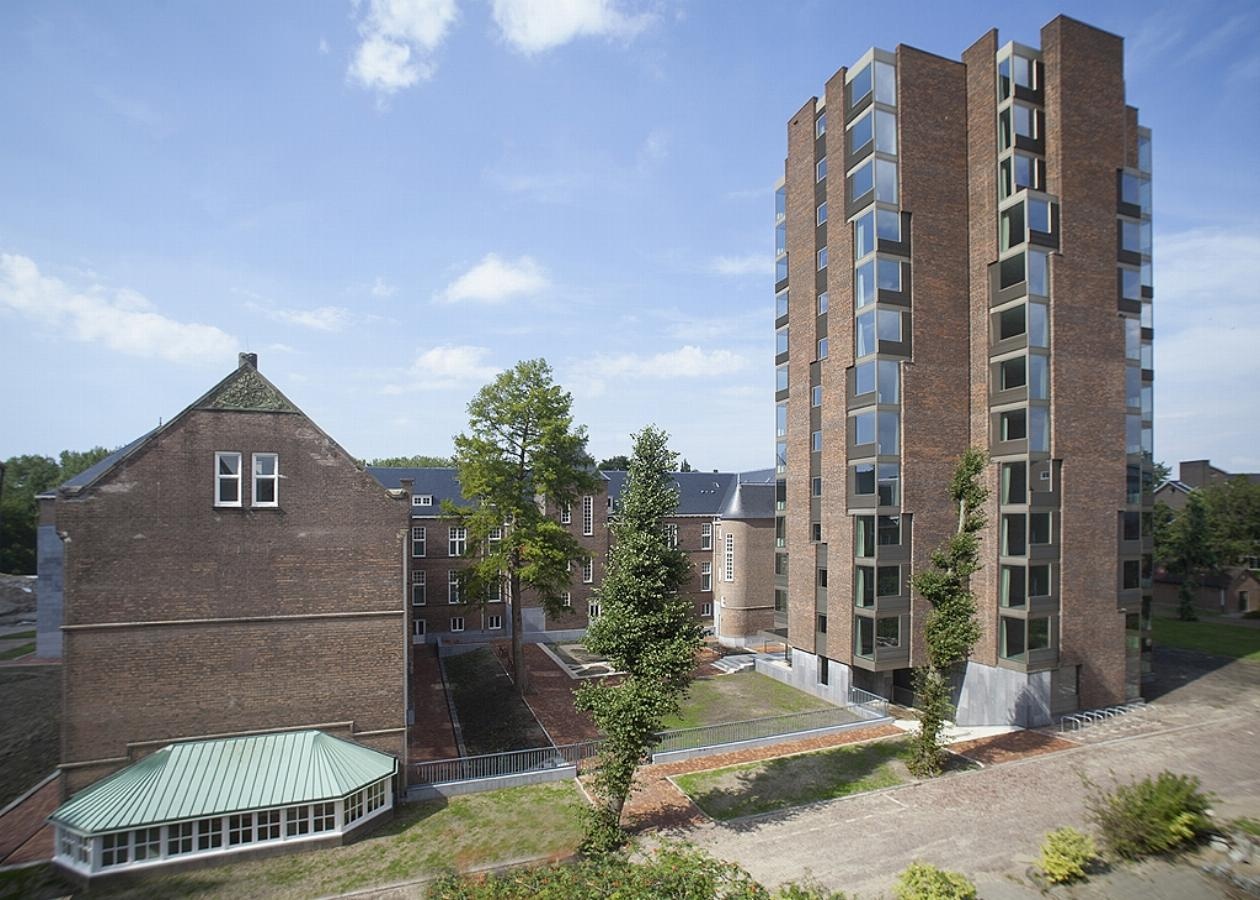
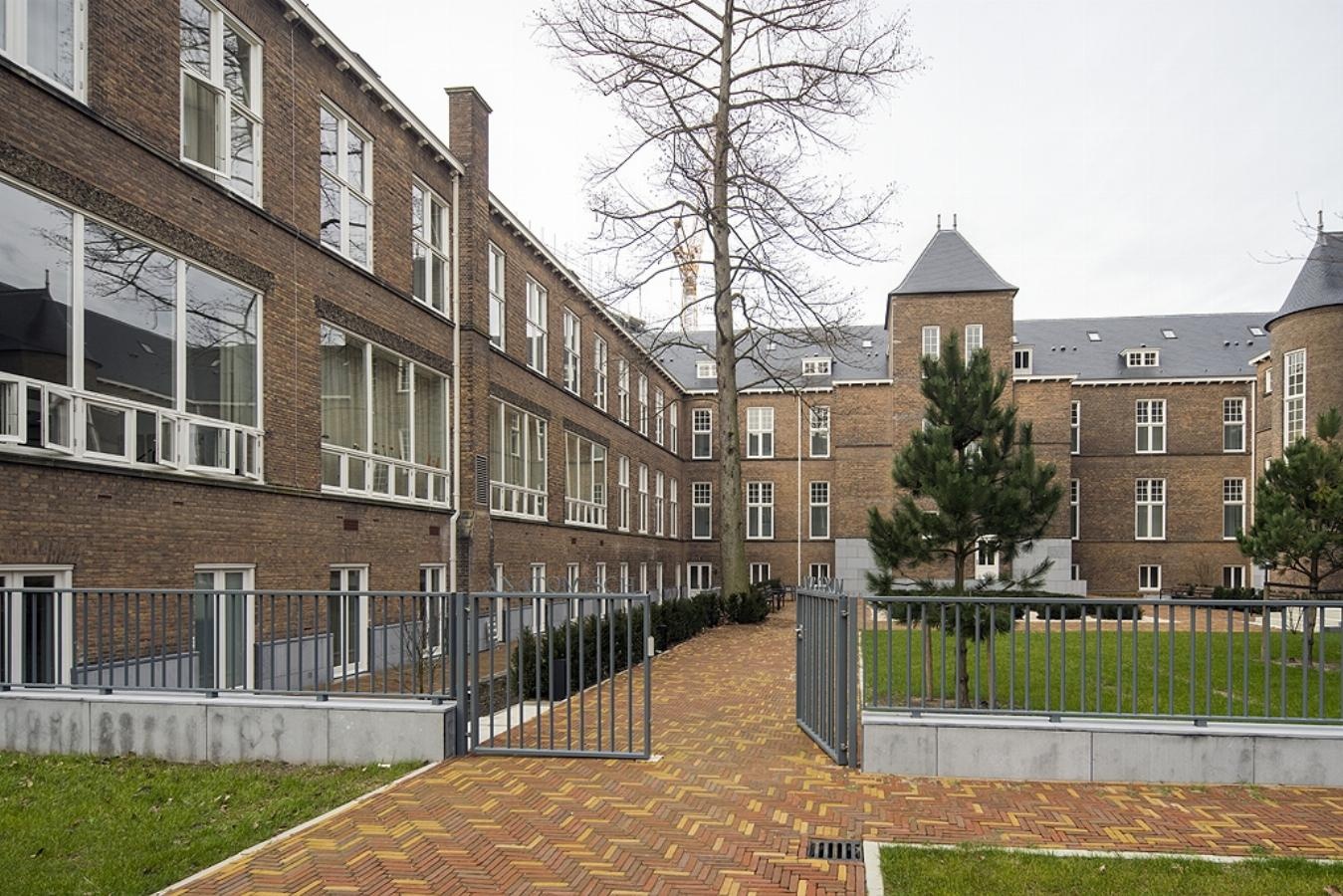
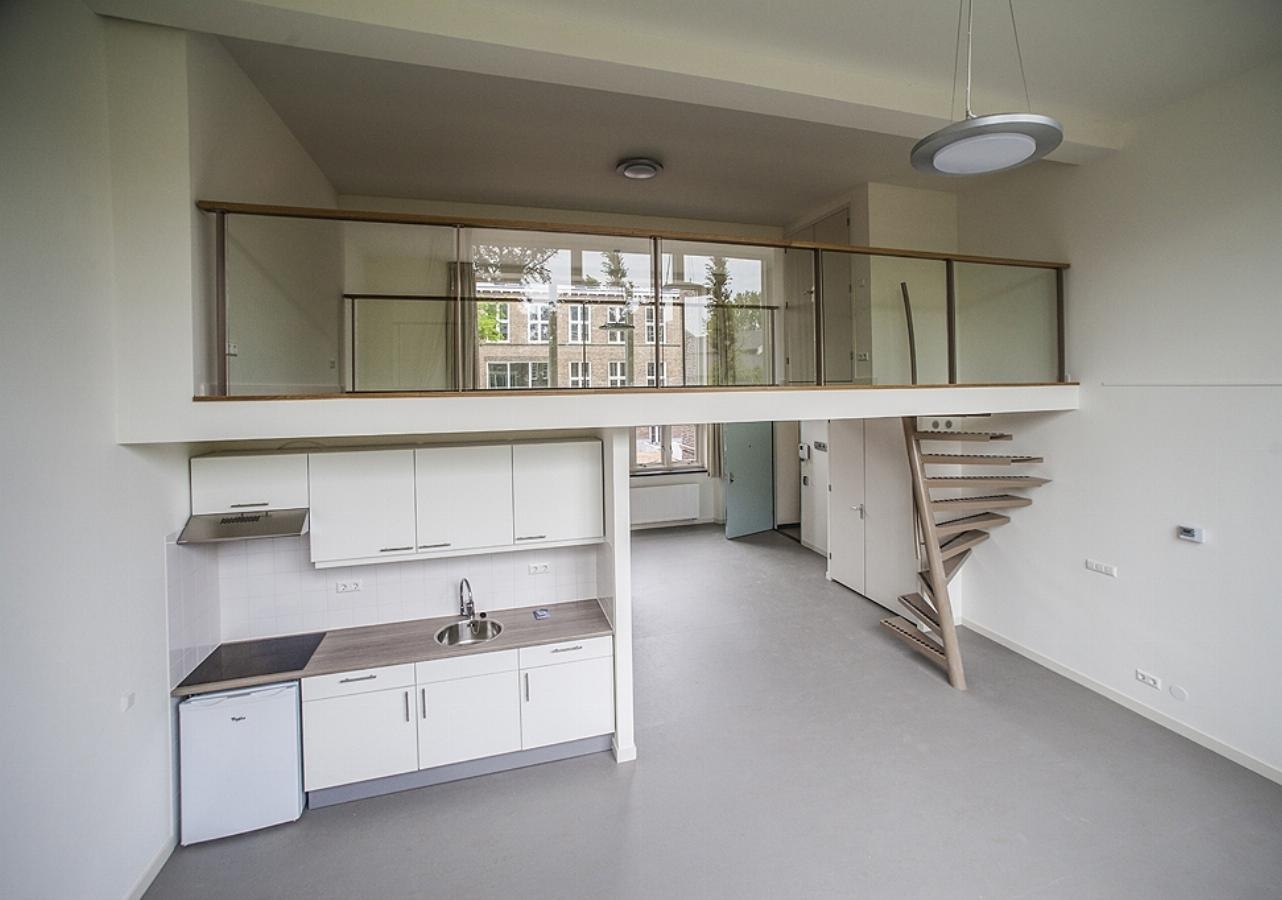
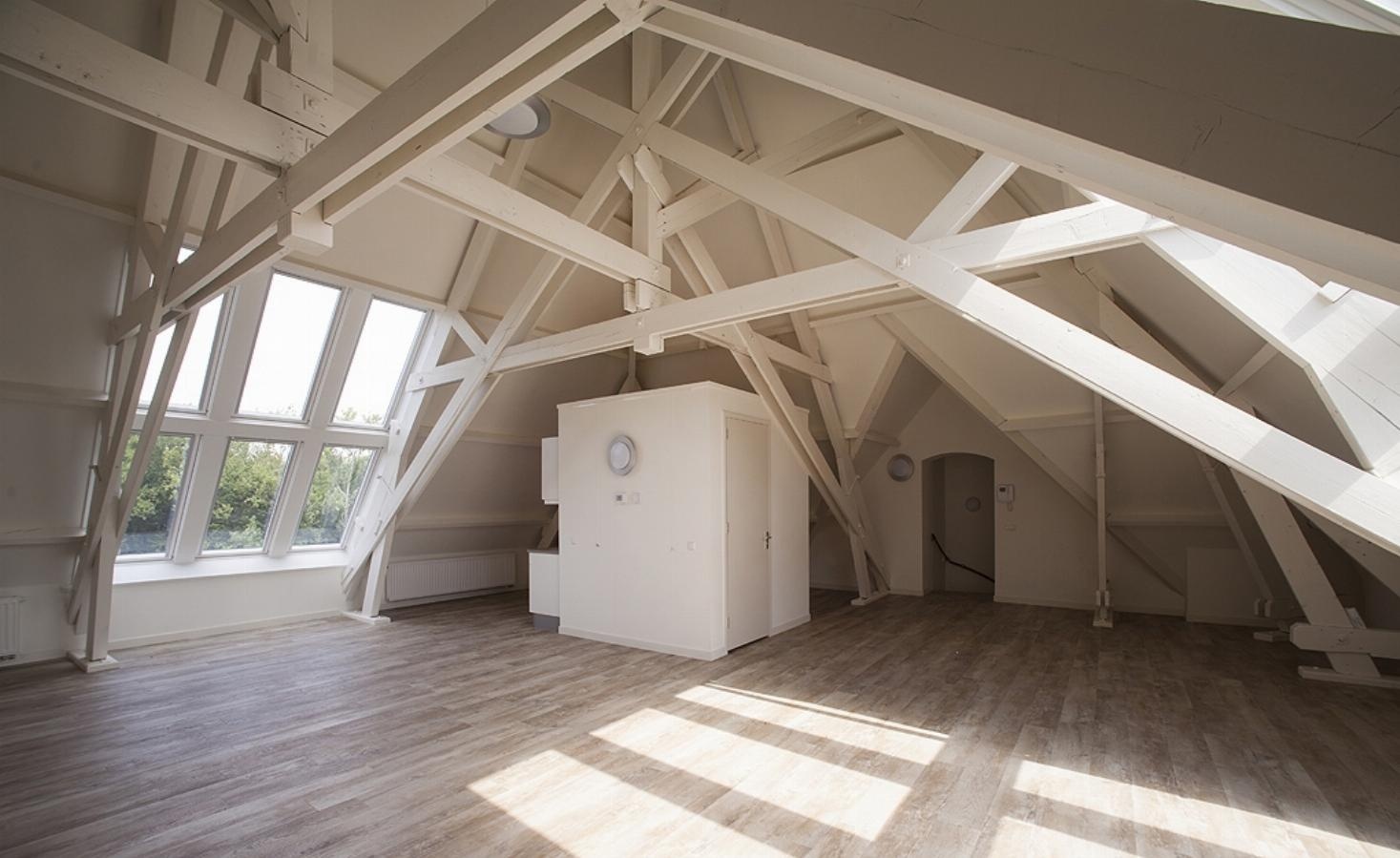
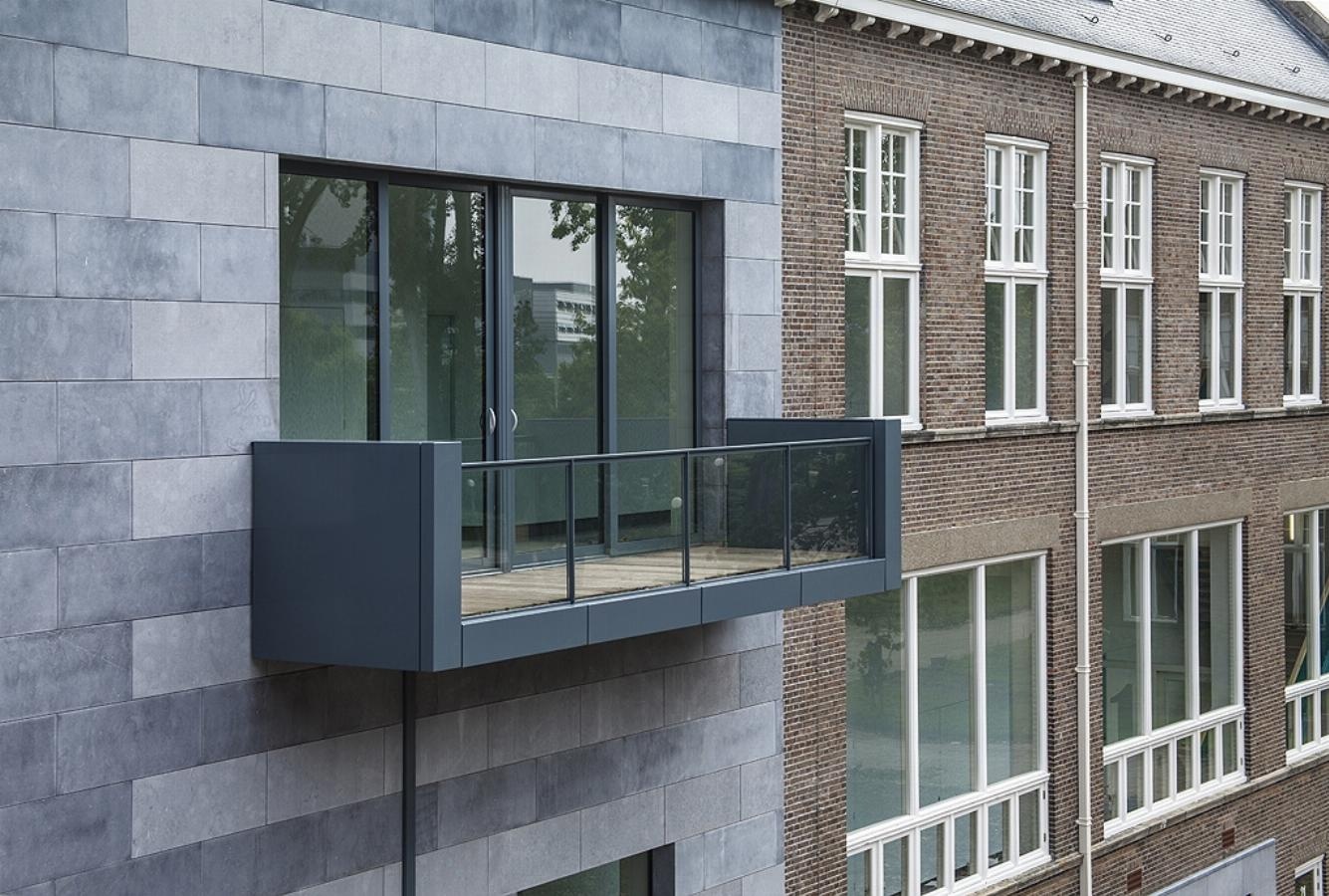
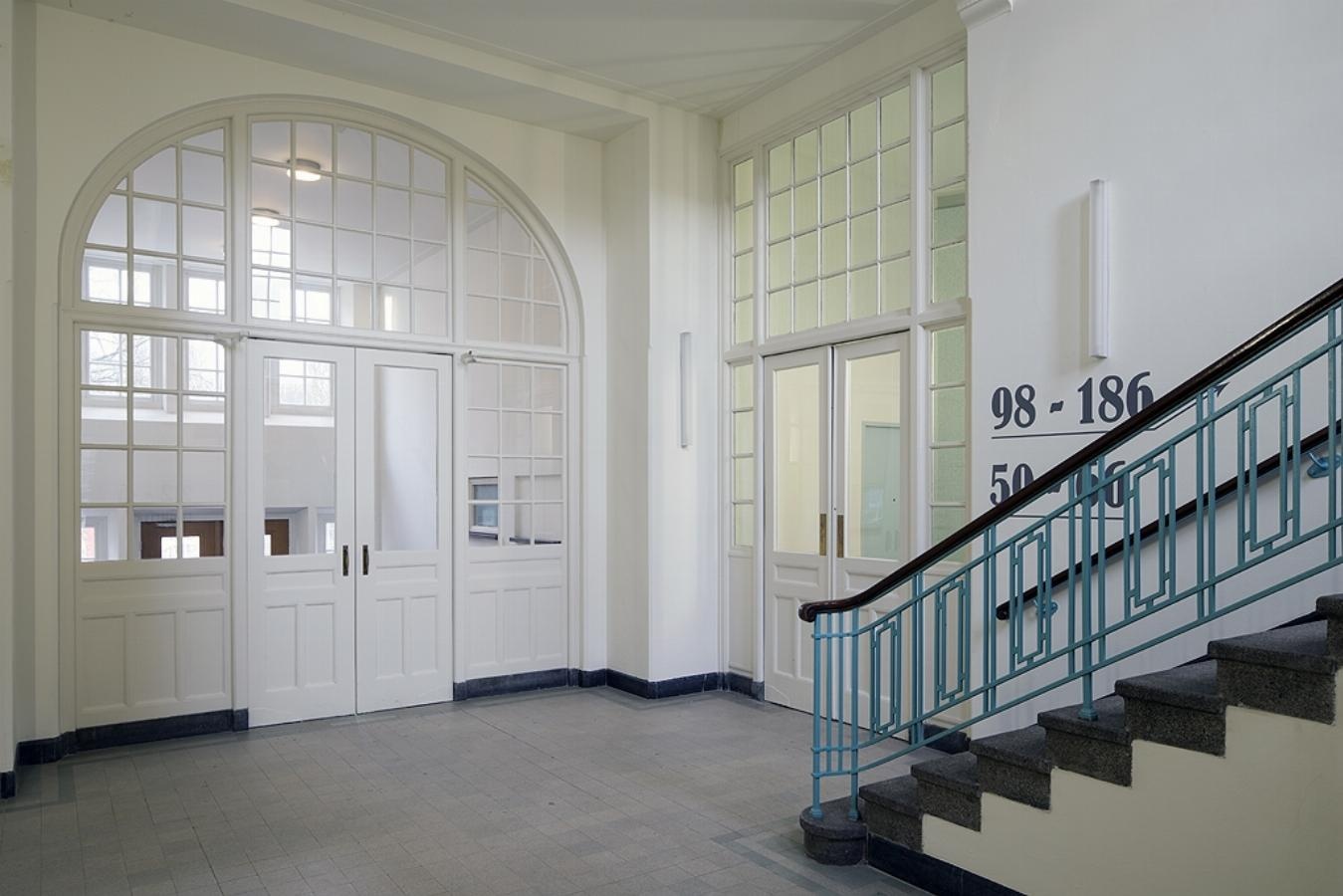
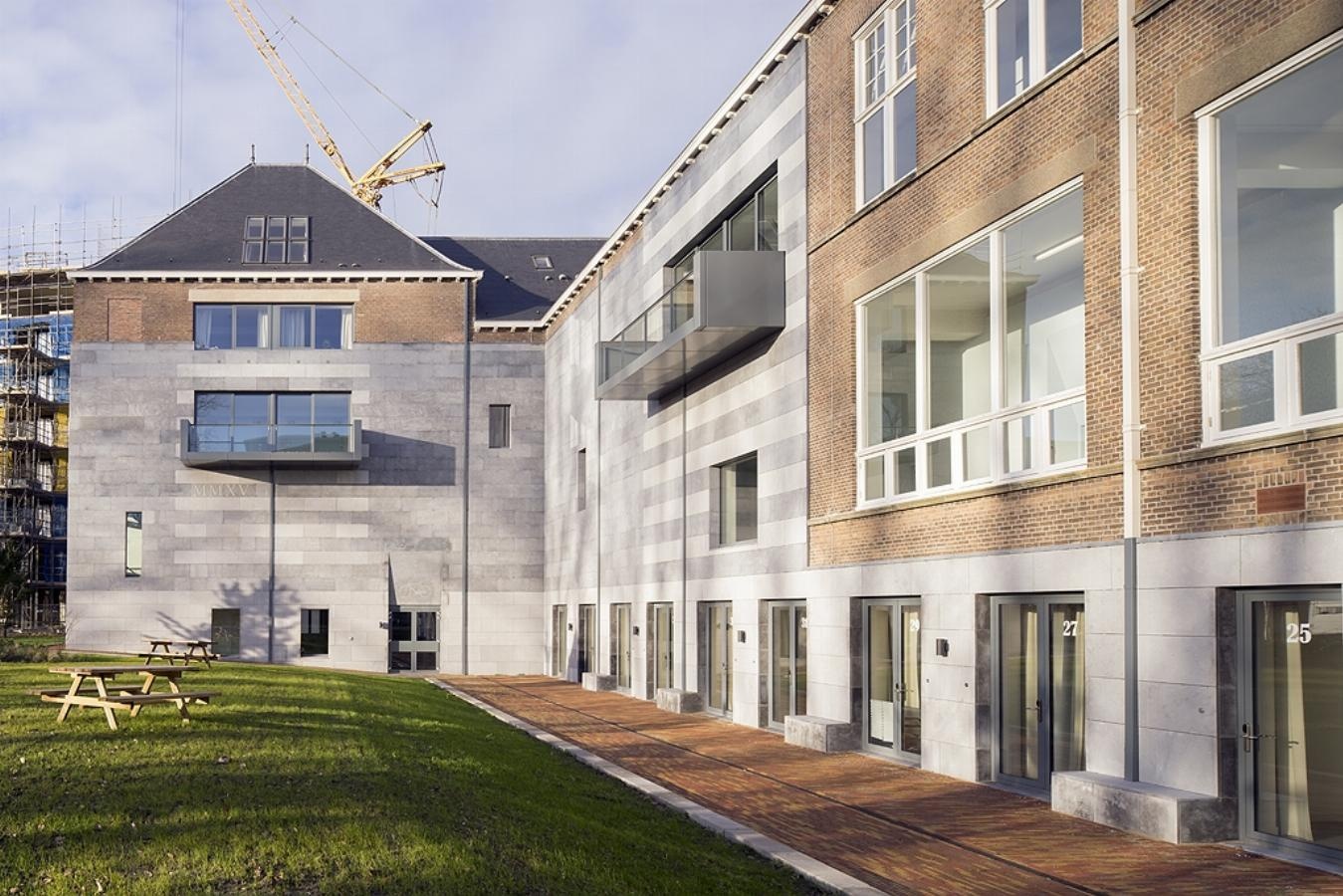
On the Boerhaave Campus, part of the Bio Science park in Leiden, the historical anatomy-building has been transformed into housing for Phd-students and researchers of the Leiden University. The new apartments are characterized by their high ceilings and old constructions. A small mezzanine is created to function as a bedroom. Right beside the existing building a new appartmentbuilding is erected, designed by Van Gameren of Mecanoo Architects. The total complex contains 166 apartments and is the first step in the complete transformation of the Boerhaave Campus.
| Architects | Fons Verheijen, Krijn Tabbers |
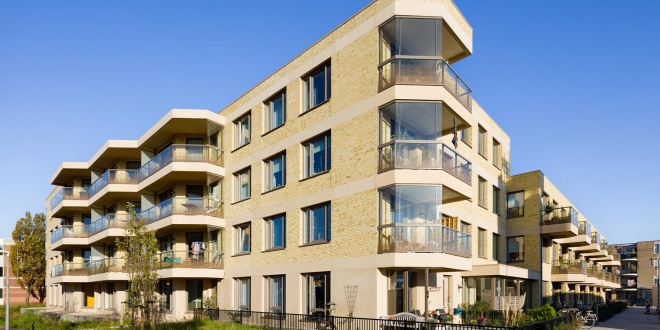
The plot Oeverpolder is located in the central part of the Hoornespolder, a 1960s reconstruction area. In recent years, this district has undergone a transformation, where living is more focused on the public space and a clearer separation is made between public and private.
In the design for the new-build location, a U-shaped courtyard building was chosen, which in terms of architecture and grain size connects to the existing buildings. The green structure of the neighborhood is reinforced with the design. The transition between the residential building and the public space has been carefully designed. There are no garages, storage rooms and blind facades in the public space. The U-shaped building contains a total of 52 apartments of 53-88 m2. The building on Hoorneslaan has 4 storeys, the other two sides are 3 storeys high. The houses are all accessible via (widened) galleries in the courtyard, parking is partly in the courtyard and partly on public land, on the street.
The masonry architecture is in line with previous transformations on Hoorneslaan, but also fits in well with the existing modern reconstruction architecture of, for example, the adjacent Pniëlkerk. Due to the sloping boundary of the plot on Hoorneslaan, the building block has been given characteristic staggered façades here. It is an all-round designed building that at the same time has a new and unique character, but also fits well in the neighborhood.
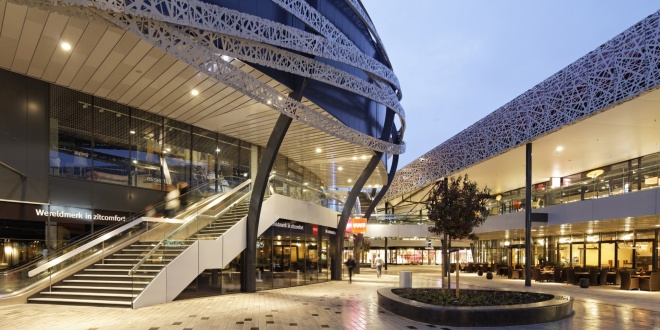
Home and Living Mall Ekkersrijt is located on the north of Eindhoven, directly at the highway A50. In 2013 the existing shopping mall (21.000 sq.mtrs) has been extensively renovated and expanded with 24.000 sqr.mtrs.
New look and feel
The existing building was outdated and made up of separate buildings, with closed unattractive facades and entrances, shop windows only facing the courtyard. Experience and length of stay have been central themes to the renovation and expansion. The new complex has been given a contemporary, modern feel. Old, loose components and constructions are forged into a recognizable, homogeneous unit, which is easily visible from the public road. In addition, a pleasant living environment has been created for visitors. The original stores remained open during this major redevelopment. With intensive consultation and coordination between designer, consultants, tenants and builder the inconvenience during the construction has been limited to a minimum. With this transformation the center has been made future-proof.
Renovation
Existing shops have been given new facades to meet with the requirements of present times and to become one with the extension. Besides facades also the roof has been thoroughly upgraded and installations (among others sprinkler system) have been replaced, modernized. Signing is carefully incorporated and nowhere predominant.
Extension
The new building has a distinctive façade of metal with a specifically, laser cut pattern. Recessed into the façade are the neon signs and the ramps to the parking deck. The movements of the cars on the ramps provides extra dynamism in a natural way.
On the former courtyard a freestanding oval new shop building is made. This building forms the heart of the new home and living mall and is, due to its special design, an icon to the highway and nearby. From the parking deck visitors reach the heart through walkways and they go with elevators and escalators to the open and indoor malls on the lower levels of the complex. Shops on the upper floors thereby have the same run as on the ground floor. Because of the oval building shopping at ground level has a pleasant scale with shops on both sides.
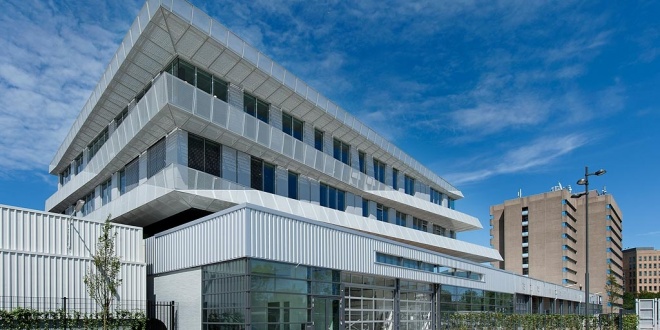
A former Mercedes showroom is rebuild to become the regional ambulance station. From here thirteen ambulances are ready to tear out in an emergency. On top of the existing showroom an new building with offices and a hightech trainingcenter is oriented at the a busy railwayline. The new part is a sturdy building with overhanging balconies which provides shade in summer and window cleaning. In the front facade, at the Vondellaan, a small ambulance museum is created.
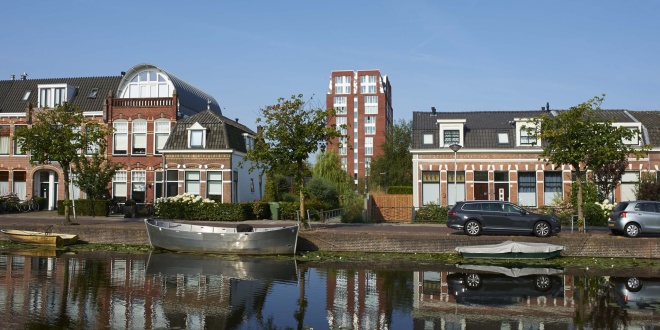
On a piece of wasteland in Leiden between the Lucebert Street and Toussaintkade an apartment building, ‘the Verleyding’ will rise this year. Construction started in March. In the building are 112 rental apartments for young professionals between 18 and 35 years. The properties are suitable for 1- or 2-person households, and have a surface of approximately 30 m2 (one-room apartment) and 45 m2 (two-room apartment).
The project is being developed and built by ten Brinke respectively Real Estate and ten Brinke Bouw. After realization the building owner will be SHWJ, Leiden. The housing design is tailored to the needs of SHWJ.
The building is 12 floors high and will become a landmark in Leiden. The area is bounded by the railway, a pond and a small park. On the park side the building stands on columns. Under the underpass, the entrance and lift are located. Together with the corridor access therefore an efficient plan has been realized, with 10 dwellings per floor. The upper apartments have stunning views over the city. The view can fully be enjoyed through the large windows. The ground level apartments have their own garden. Residents can cross a bridge over water to the park. Parking takes place on private property. The main body is constructed in a rhythm of frameworks of orange brick. The large frameworks ensure that the building looks less massive and joins well in the neighbourhood. The roof shape refers to the adjacent housing, it is finished with aluminium losagnes.