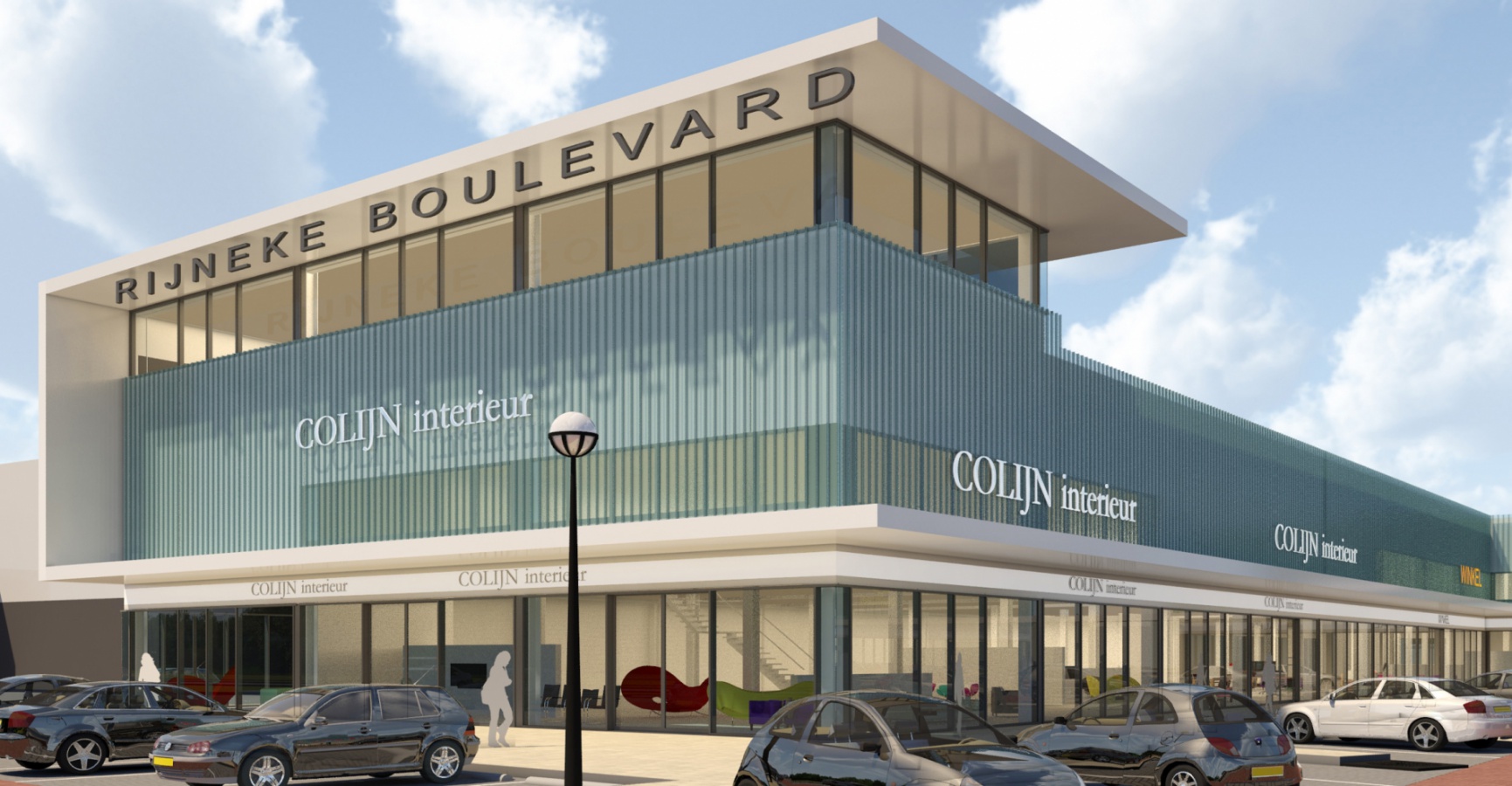
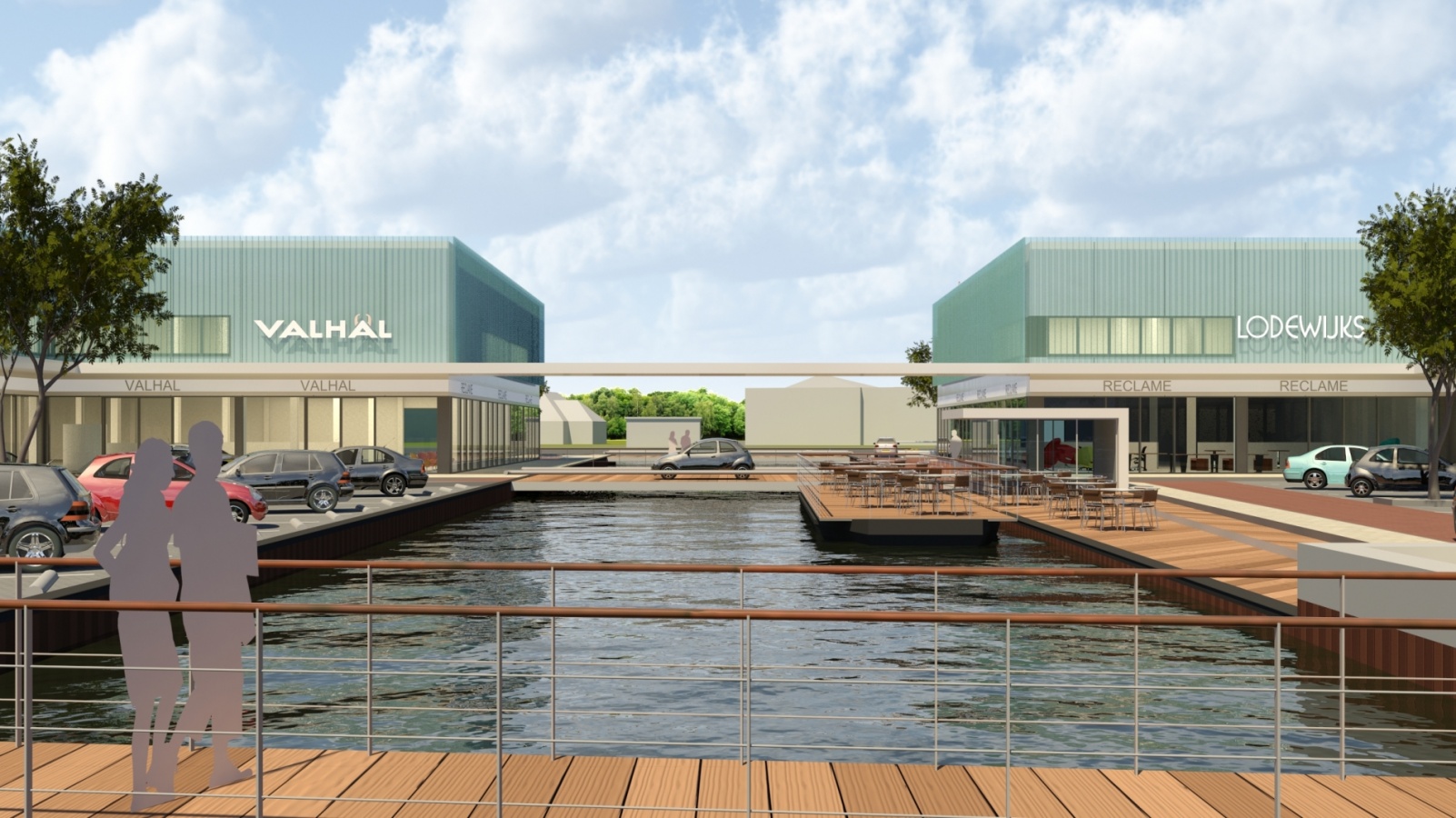
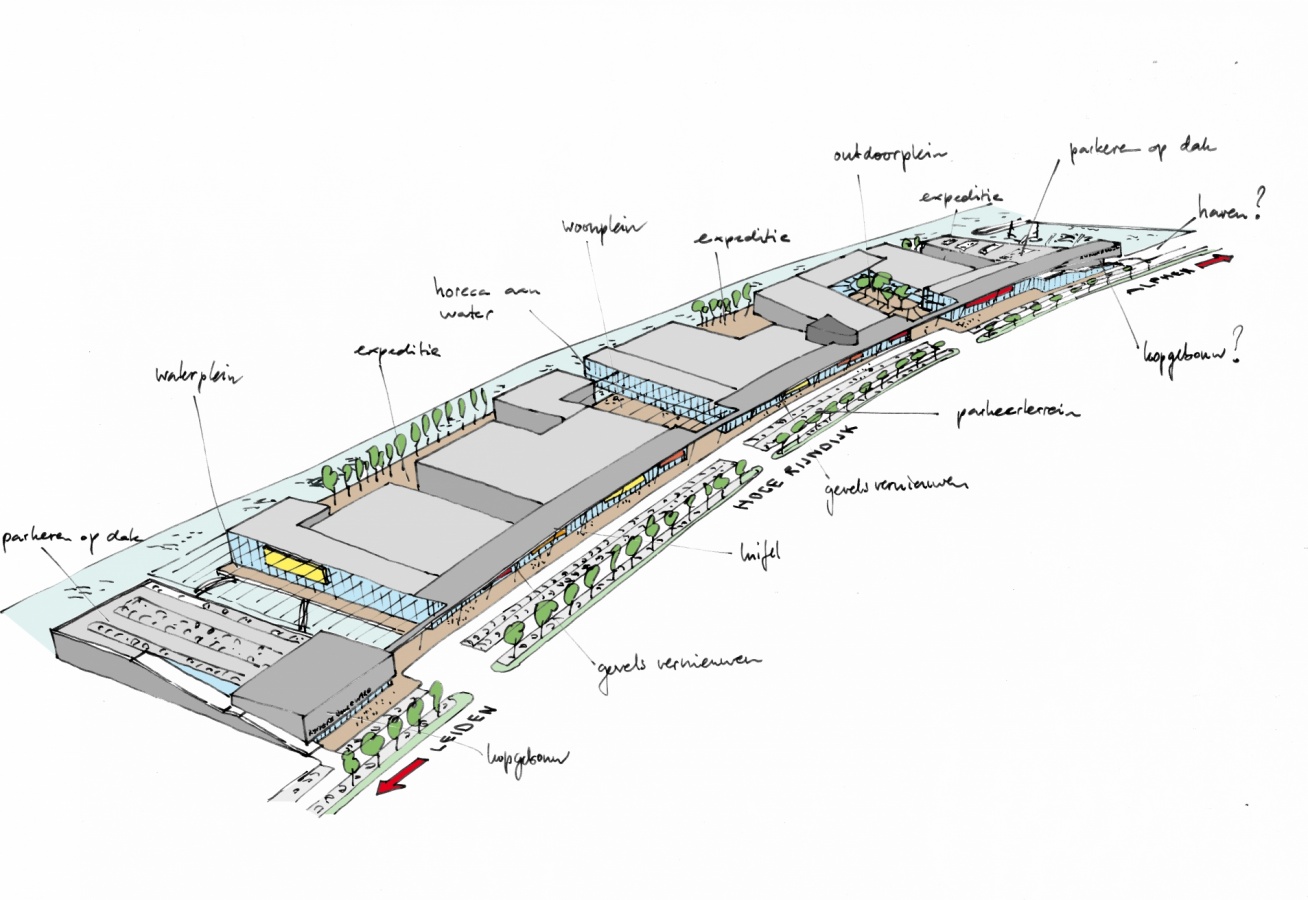
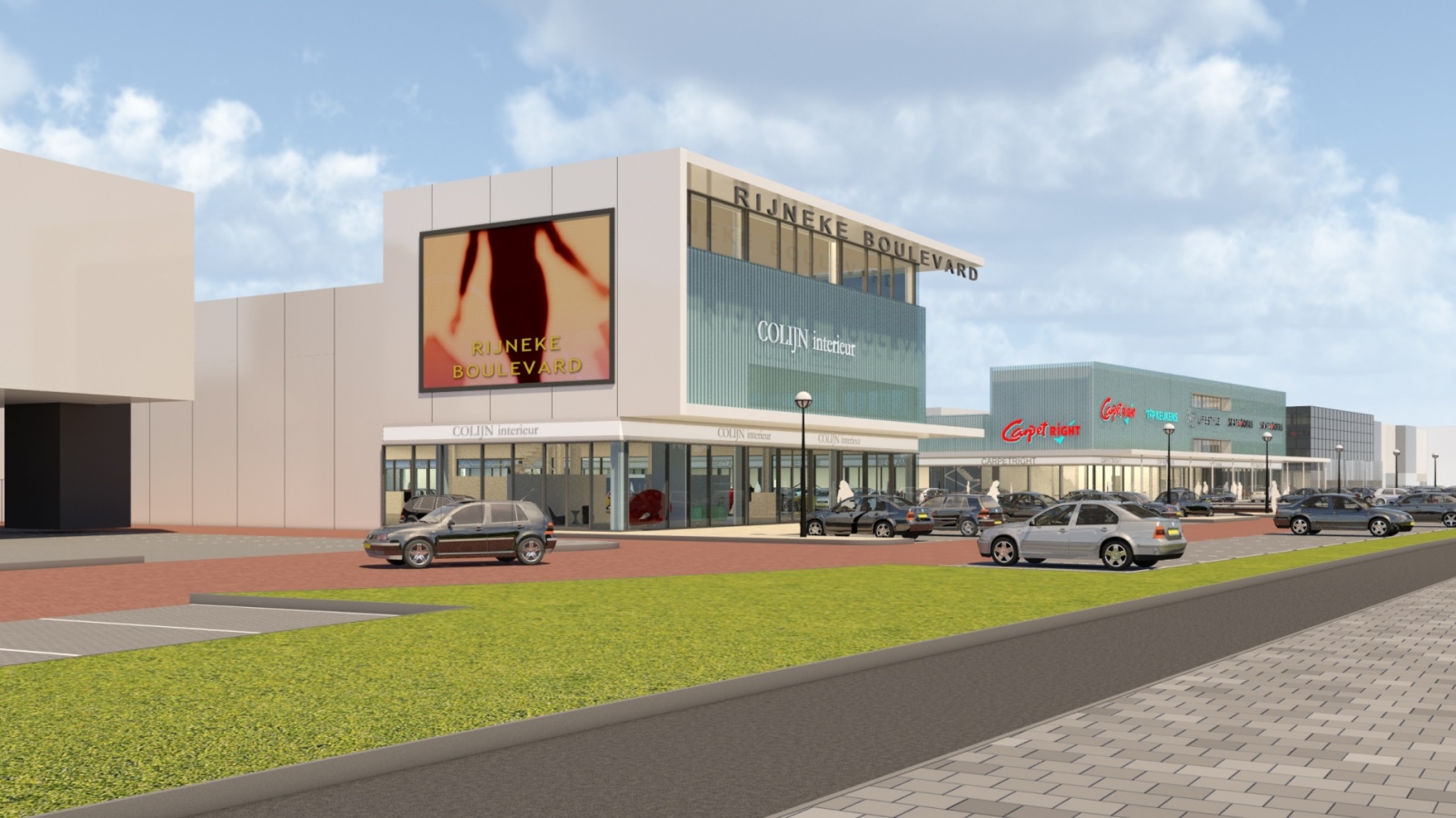
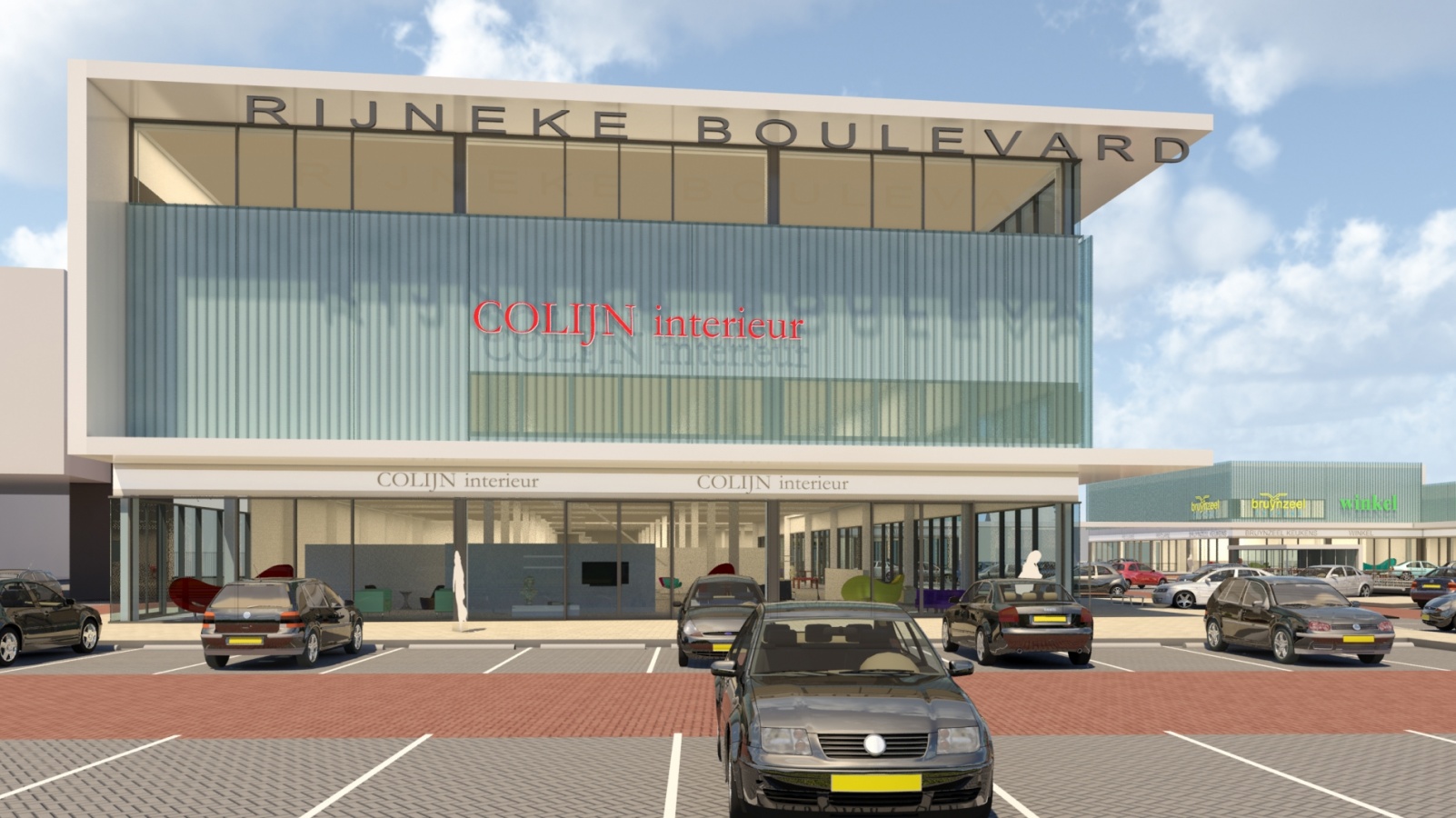
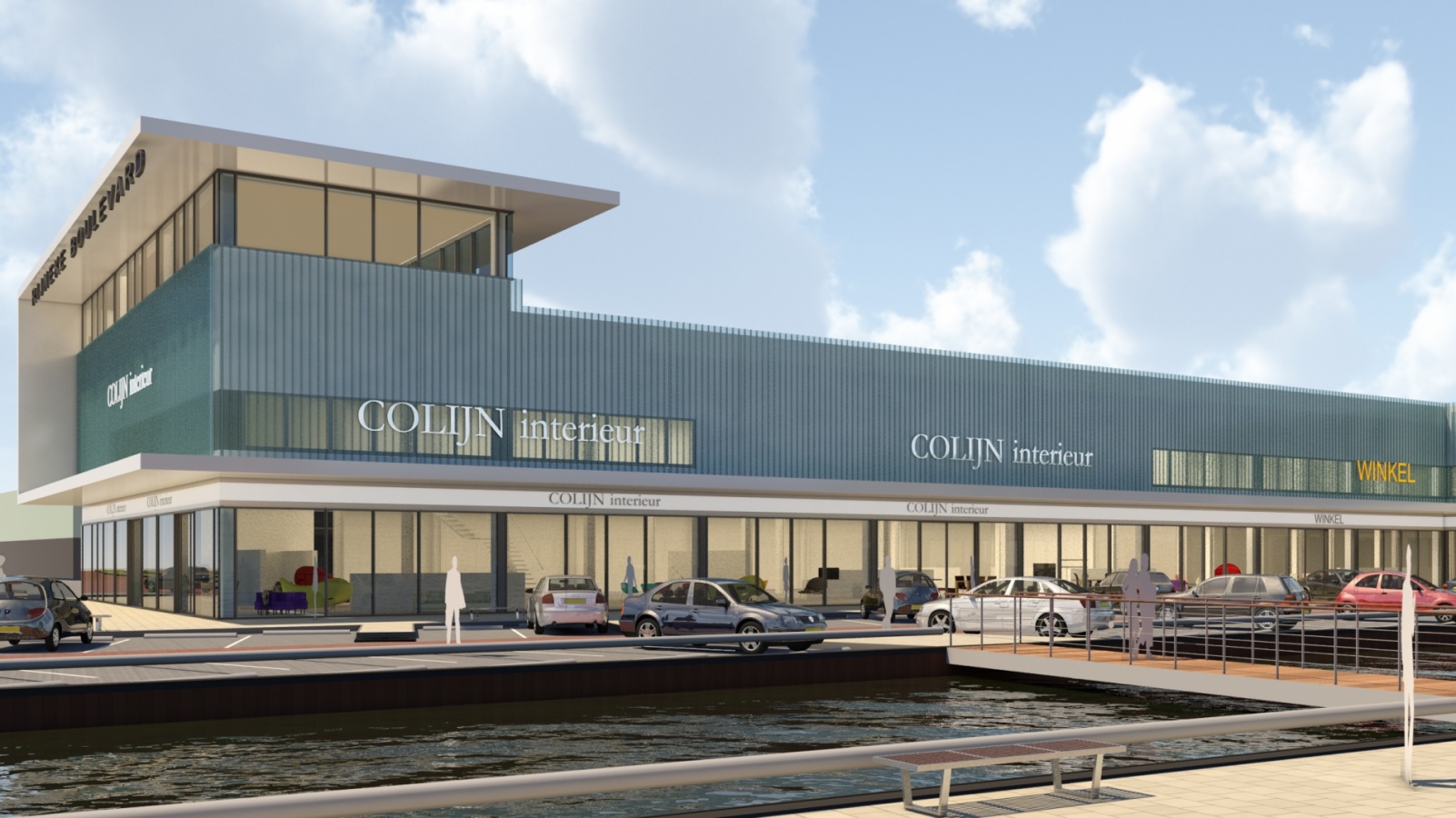
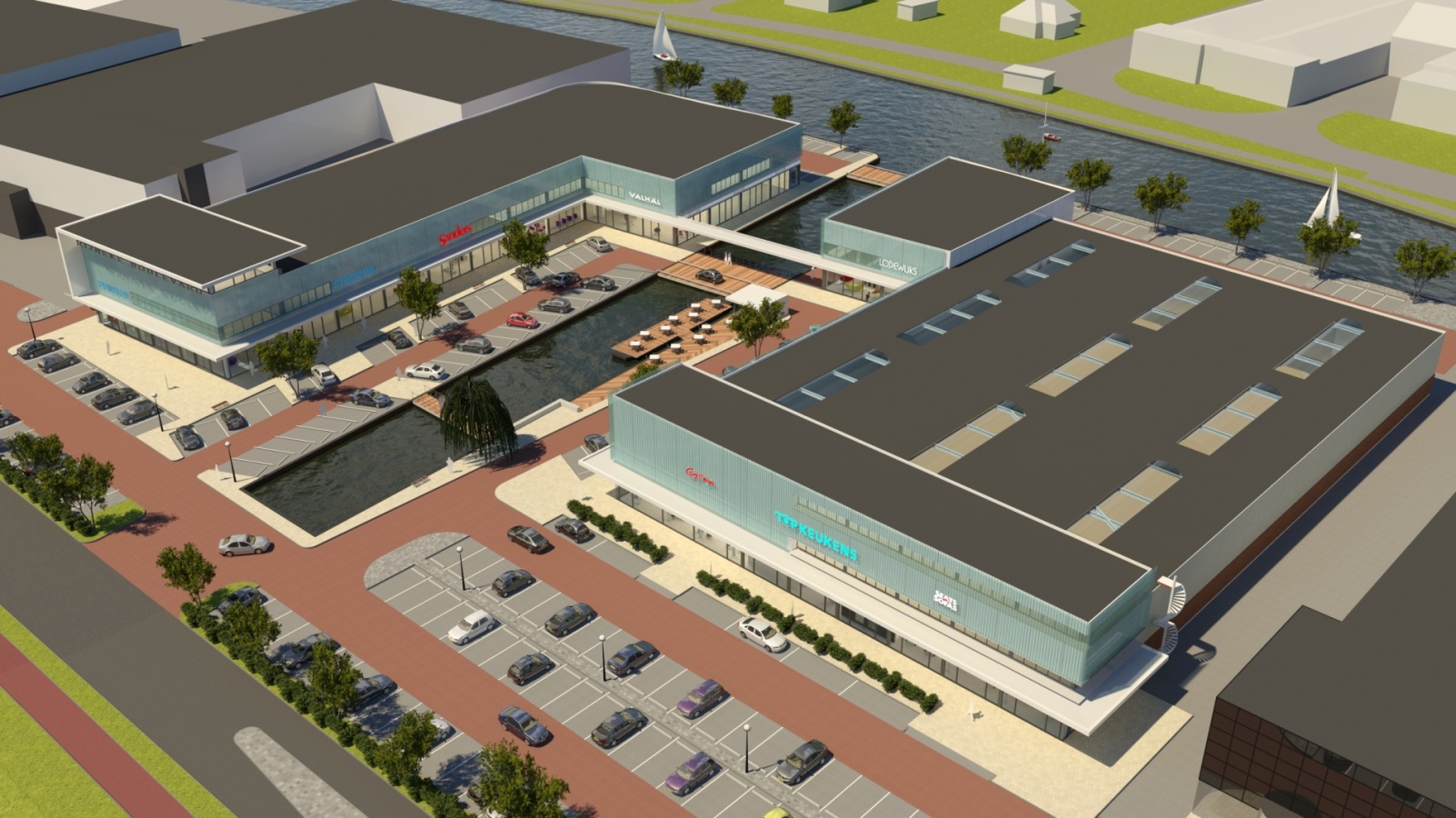
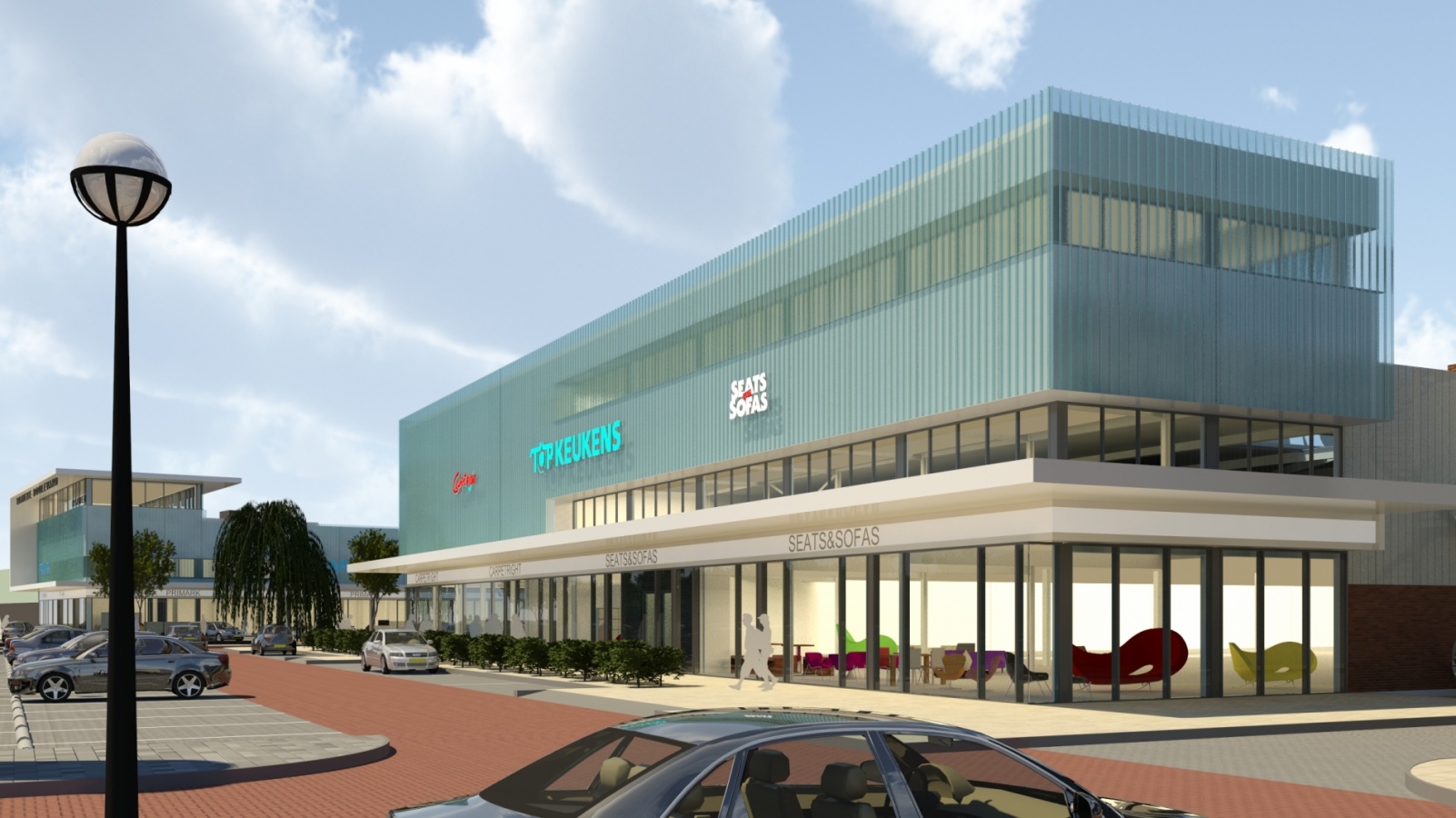
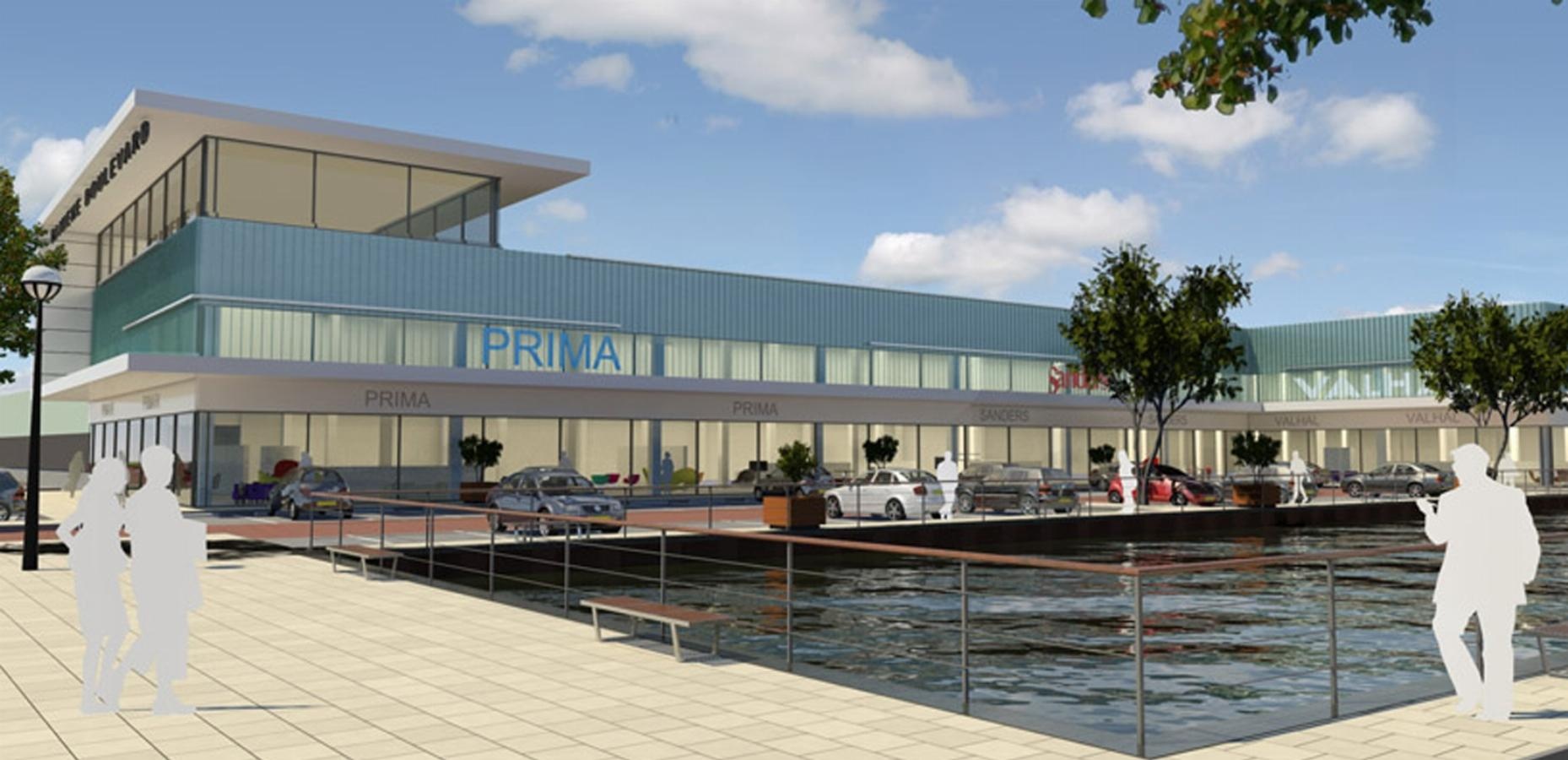
The Rijneke Boulevard in Zoeterwoude is a busy shopping area with a dated appearance. The complex has its back to the Rijn. We have developed a vision to renovate and expand the boulevard in stages. The Rijn is also more involved in the shopping area by creating harbors.
The first phase starts on the west side of the complex. In this phase, the first building has already been renovated (completed in 2016) and the expansion of 6,000 m2 of retail space started in January 2018. The shopping area is organized around the old harbor of the Heineken factory, where the hops used to be unloaded.
| Architects | Gerrit-Jan van Rijswijk |
| Employees | Hans Schepman |
| Client(s) | Niersman-Marington |
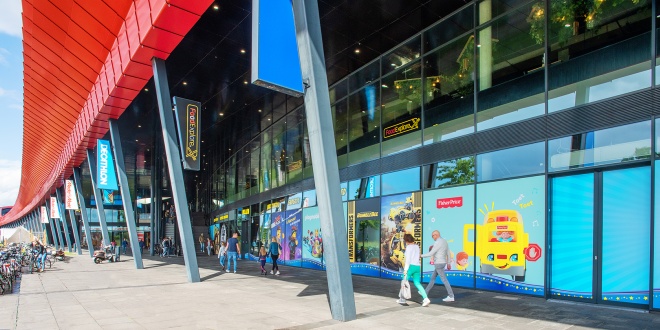
The Wall in motion
The Wall shopping center in Leidsche Rijn, located next to the A2, which also serves as a noise barrier, changed hands in 2018. Together with the new owners, real estate investors / developers Built to Build and Urban Interest, we have investigated parts that have not been implemented or have been incompletely completed and measures that are additionally needed to optimize the letting of the building. Since then, they have been working with them on perfecting both the building and the public space to make the shopping center a success.
The first steps for the Wall 2.0 have now been taken.
Since December 2018, a new AMAC location has been opened in the end building. We have made a number of allotment proposals and prepared various units in the end building based on the layout agreed with AMAC. The interior design was provided by Apple itself. In addition to a retail space, this location includes an auditorium, training room, service desk and repair center and warehouse / storage space in The Wall.
A number of improvements / changes that were implemented in 2019 and 2020 are an extra rise point to make the parking roof accessible from the adjacent office building, and an extra retail space on the deck. The entrance on the south side of the building has been adapted, with a tapis roulant and extra escalators. And on the north side of the building, an extra entrance, rising point and a roof building will be realized.
In addition, the possibilities for sustainability are being investigated by installing solar panels on the parking deck, making the parking deck greener and redesigning the ground level.
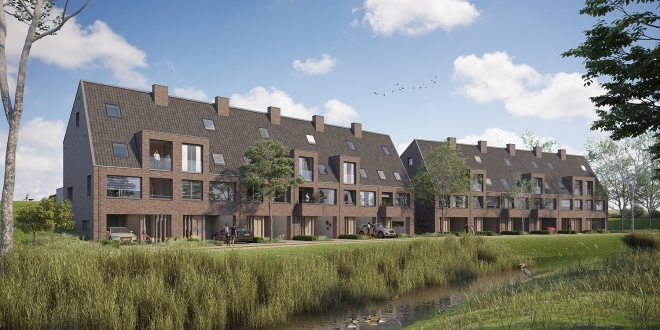
A total of 269 houses and apartments are being built by various parties in the Stelt Zuid, part of the “Waalsprong” near Nijmegen. De Stelt Zuid occupies a special position as a green enclave between the village of Lent and the river. Four combinations of architectural firm and developer work together here on a new residential area, with a central orchard and the dike zone as structuring elements.
Commissioned by BPD, we made the design for 12 dike houses in the dike zone. The houses have a living area of approximately 190 m2 and all have a fantastic view from the living floor over the Waal and the city of Nijmegen. There is parking at the bottom of the houses, on the first floor the master bedroom, kitchen and backyard are situated on the dike, on the second floor the living room with a view of the Waal and the third floor can be set up as a sleeping and / or work space. The houses are gas-free and the roof is fitted with solar panels.
The height differences of the dike area are reflected in the gardens and the transition to the struing area along the dike. From the terrace of the houses you can walk towards the banks of the Waal.
The houses were put on sale in December 2019.
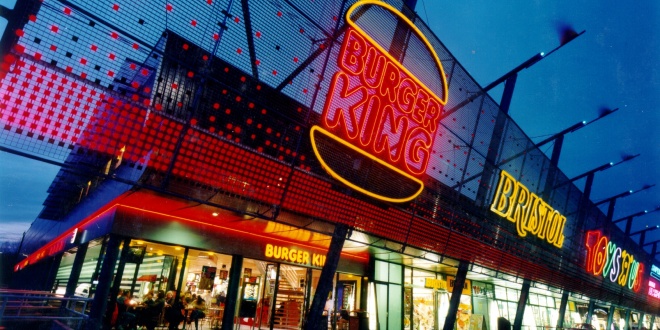
Alexandrium is made of 35.000m² megastores and 65.000m² home and living mall. The assignment was approved after winning the architectural competition and was build in two fases. Important aspect for winning te competition was the incorporation of the existing polderhuis, which seems to be placed in a window of the new mall.
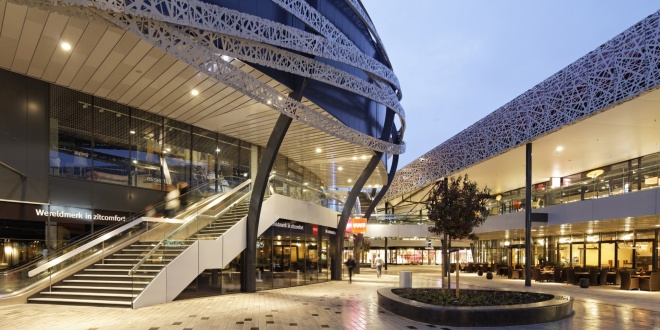
Home and Living Mall Ekkersrijt is located on the north of Eindhoven, directly at the highway A50. In 2013 the existing shopping mall (21.000 sq.mtrs) has been extensively renovated and expanded with 24.000 sqr.mtrs.
New look and feel
The existing building was outdated and made up of separate buildings, with closed unattractive facades and entrances, shop windows only facing the courtyard. Experience and length of stay have been central themes to the renovation and expansion. The new complex has been given a contemporary, modern feel. Old, loose components and constructions are forged into a recognizable, homogeneous unit, which is easily visible from the public road. In addition, a pleasant living environment has been created for visitors. The original stores remained open during this major redevelopment. With intensive consultation and coordination between designer, consultants, tenants and builder the inconvenience during the construction has been limited to a minimum. With this transformation the center has been made future-proof.
Renovation
Existing shops have been given new facades to meet with the requirements of present times and to become one with the extension. Besides facades also the roof has been thoroughly upgraded and installations (among others sprinkler system) have been replaced, modernized. Signing is carefully incorporated and nowhere predominant.
Extension
The new building has a distinctive façade of metal with a specifically, laser cut pattern. Recessed into the façade are the neon signs and the ramps to the parking deck. The movements of the cars on the ramps provides extra dynamism in a natural way.
On the former courtyard a freestanding oval new shop building is made. This building forms the heart of the new home and living mall and is, due to its special design, an icon to the highway and nearby. From the parking deck visitors reach the heart through walkways and they go with elevators and escalators to the open and indoor malls on the lower levels of the complex. Shops on the upper floors thereby have the same run as on the ground floor. Because of the oval building shopping at ground level has a pleasant scale with shops on both sides.