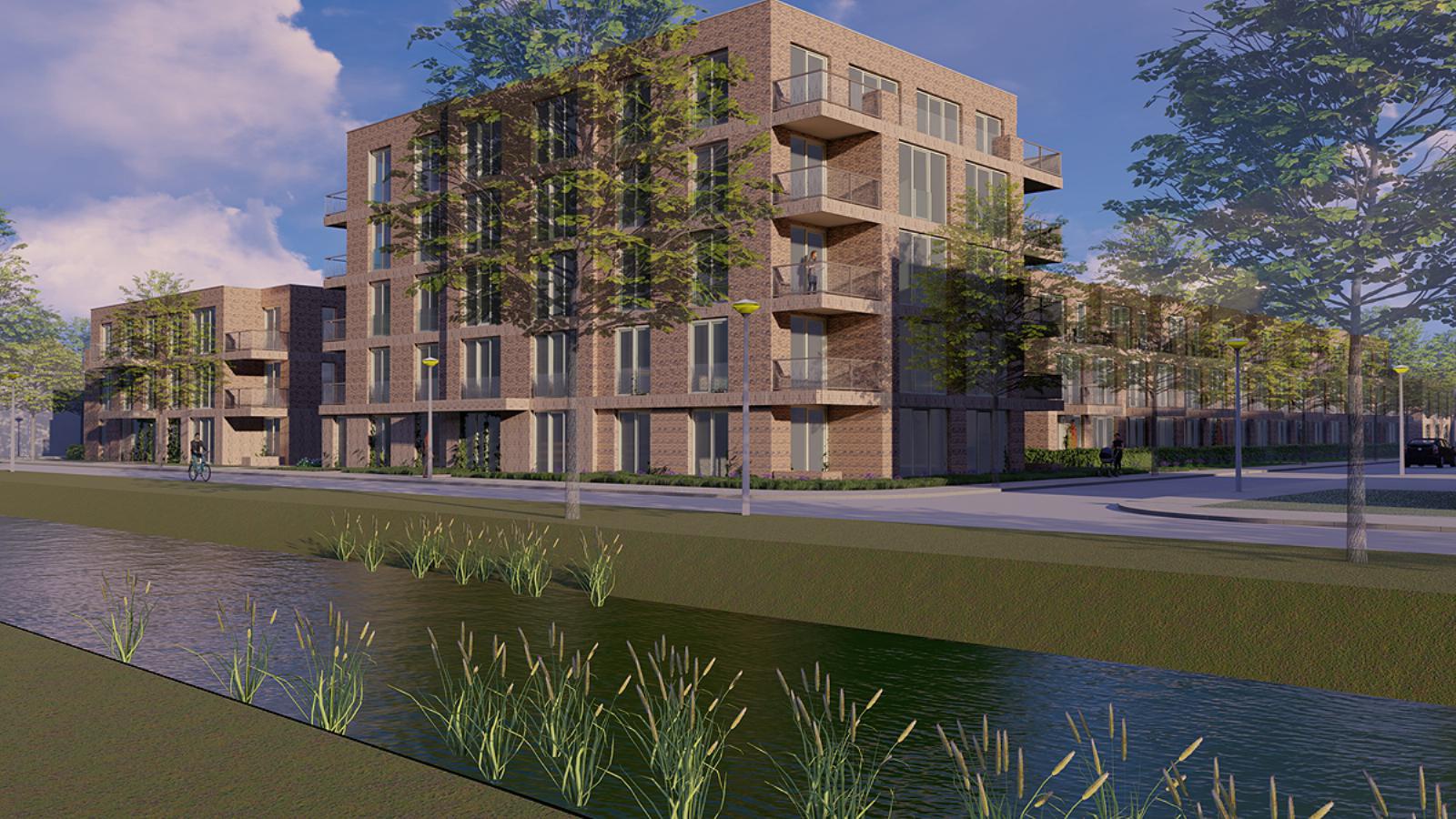
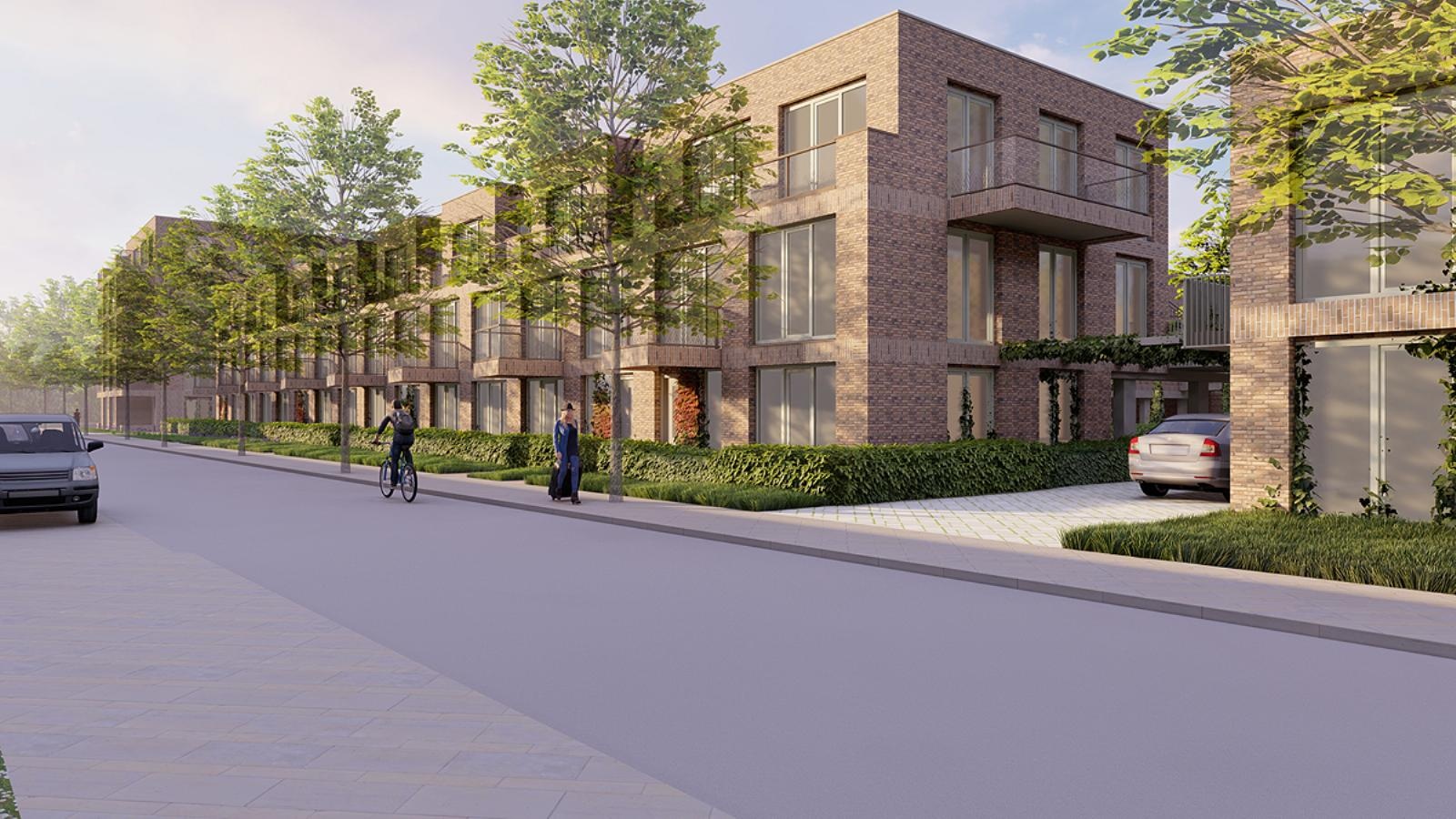
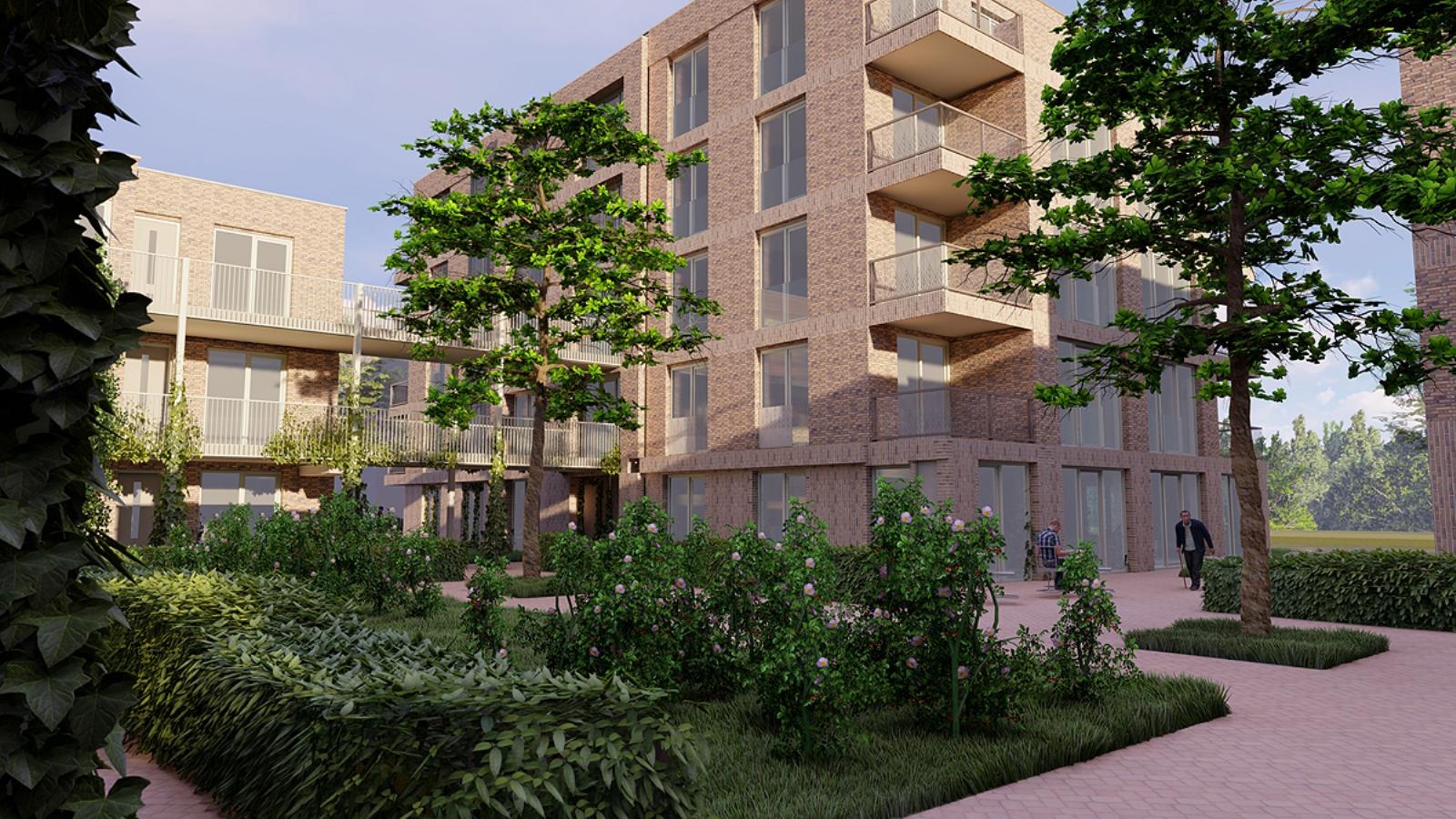
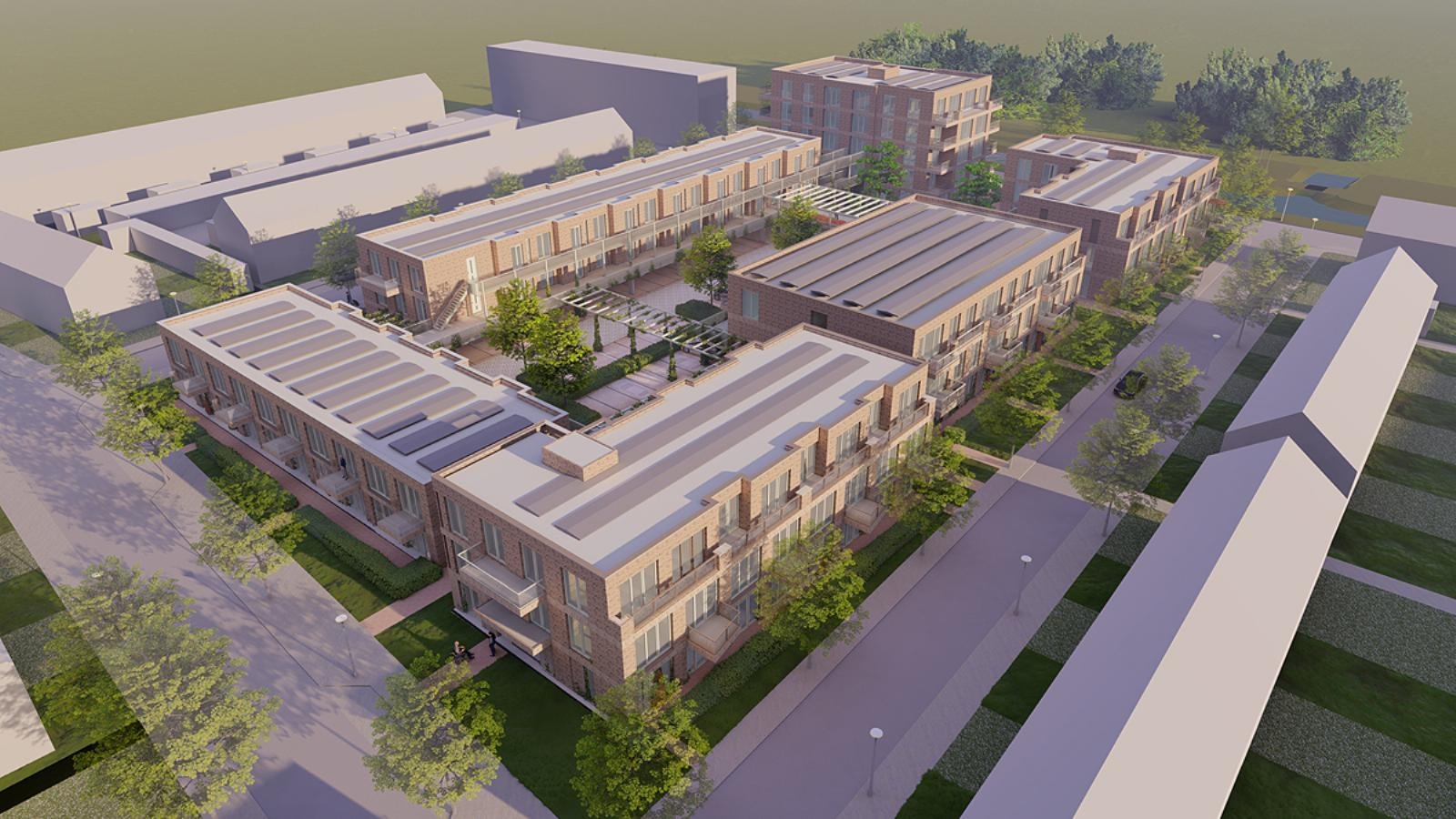
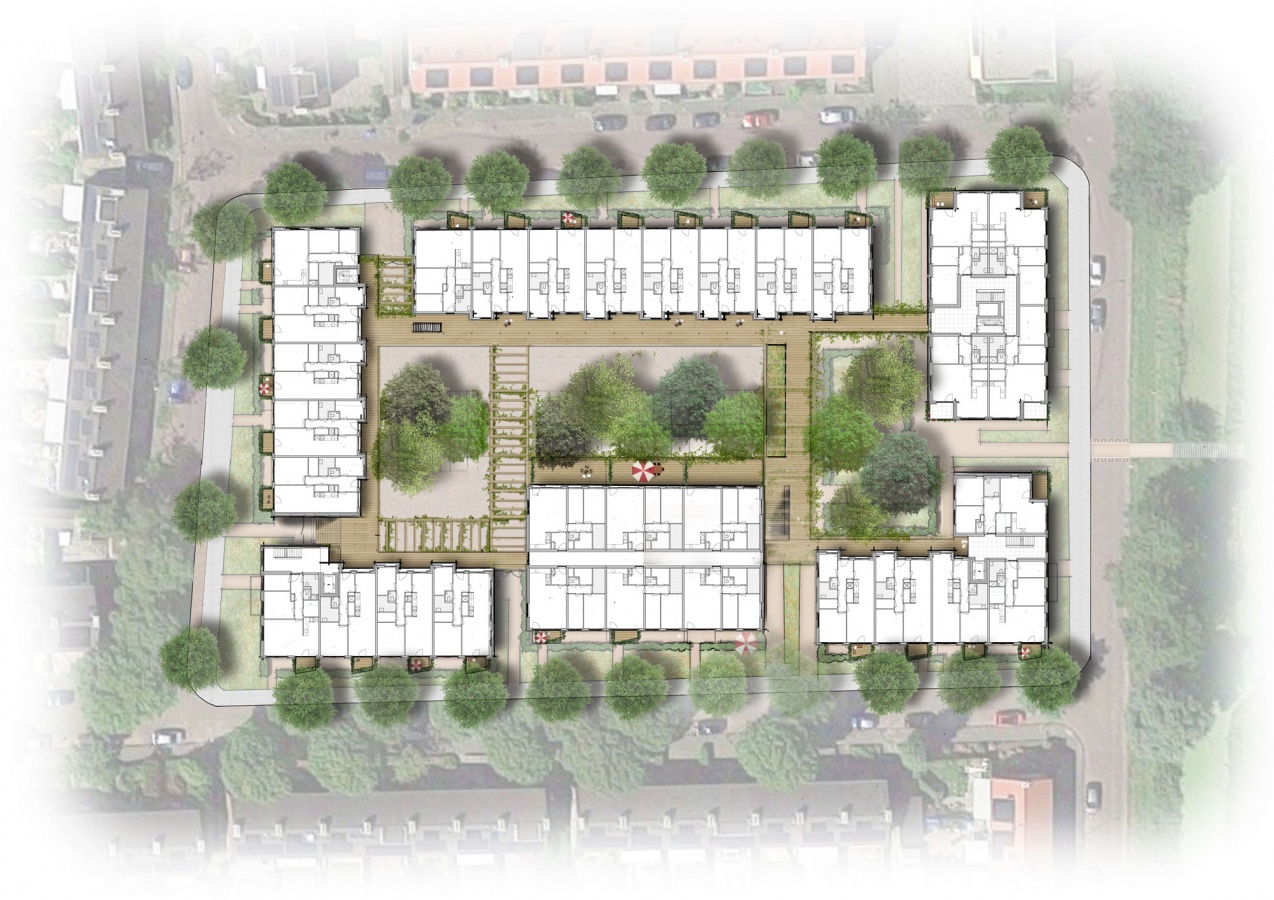
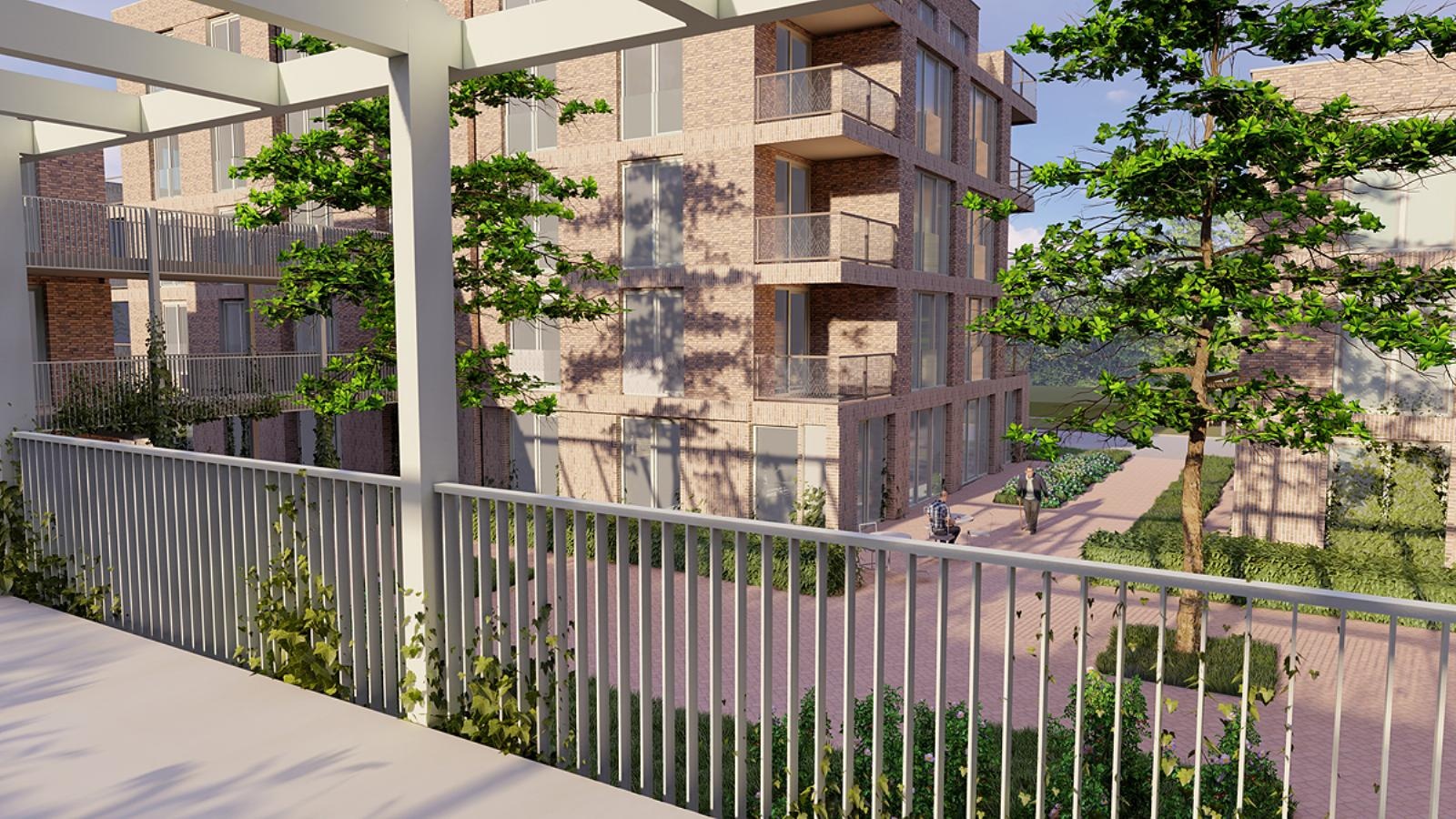
Housing association St. Willibrordus wants to renew 40 duplex houses along Stompwijckstraat in Wassenaar. The program provides for the realization of 86 social rental homes, mainly for starters and seniors. The plan area is located in a village extension from the 1960s. At the time of completion, this was the northernmost district of Wassenaar and it overlooked the meadows and farms. The district is spacious with a focus on greenery. In the development of the plan, we link up with the basic qualities of the neighborhood with spacious profiles with front gardens and lots of greenery. In order to be able to make the closed building block, the Stompwijckstraat in between will be removed. This provides space to solve parking for residents within the building block. The plan also provides for a communal courtyard with a social facility adjacent to it.
To create privacy in the front gardens, we create a green strip between the front gardens and the sidewalk that remains the property of the municipality. The existing structure of mature trees will be maintained. There is a distinction between a formal front, with zoom houses on the ground floor all around that are accessible from the street side, and an informal rear with parking under an open green deck (through which existing large trees protrude) and the access to the houses on the upper floors. through wide galleries. In the long streets, the building blocks match in scale with the buildings on the overlying because the top (third) storey has a setback in relation to the building line. On three sides of the building block, the balconies of the houses on the upper floors hang from the building blocks as ornaments. The balconies provide contact with the street and respond to the orientation with respect to the sun by means of a rotation and still show the echo of the current situation. The building block responds somewhat more robustly to the northern park side. On the northwest side, one of the blocks reacts in height to the adjacent apartment building.
| Architects | Gerrit-Jan van Rijswijk, Thomas Gillet |
| Client(s) | Housing association St. Willibrordus |
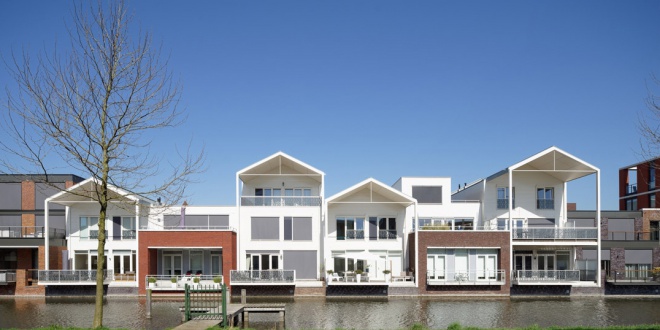
The plan ‘de Biezenhof’ is part of the new residential area ‘Waterrijk Woerden’ and is situated along a natural watery region. The urban scheme of ‘Waterrijk Woerden’ was designed by West 8 and refers to the traditional Dutch water cities such as Delft and Leiden. The design is made in collabiation with Klunder architects. Almost every dwelling is individual and has a specific connection to the water.
The plan of Biezenhof is divided in two parts: there is one block of family houses around a courtyard on the edge of the lake, and there is a row of water houses and apartments along a canal.
The buyers of the houses could choose between several types of houses as well as between four architects. Due to the possibilities in combining type and architect, not one house is the same. Every house has a singular character: the lake houses have a beautiful view on the lake, the street houses have a garden, and the canal houses enclose big terraces. In the public space there are a few parking places, the majority of parking places are organised in garages.
The houses designed by Knappers are characteristic because of the huge roof overhanging the façade. This contributes to the shelter-against-the water identity of the houses, and refers to the greenhouse glass constructions in the low lands. At the street side these houses are made of brick, which gives them a closed and open (to the light and the water) individuality.
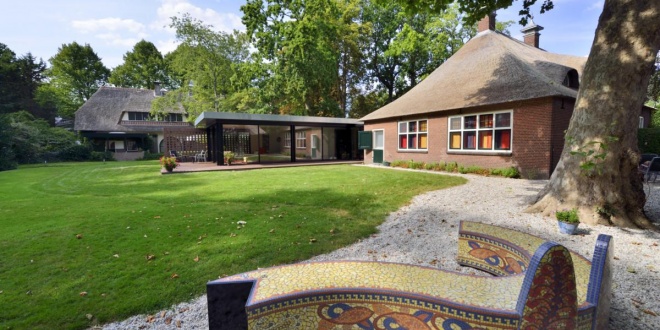
The house from the beginning of the 20th century was originally the staff residence of the adjacent main house “Malgre tout”. The main house and staff house are seen as examples of the development of country estates in the municipality. As an ensemble, the buildings and the surrounding gardens are of great cultural-historical value. The ensemble has the status of a national monument. The carefully detailed house is built in red brick under a thatched wolf roof. The staff house originally included a garage, horsestables and a driver's house.
In 2018, a design was made for the restoration and modernization of the service residence including a modern extension. A large living room and kitchen will be realized in the extension. A veranda will be added to the extension. Living room and veranda offer a view of a beautiful Hortensia garden. The extension is completely transparent on the side of the garden. On the other side, the extension is embraced by an openwork masonry wall. The wall becomes more transparent towards the edges. By using a heat pump installation with a source, high-quality insulation, and by completely filling the roof of the extension with solar panels, the service house will soon be completely energy neutral.
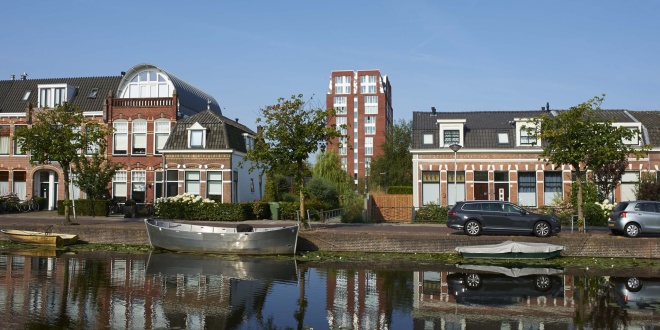
On a piece of wasteland in Leiden between the Lucebert Street and Toussaintkade an apartment building, ‘the Verleyding’ will rise this year. Construction started in March. In the building are 112 rental apartments for young professionals between 18 and 35 years. The properties are suitable for 1- or 2-person households, and have a surface of approximately 30 m2 (one-room apartment) and 45 m2 (two-room apartment).
The project is being developed and built by ten Brinke respectively Real Estate and ten Brinke Bouw. After realization the building owner will be SHWJ, Leiden. The housing design is tailored to the needs of SHWJ.
The building is 12 floors high and will become a landmark in Leiden. The area is bounded by the railway, a pond and a small park. On the park side the building stands on columns. Under the underpass, the entrance and lift are located. Together with the corridor access therefore an efficient plan has been realized, with 10 dwellings per floor. The upper apartments have stunning views over the city. The view can fully be enjoyed through the large windows. The ground level apartments have their own garden. Residents can cross a bridge over water to the park. Parking takes place on private property. The main body is constructed in a rhythm of frameworks of orange brick. The large frameworks ensure that the building looks less massive and joins well in the neighbourhood. The roof shape refers to the adjacent housing, it is finished with aluminium losagnes.
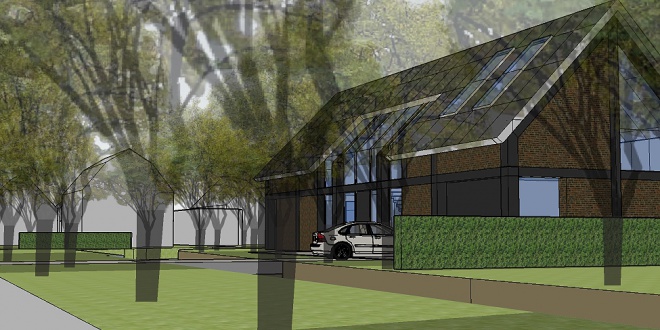
The ‘Oud Woelwijk’ farm, the oldest part of which dates from before 1528, was still standing at the beginning of the 20th century in a sea of lands and bushes to the south of the village center of Voorschoten. The farm formed an ensemble with the country estate of Roucoop. The country estate no longer exists, and from 1930 the built-up area has been advanced. Yet the Essenlaan is still a protected leafy lane that leads to the old farm. For a plot directly on the other side of the farm, we have made a design for a contemporary energy-neutral home. The single-storey house with hood is designed as an outbuilding of the farm. You reach the plot via a bridge that cuts through the historic woods at a clever location. A very spacious home has been designed partly due to a number of voids. The volume is still closed on the farm side. On the south side, the house opens to the large garden.