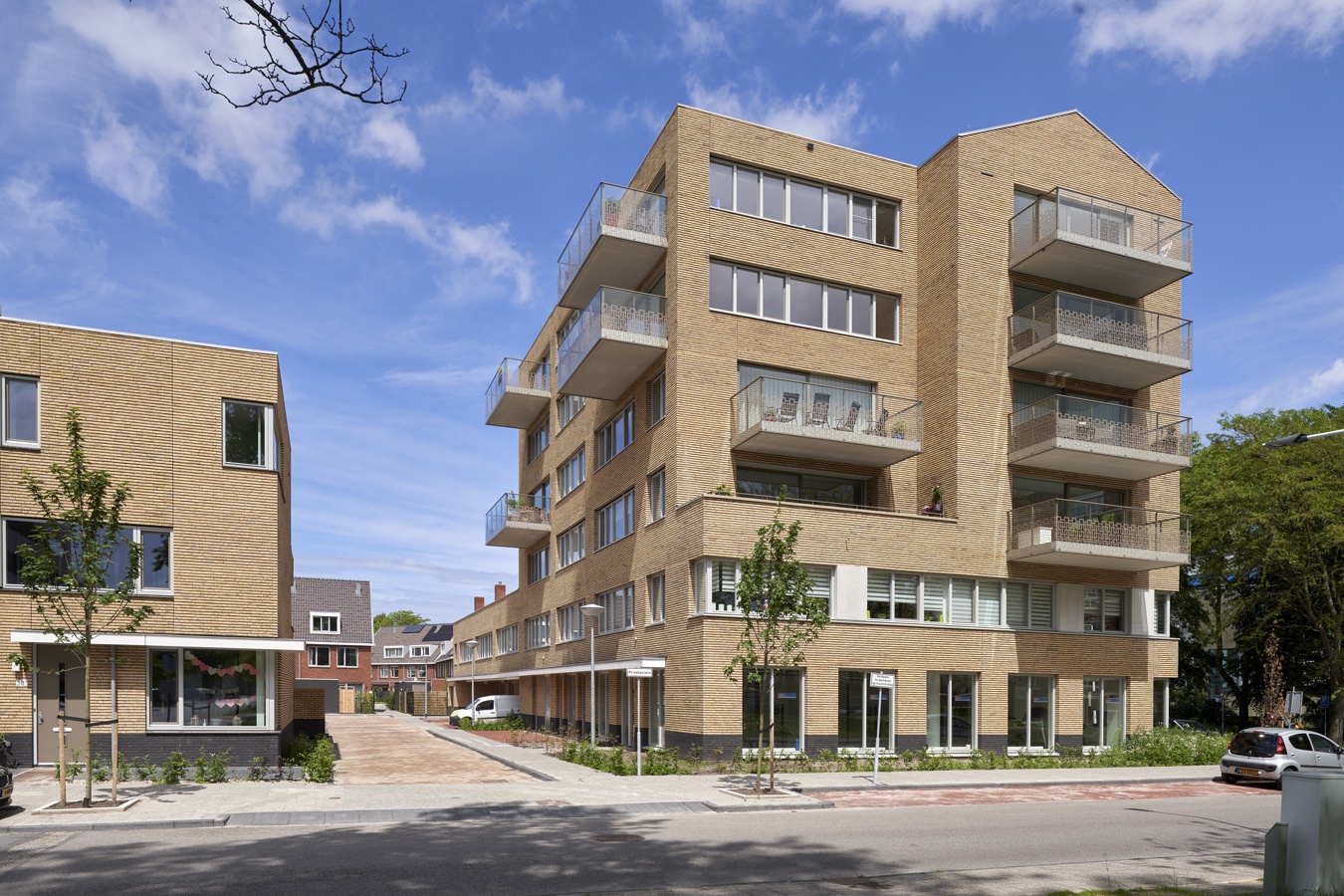
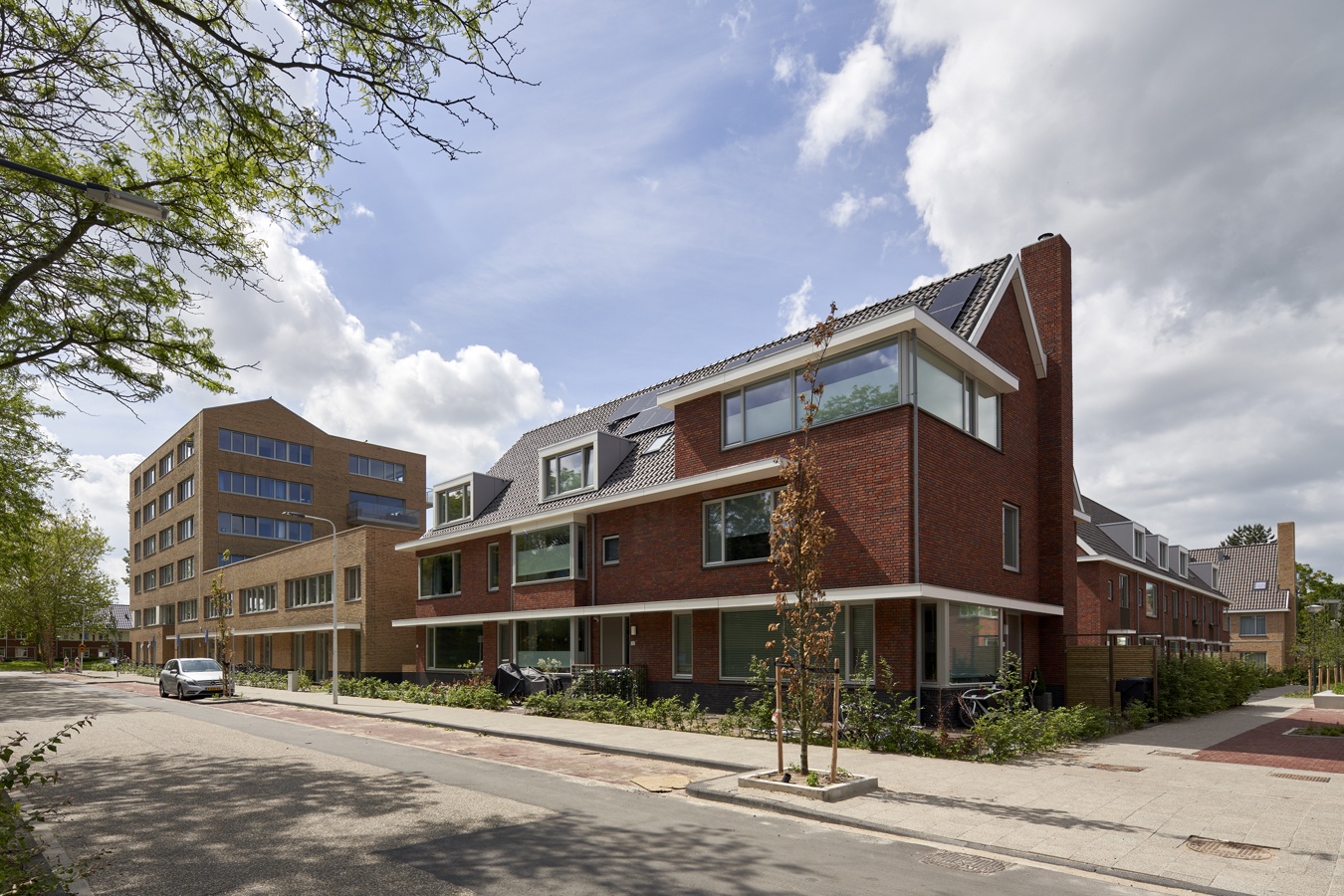
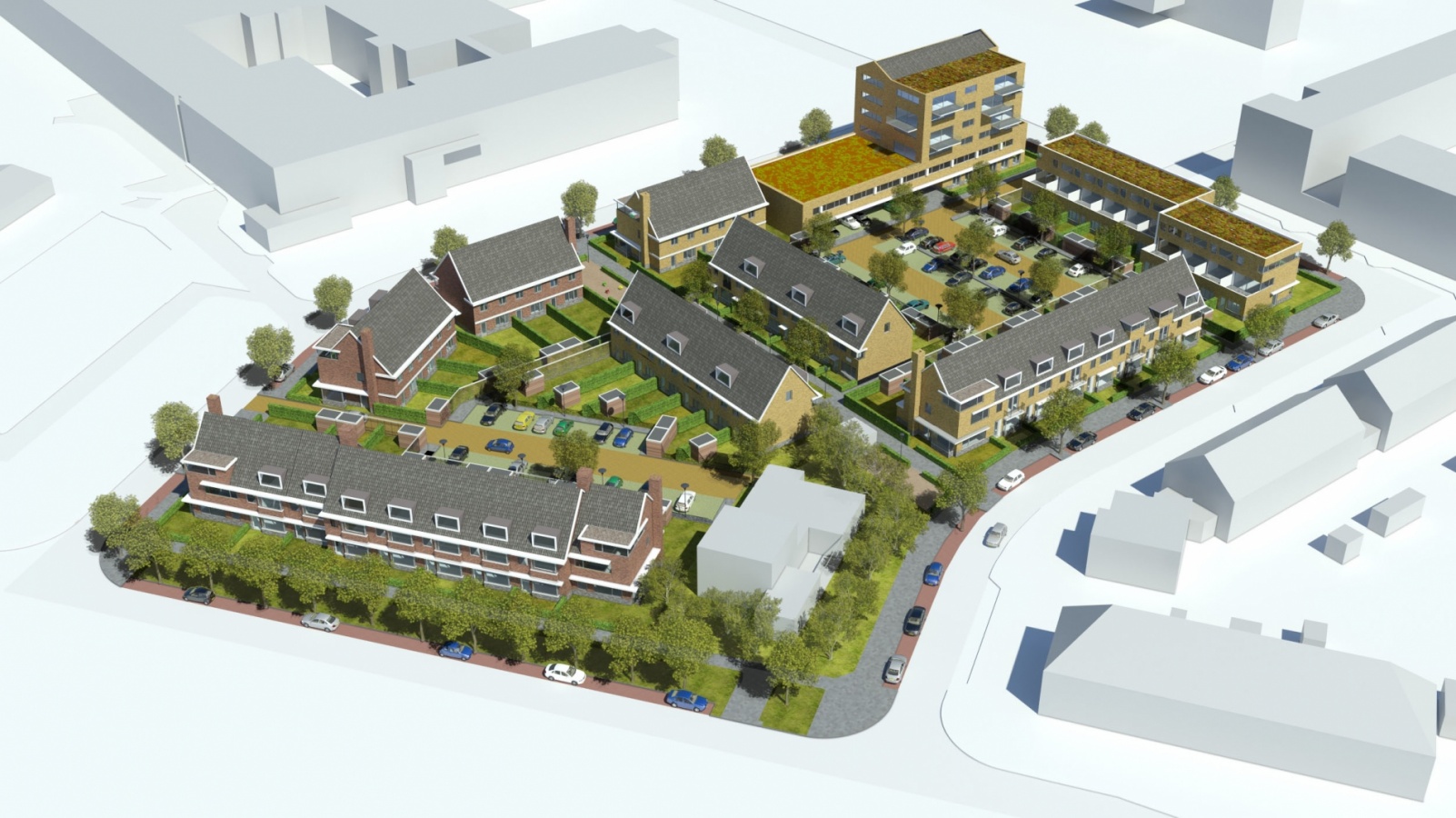
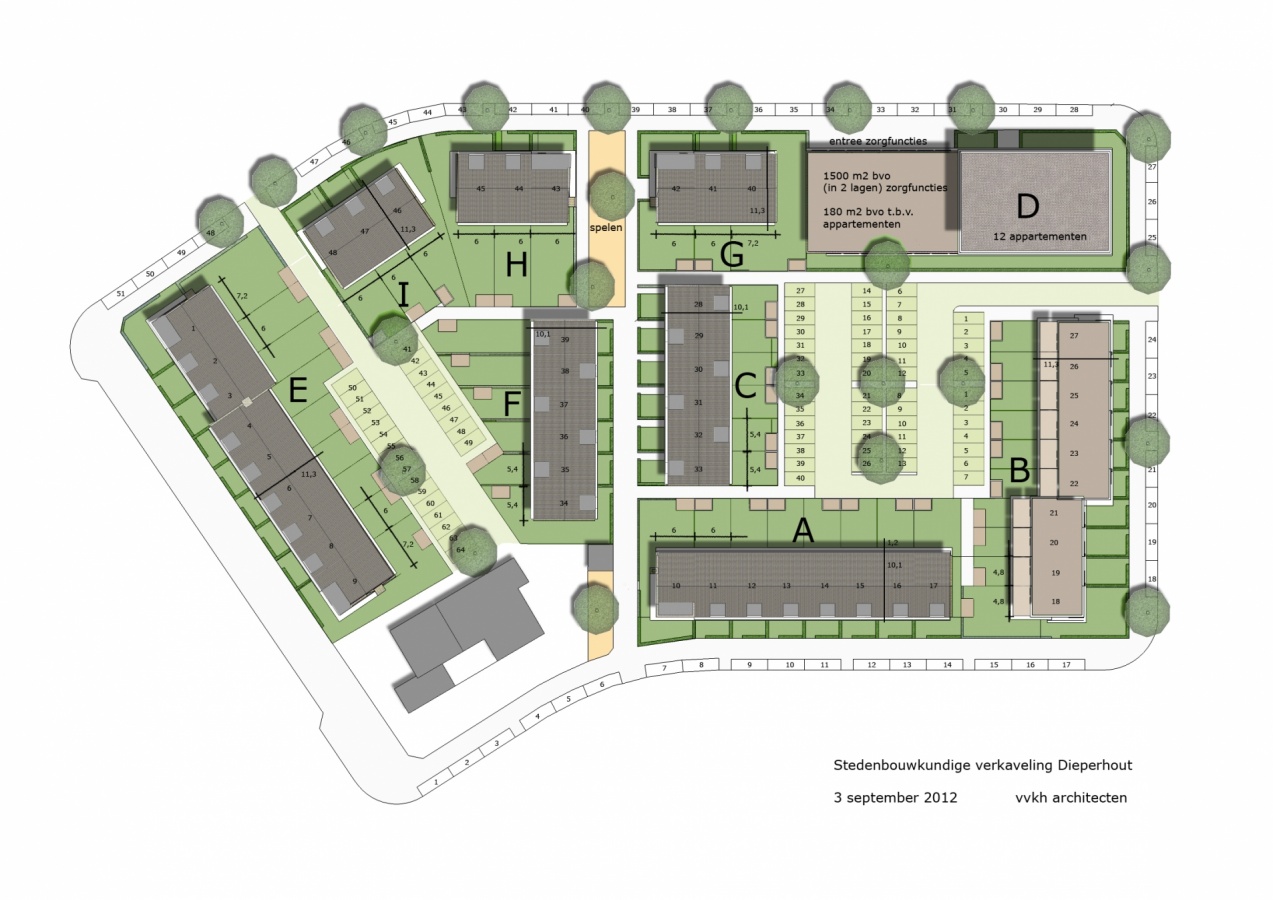
In cooperation with Smits bouwbedrijf, VVKH has won the european tender to develop a new housingarea in district Dieperhout in Leiden. The project consists of 48 dwellings, 12 apartments and a care facility of 1500m². Start of the constructionwork is planned in may 2015, because thats when a current school will move to a new building and the site will be available.
| Architects | Ronald Knappers |
| Employees | Hans Schepman |
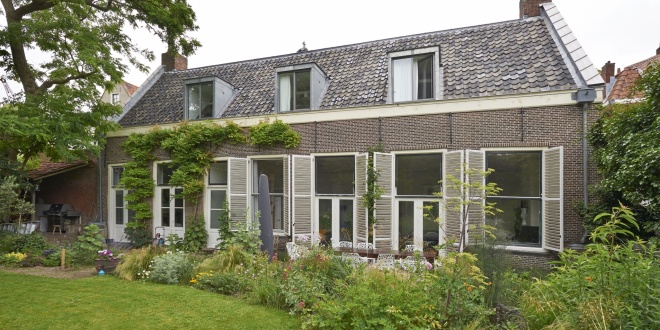
Together with restoration contractor Burgy from Leiden, the back house, the garden house of the house at Garenmarkt 9 / 9a, has been completely restored and modernized. The new owner lives in this part. The front house with a number of apartments / studios for rent will remain unchanged for the time being.
The house at Garenmarkt 9, 9a is also popularly known as 'Thorbeckehuis'. The house has one of the largest private backyards in Leiden. In the Secret Annex, the garden house (No. 9a), the liberal statesman Johan Rudolph Thorbecke wrote in 1848 the revision of the Constitution, which turned our country into a constitutional monarchy. Thorbecke has lead three cabinets from 1849. A gable stone in the national monument reminds of the habitation by the liberal statesman and professor of law (1798-1872).
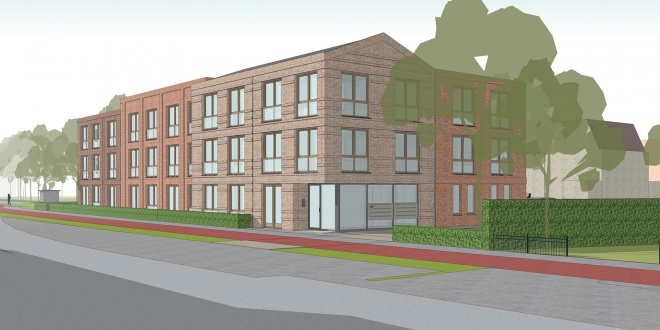
For the Hoge Rijndijk location in Zoeterwoude, a new construction plan has been developed for an apartment building with starter homes, after demolition of the existing office building. The building stands on the edge of the large-scale buildings that are currently being built between the Oude Rijn and the Hoge Rijndijk, and the existing residential area from the 1980s. It adjacents to a small park on the east side. The new building has been placed in the building line of the Rijndijk and thus strengthens the profile of the road. The parking spaces are located in the rear area, lined by green. By dividing the building mass in three, a smaller scale is created, which is further reinforced with differences in brickwork and roof shape. The building will contain 34 residential units of approximately 50 m2 and a bicycle storage. An extremely energy-efficient and sustainable design is achieved with individual heat pumps and solar panels on the roof.
The permit application is being processed, implementation is expected in 2021.
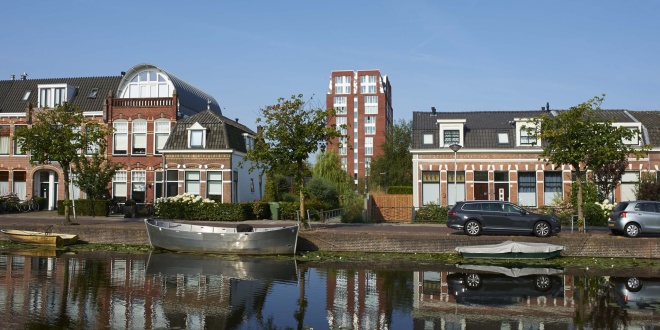
On a piece of wasteland in Leiden between the Lucebert Street and Toussaintkade an apartment building, ‘the Verleyding’ will rise this year. Construction started in March. In the building are 112 rental apartments for young professionals between 18 and 35 years. The properties are suitable for 1- or 2-person households, and have a surface of approximately 30 m2 (one-room apartment) and 45 m2 (two-room apartment).
The project is being developed and built by ten Brinke respectively Real Estate and ten Brinke Bouw. After realization the building owner will be SHWJ, Leiden. The housing design is tailored to the needs of SHWJ.
The building is 12 floors high and will become a landmark in Leiden. The area is bounded by the railway, a pond and a small park. On the park side the building stands on columns. Under the underpass, the entrance and lift are located. Together with the corridor access therefore an efficient plan has been realized, with 10 dwellings per floor. The upper apartments have stunning views over the city. The view can fully be enjoyed through the large windows. The ground level apartments have their own garden. Residents can cross a bridge over water to the park. Parking takes place on private property. The main body is constructed in a rhythm of frameworks of orange brick. The large frameworks ensure that the building looks less massive and joins well in the neighbourhood. The roof shape refers to the adjacent housing, it is finished with aluminium losagnes.
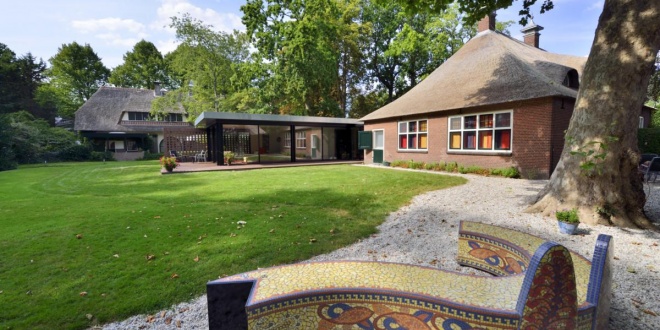
The house from the beginning of the 20th century was originally the staff residence of the adjacent main house “Malgre tout”. The main house and staff house are seen as examples of the development of country estates in the municipality. As an ensemble, the buildings and the surrounding gardens are of great cultural-historical value. The ensemble has the status of a national monument. The carefully detailed house is built in red brick under a thatched wolf roof. The staff house originally included a garage, horsestables and a driver's house.
In 2018, a design was made for the restoration and modernization of the service residence including a modern extension. A large living room and kitchen will be realized in the extension. A veranda will be added to the extension. Living room and veranda offer a view of a beautiful Hortensia garden. The extension is completely transparent on the side of the garden. On the other side, the extension is embraced by an openwork masonry wall. The wall becomes more transparent towards the edges. By using a heat pump installation with a source, high-quality insulation, and by completely filling the roof of the extension with solar panels, the service house will soon be completely energy neutral.