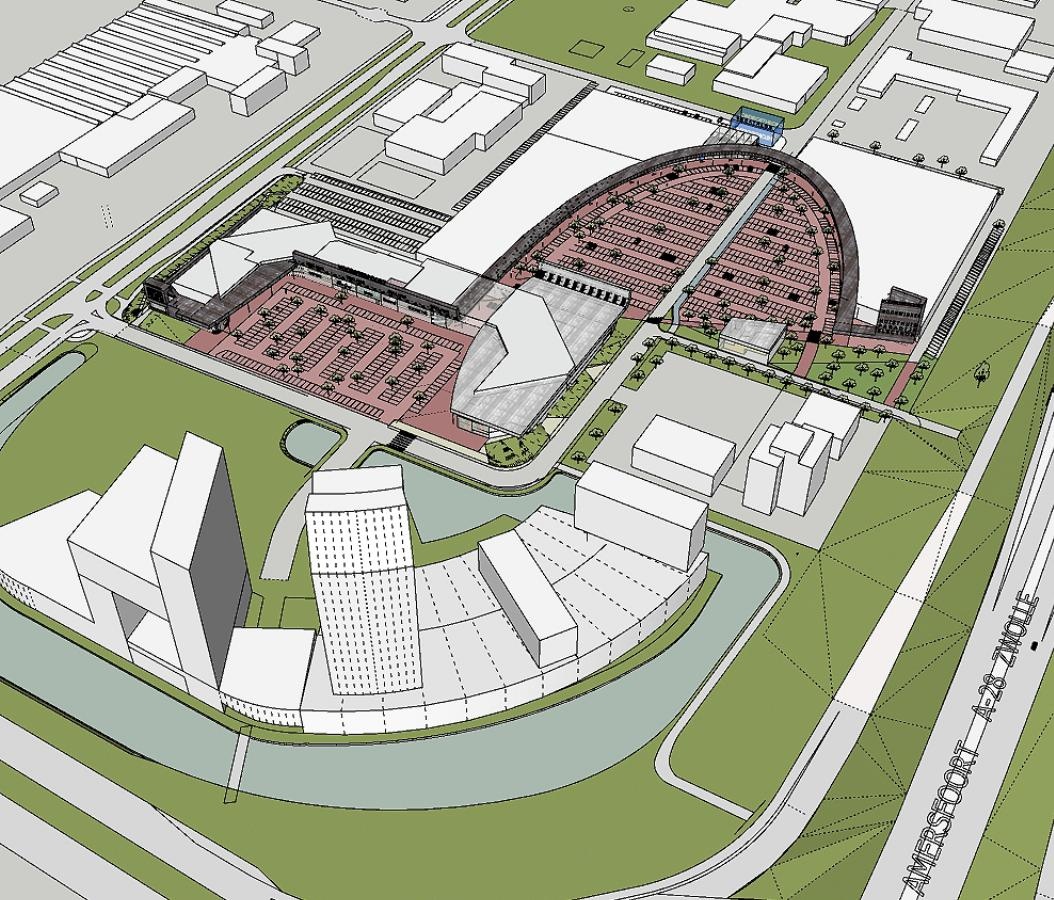
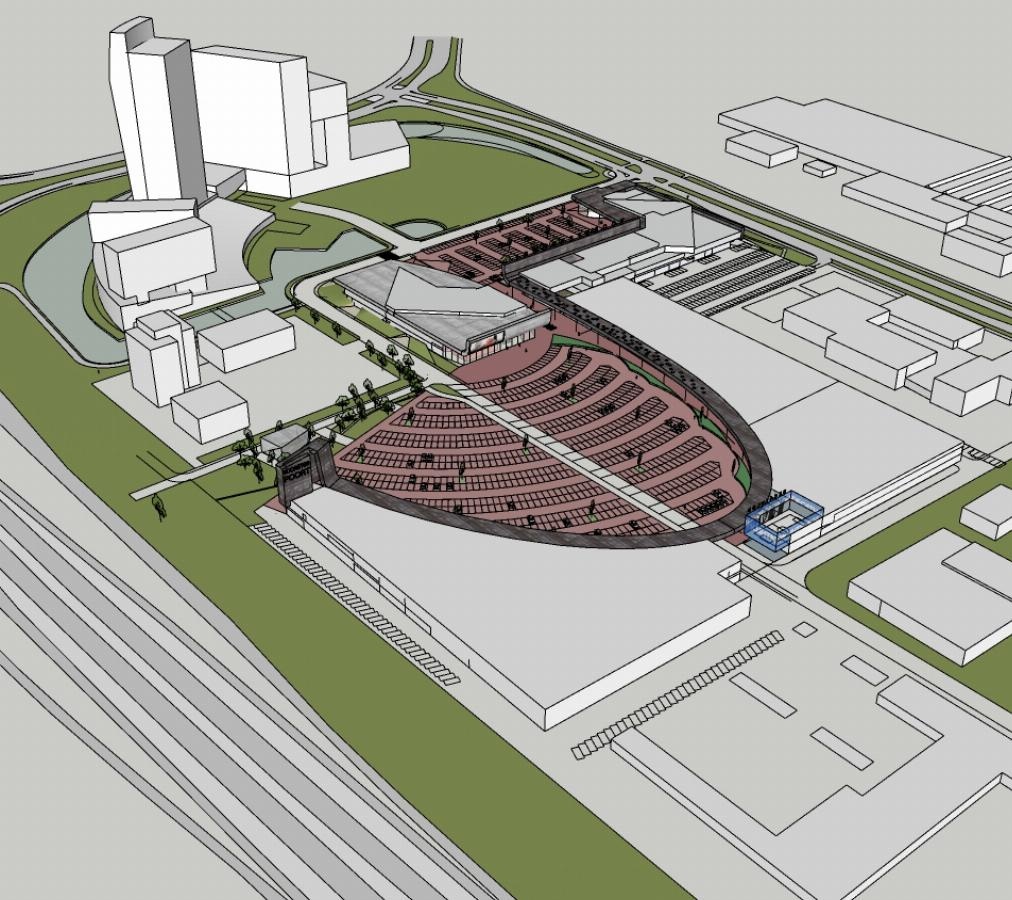
Woonboulevard Voorsterpoort in Zwolle is a well-running residential boulevard near the exit of the A28 motorway. Market research shows that there is room for expansion with more than 30,000 m² GFA for large-scale retail. Plots are available for expansion behind the existing boulevard. In our vision, the expansion will be realized around an oval square with parking at ground level. All shops are visible from anywhere on the square. Landmarks will be realized at the ends. The extension will be connected to the existing boulevard through a gate. The existing boulevard will be renovated, so that the shopping center will eventually again present itself as a cohesive complex. The plan can be realized in phases.
| Architects | Gerrit-Jan van Rijswijk |
| Client(s) | CBRE |
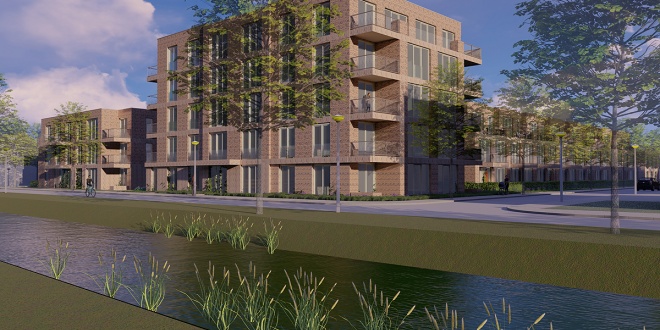
Housing association St. Willibrordus wants to renew 40 duplex houses along Stompwijckstraat in Wassenaar. The program provides for the realization of 86 social rental homes, mainly for starters and seniors. The plan area is located in a village extension from the 1960s. At the time of completion, this was the northernmost district of Wassenaar and it overlooked the meadows and farms. The district is spacious with a focus on greenery. In the development of the plan, we link up with the basic qualities of the neighborhood with spacious profiles with front gardens and lots of greenery. In order to be able to make the closed building block, the Stompwijckstraat in between will be removed. This provides space to solve parking for residents within the building block. The plan also provides for a communal courtyard with a social facility adjacent to it.
To create privacy in the front gardens, we create a green strip between the front gardens and the sidewalk that remains the property of the municipality. The existing structure of mature trees will be maintained. There is a distinction between a formal front, with zoom houses on the ground floor all around that are accessible from the street side, and an informal rear with parking under an open green deck (through which existing large trees protrude) and the access to the houses on the upper floors. through wide galleries. In the long streets, the building blocks match in scale with the buildings on the overlying because the top (third) storey has a setback in relation to the building line. On three sides of the building block, the balconies of the houses on the upper floors hang from the building blocks as ornaments. The balconies provide contact with the street and respond to the orientation with respect to the sun by means of a rotation and still show the echo of the current situation. The building block responds somewhat more robustly to the northern park side. On the northwest side, one of the blocks reacts in height to the adjacent apartment building.
The Wall in motion
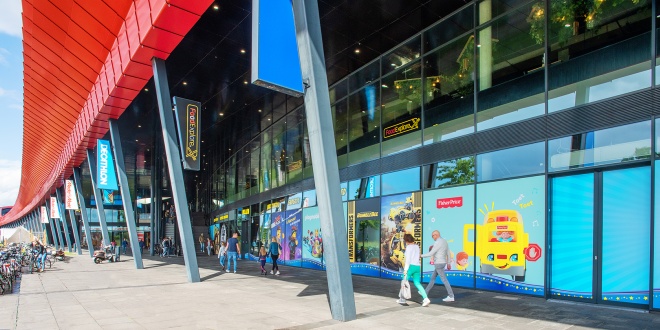
The Wall shopping center in Leidsche Rijn, located next to the A2, which also serves as a noise barrier, changed hands in 2018. Together with the new owners, real estate investors / developers Built to Build and Urban Interest, we have investigated parts that have not been implemented or have been incompletely completed and measures that are additionally needed to optimize the letting of the building. Since then, they have been working with them on perfecting both the building and the public space to make the shopping center a success.
The first steps for the Wall 2.0 have now been taken.
Since December 2018, a new AMAC location has been opened in the end building. We have made a number of allotment proposals and prepared various units in the end building based on the layout agreed with AMAC. The interior design was provided by Apple itself. In addition to a retail space, this location includes an auditorium, training room, service desk and repair center and warehouse / storage space in The Wall.
A number of improvements / changes that were implemented in 2019 and 2020 are an extra rise point to make the parking roof accessible from the adjacent office building, and an extra retail space on the deck. The entrance on the south side of the building has been adapted, with a tapis roulant and extra escalators. And on the north side of the building, an extra entrance, rising point and a roof building will be realized.
In addition, the possibilities for sustainability are being investigated by installing solar panels on the parking deck, making the parking deck greener and redesigning the ground level.
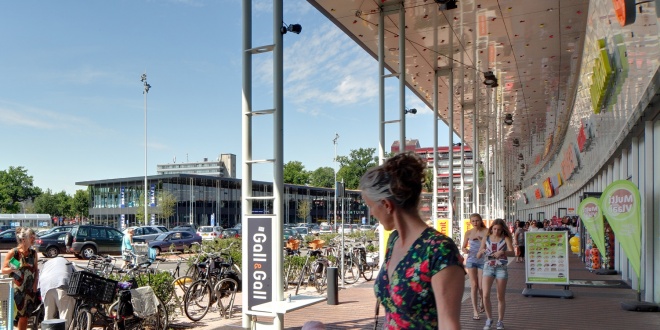
On the east side of Enschedé, on the outskirts of the city center lies the Miro shopping centre. The former mall has gradually been replaced by new buildings and was worn out. The new building has a curved façade and a large canopy. It embraces the public space and the high-quality parking facility. The shopping facade ends on the east side in a shopping arcade, which contains a large supermarket. On the west side the arcade accumulates into a two storey development. Together with public buildings on the other side of the road the building forms a port that marks the transition from the green suburban neighbourhood to the city itself. The complex includes a green roof that connects on the east end to an ecological zone for butterflies and bats.
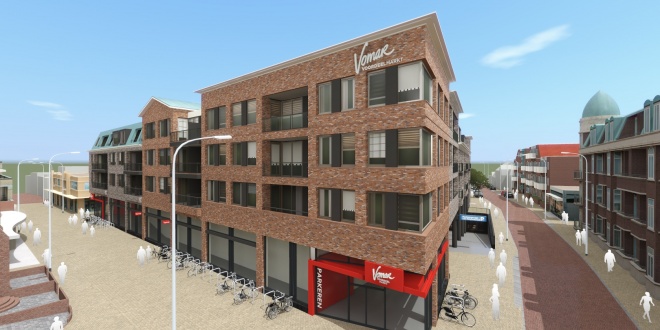
Urban development and architectural integration “Vomar” location, corner of Abraham van Rooijenstraat and Maarten Kruijtstraat in Noordwijk
From an urban planning point of view, the contours and height of the building plan were determined by the municipality of Noordwijk. The plan clearly defines the streets Abraham van Rooijenstraat and Maarten Kruijtstraat, in line with the existing street profiles. Gasthuissteeg will also have a clear boundary with this building plan.
The main mass has an intermediate scale between two worlds present in the environment. On the one hand, there is the smaller-scale village development of the Hoofdstraat and on the other hand, the large-scale hotel development. The mass of the new building block to be built is 3 storeys high plus a roof storey. It is articulated into a number of volumes, softening the scale of the building block. These volumes are made independent by different colors of masonry and roof finishes. With a play of rhythm between balconies, windows, tires, roof moldings and a green-copper-colored roof, the building blends in well with the seaside resort architecture of the environment. The mass on the Gasthuissteeg is 2 storeys high. It has a green facade with window openings. On the north side of the plan, the existing firebreak will be closed and the buildings will close directly on the adjacent plot.
The plan is mainly sustainable because of the triple land use. The building block has an underground floor, on top of that a storey layer, above that a parking deck for the houses and 42 houses.
Abraham van Rooijenstraat is an important access road. That is why functions such as the entrance to the underground parking garage, the entrance to the parking deck on the 1st floor in front of the houses, and the entrance to the expedition have been made here. The Kruisstraat will become more traffic-calmed. This will be the world of shopping as it is at the Hoofdstraat. This is where the shopping functions will be located, which are accessed via two clear entrances at the corners. These entrances are clearly visible from the Hoofdstraat and from the Grent.
The entrance to the houses is on the north side. This will give the existing loading and unloading yard, where other residential accesses are located, a quality impulse. The gallery facade, which is hardly visible from the public space, is conceived as a veranda world. It's a light world of painted wood.